Terraform Industries blog
Notes from the people building cheap synthetic fuel from sunlight and air: what we're doing, why, and what we've learned along the way.
2026
- Doing It The Hard Way
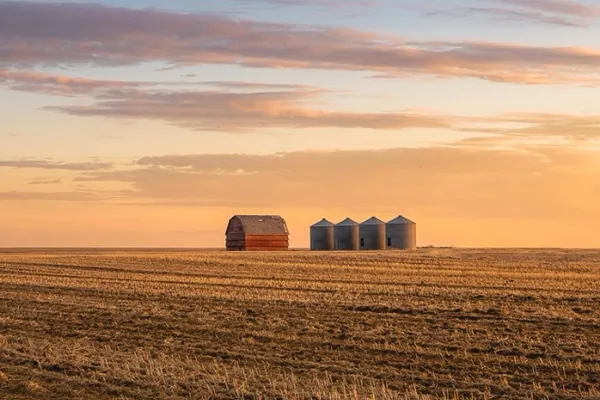
Dawson James is the fifth generation of his family to farm the same land in Saskatchewan, where the rule is you don't take from tomorrow to pay for today. He mined uranium with water jets and built a water recovery startup, then came to Terraform to make our calciner work, the part of the lime cycle that bakes pure CO2 back out of the carbonate without burning anything.
- How Terraform built the cheapest solar in North America
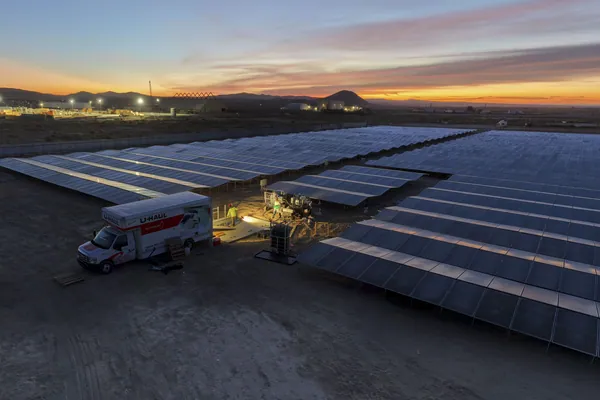
Matt Weickert went from tech job to ironworker to my Technical Chief of Staff, and in October 2025 I asked him to build our Muroc test site. 58 days from closing to ground breaking, ten working days to install 1.8 MW of panels, $1.3 million all in, $0.016/W amortized. The veterans told us to expect four years and $1.40/W.
- Terraform 2026 Update
About 10% of the world's oil production and delivery capacity has been blown up in five years, and drones mean anyone can do it for a few thousand dollars. Fuel you can make anywhere from sunlight and air is now a security question. Meanwhile at Muroc we built the cheapest solar in North America and made CO2, hydrogen and methanol off grid. Plus where permitting reform could help, and where it could shoot itself in the foot.
- The enormous size of the oil and gas market drives adoption of synthetic fuel production
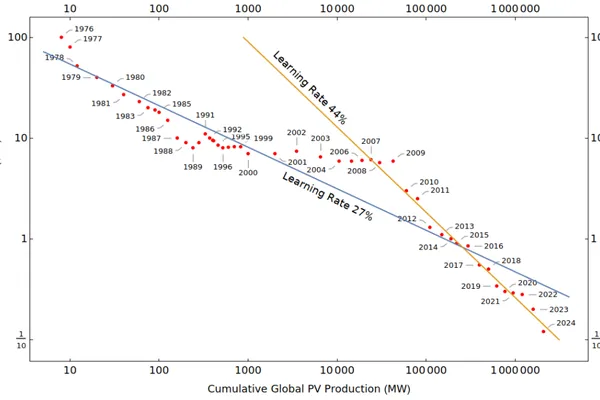
New technology starts expensive and gets cheaper with scale, but how much scale, and who pays for it while it's expensive? Oil and gas is so enormous that each step down in cost opens a bigger market than the last, so what really matters is our learning rate. Our first full scale Terraformer at Muroc should make money on its own, no billion dollar leap of faith required.
- Organization is My Superpower
It's 6:30 PM on a Friday, Lucie's inbox is empty, and the next six months are already planned. She leads our reactor team, runs hiring, sales and logistics, does her own engineering, and climbs alpine routes on weekends, using nothing fancier than Google Sheets, Calendar, and a rule that every meeting gets closed out within ten minutes.
- Capturing Carbon I: The Base
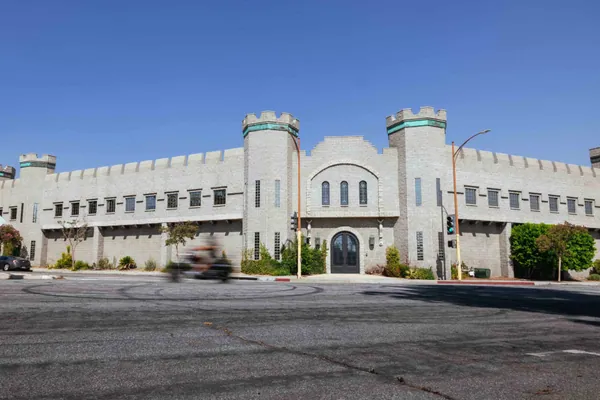
AK Jain leads our carbonator, the part of our direct air capture system that grabs CO2 out of the air. Part one of his series: how a middle school climate scare, electric racecars and an internship at Rivian led him to the castle, the fundamentals of DAC, and the design rule he lives by, SIMPLIFY DELETE REPEAT.
- Direct Current Data Centers
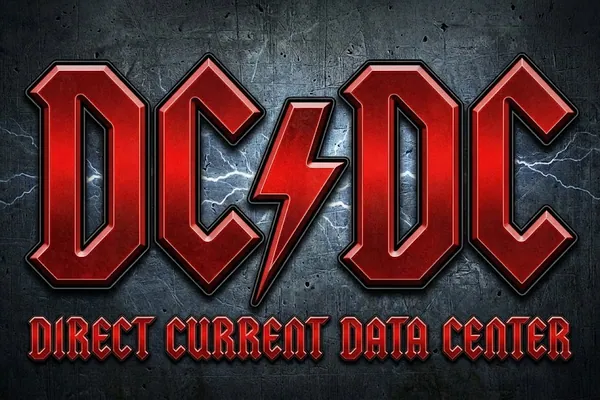
The GPU is the expensive part, about $50,000/kW, and all it wants is a steady supply of low voltage DC. So delete everything else. Matt and I show that solar and batteries wired straight to the GPUs, no turbines and no grid, is faster and cheaper than the gas hybrids everyone is proposing, and that the most profitable design throws away most of its sunlight. With bonus space AI and Kardashev levels.

2025
- Terraform Talent Development
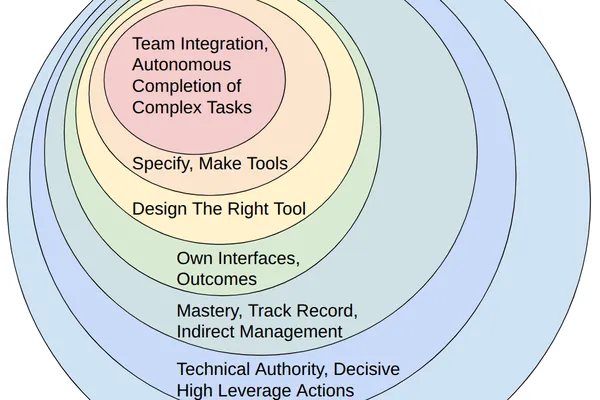
Terraform Industries is the vehicle by which I build the people that build the team I need to build the future I am determined to build. This is our internal memo on how we develop engineers, from table stakes at entry level all the way up to principal engineer, plus the reading list. We're publishing it so candidates know what they're signing up for.
- My “Free” MBA
Ken Nelson runs manufacturing at Terraform. Before that he learned the trade in Malaysia, which somehow involved a night in prison, kickbacks, the Big Vacuum Cleaner Company, a COVID lockdown, and finding, setting up and haunting factories. This is the story of the most expensive free MBA ever, and how he ended up in our castle. It's a wild read.
- The Million Dollar Knowledge Gap: Why I’m Open-Sourcing My Machine Shop Wisdom
Johanness is back, this time with a 1962 Mercedes that absolutely needed 1990s AMG wheels, and the five hole bolt circle that nearly broke him. Out of that came a full set of machine shop tutorials, written in plain English by someone who has made every dumb mistake so you don't have to, now open source. Moral of the story: use six holes.
- The Core Pillars at Terraform Industries
A conversation with Lucie Nurdin, who leads our reactor team. She grew up on her family's flower farm in Burgundy, saw droughts and storms her dad hadn't seen in 30 years, and at 18 decided to spend her life on climate change. We talk about chemistry, what makes Terraform different, and the kind of people she wants to hire.
- The Future Of Solar Doesn’t Track The Sun
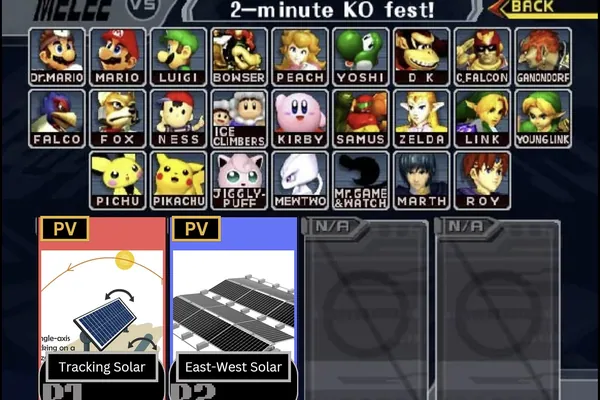
Xavier Dedenbach, one of our power electronics engineers, makes the case that solar panels are now so cheap that simple fixed East-West arrays beat the industry's beloved single-axis trackers. They make less power per panel, but use less steel, labor and land, and the advantage grows as modules get cheaper. The one exception is regular severe hail. Nature is metal.
- To Conquer the Primary Energy Consumption Layer of Our Entire Civilization
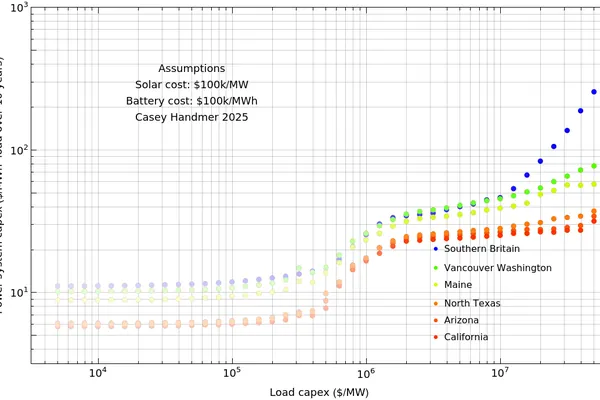
We set out to make cheap natural gas from sunlight and air, and accidentally started recompiling the foundation layer of the entire industrial stack. To find out what off-grid solar power really costs, we simulated a year of five minute solar data at sites around the world, for any load from a $20/kW kettle to a $50,000/kW AI datacenter. Then a very long list of open roles.
- No Excuses: How to Build, Scale, and Win in Hard Tech
Kyle Adkins runs strategic operations and finance at Terraform, and he thinks the hard tech Valley of Death is mostly a chasm of excuses. The companies that win spend every dollar like it's their last, iterate fast, chase revenue early and don't lean on subsidies. Terraform's playbook is borrowed from Henry Kaiser's shipyards and Kelly Johnson's Skunk Works, which used to be just across the road.
- Six months as an Alchemist’s apprentice
Chandhana got nerd sniped at a hackathon into worrying about plastics, which led to an Emergent Ventures grant, PlasticList, and by a chain of unlikely coincidences, six months working on electrolyzers in our alchemy castle. What she learned there, including the day a high school gas law pulled a vacuum in the bubblers.
- A Vienna Waltz in a Burning Room
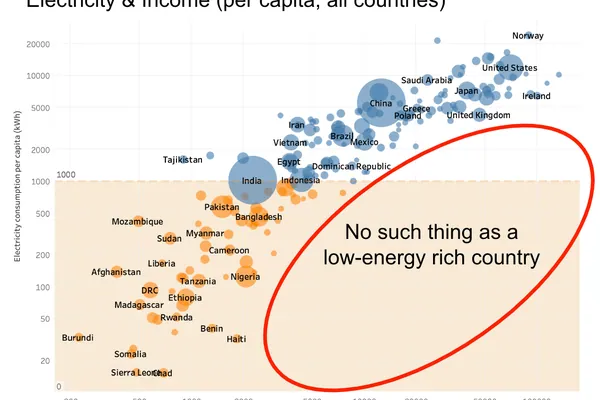
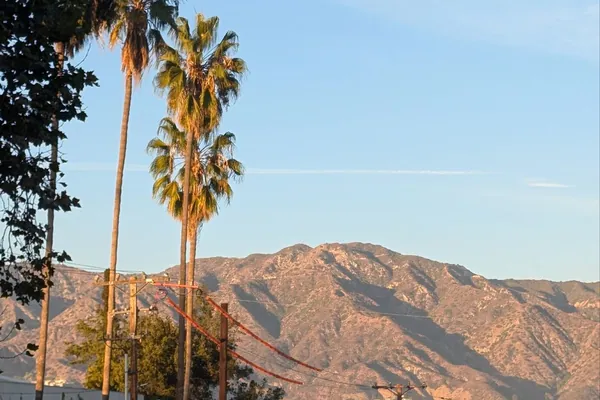
The first of our team stories. Johanness spent years as a software engineer chasing infinite scalability while the LA freeways crumbled under his 1962 Mercedes. Then he walked out of the ballroom and into the workshop, and now he builds calcium looping hardware at Terraform. The future is industrial, he says, and he'd like you to come and build it with him.

2024
- Terraform Industries Master Plan
Our demo works, so now it's time to make money. We started with natural gas because it was technically easiest, but we want to make every hydrocarbon in every market on Earth (and beyond!). This is the road map, with market sizes and dates, from electrolyzers and hydrogen in 2025 to factories that build Terraformer factories. We currently have no plans to make our own polysilicon.
- How Terraform Navigated The Idea Maze
I founded Terraform in November 2021 with a 95% correct design in my head, and have since learned that obvious things aren't obvious to everyone. So here is our path through the idea maze. Make fuel, because fuel fixes steel and cement too. Beat drilling on cost, because nothing else scales. Use sunlight and air, which are everywhere, and keep capex low enough that low utilization doesn't matter.
- Terraform makes carbon neutral natural gas
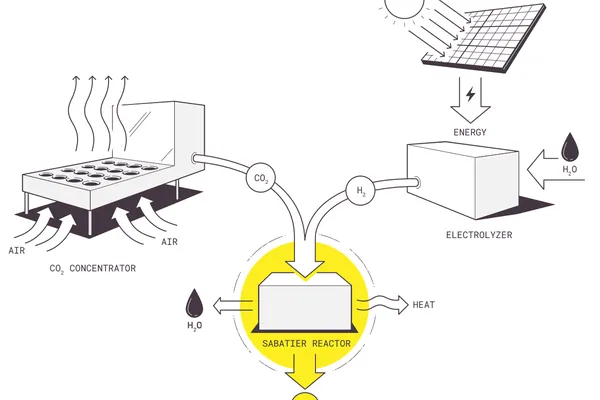
We did it! On March 27, 2024 we commissioned our integrated demonstrator, which turns sunlight and air into natural gas with an electrolyzer, direct air capture and a methane reactor, all built in-house at our castle in Burbank. Our hydrogen already costs less than $2.50/kg. Two years of hard work, and now we're taking reservations for production Terraformers.
- Terraformer Environmental Calculus
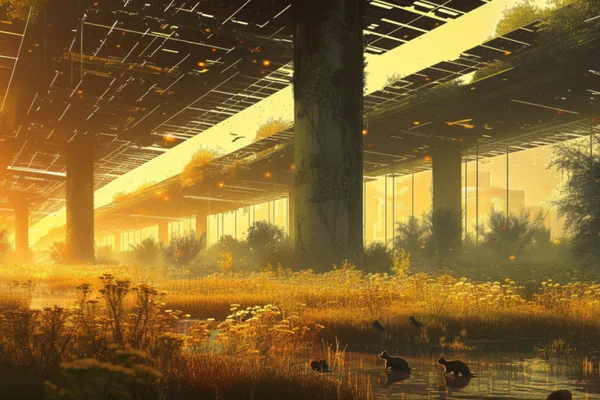
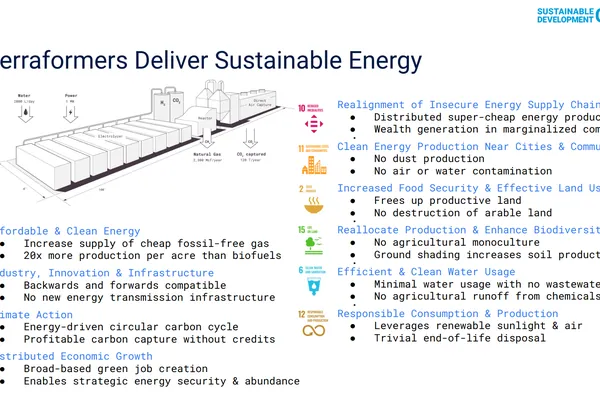
Cheap fuel is nice, but Terraform's synthetic gas also turns out to be good for the planet in ways people don't expect. Twenty times more fuel per acre than corn ethanol, no new pipelines, nothing drilled. Solar PV is a thousand times more productive than photosynthesis, so industry can keep growing and still leave nature most of the land. With pictures of the desert in 2060.
2023
- Permitting Reform Or Death
Solar and wind are now cheaper than coal, so surely we're building them as fast as we possibly can? Not exactly. NEPA and CEQA let anyone add years of delay and absurd compliance costs to any project, and when that project would replace a coal plant, the delay is counted in lives. More than ten a day in the US alone, by my count.
- The Future Of Energy Reading List
TL;DR: the future of energy is solar plus batteries plus synthetics. As of October 2023 the world installs a megawatt of solar every minute. If you want to understand why this was always going to happen, here is everything I've found worth reading on it, sorted by topic, mostly by me, Ramez Naam and Austin Vernon.
- How to Produce Green Hydrogen for $1/kg
Everyone wants green hydrogen at $1/kg, and most people try to get there by making electrolyzers more efficient. With cheap solar that is backwards. The capital cost of the electrolyzer dominates, so the winner is a cheap, somewhat inefficient stack that only runs when the sun shines, and the best technology changes with what you pay for power. Here is the math.
- The Terraformer Mark One
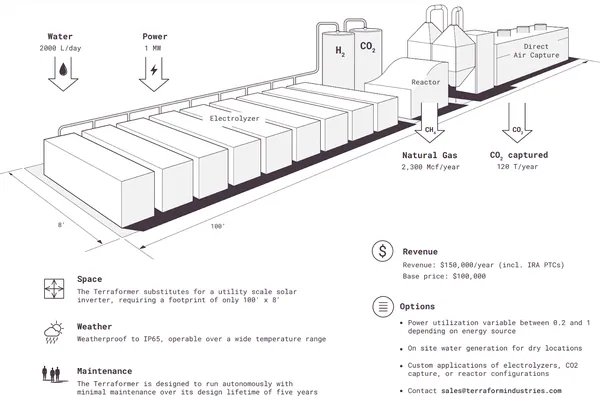
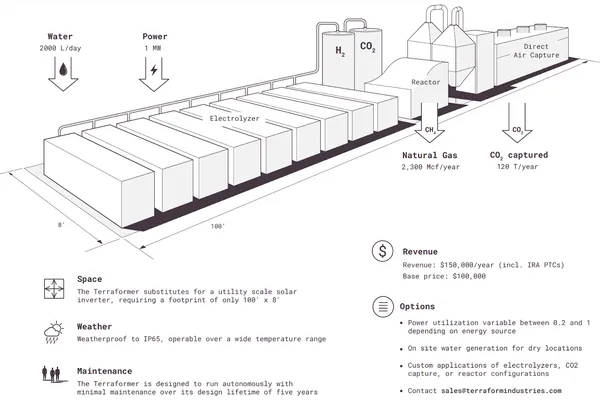
Announcing the Terraformer. Plug it into a 1 MW solar array, no grid connection and no interconnection queue, and it makes 1000 cubic feet of natural gas per hour of sunshine, over 2 million a year. A gigawatt array hosts a thousand of them. Roll out 400 million over two decades and every human gets permanent energy abundance, which was the point of the industrial revolution in the first place.
- Climate Tech Checklist
Six questions any climate play has to answer if it wants to matter. Does it crush drilling and coal mining? Can it reach tens of gigatonnes in a few years without running out of rare metals, farmland or skilled people? Does it make or use enormous amounts of energy? Most proposals fail at least one. Here is the list, and how the Terraformer stacks up against it.
- Terraform Industries Whitepaper 2.0
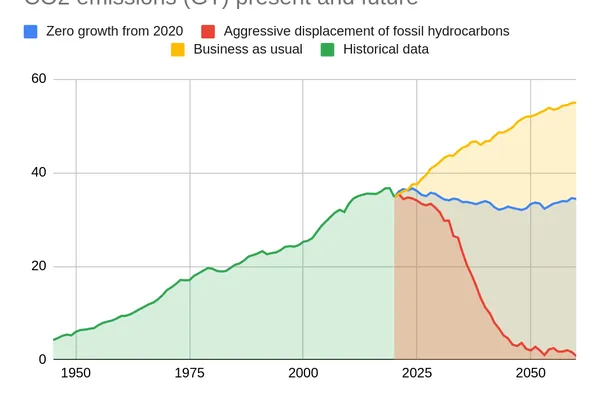
Eleven months after the first whitepaper, an update. We built our first facility and early team, started on the development prototype, and signed sales agreements with key customers. The success condition is net fossil carbon flows below what biology can soak up, about ten times lower than today. Left alone that happens by 2050. With concerted effort we can drag it back into the early 2030s.
2022
- We’re going to need a lot of solar panels
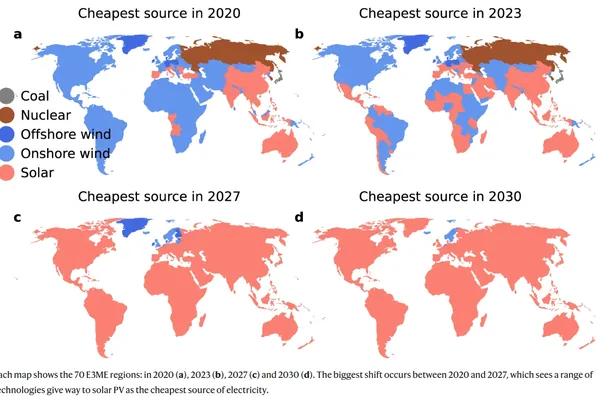
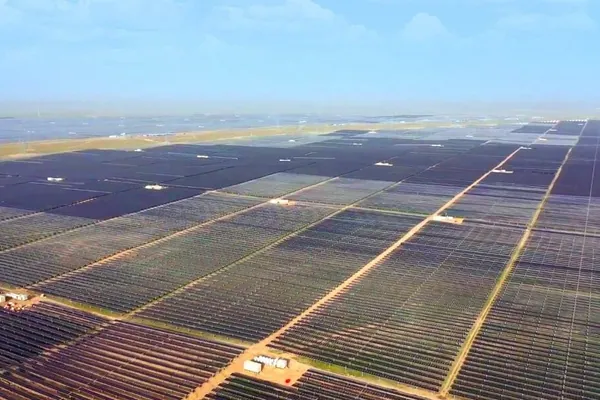
Solar electricity is now so cheap that in a growing number of places it makes more sense to turn it into natural gas than to burn gas to make electricity. I sampled sunshine and population at millions of locations to see how fast synthetic fuel demand arrives as solar gets cheaper. Within eight years of first parity, half the world is in the market and we need more than 100 TW of solar. That is a lot of panels.
- Terraform Industries Whitepaper
Our first whitepaper, February 2022. Sometime this decade, in most places, it will be cheaper to pull carbon out of the air than to drill a mile-deep hole on the other side of the world. Terraform is a bet on cheap solar, synthetic hydrocarbons and hyperscale, and this is the plan to build the machines, plus the team who started building them.
2021
- Scaling Carbon Capture
Our civilization runs on ancient sunlight dug out of the ground. Quitting cold turkey means starvation, carrying on means climate catastrophe, and repricing carbon is political suicide. The way out is carbon capture that makes money, at enormous scale, and we need hundreds of shots on goal. This is also the post where I quit JPL to found Terraform Industries.
- So you want to build a carbon capture company
Carbon capture is all the rage and I get asked about it a lot, so here is the rubric I use to sort the good ideas from the perpetual motion machines. Physics first: how much energy does it really use, and what does it know that no-one else does? Then finance: who pays, how much, and is your carbon capture company secretly a zeolite factory?