
Permitting Reform Or Death
Now that solar and wind are both significantly cheaper than coal, we should be accelerating deployment using every financial and regulatory tool we have available, right? Right?? Well, not exactly.
[The same week I published this, Sammy Roth at LA Times and Jennifer Pahlka at Washington Post wrote similar, though more rigorous, articles!]
The National Environmental Policy Act (NEPA) and state versions, such as CEQA, among many other laws, act to slow down all kinds of development. While the text of the law when implemented in 1970 was intended to promote disclosure of impacts, it is now routinely used by (WLOG) NIMBYs to automatically add 2-6 years of delay, plus insanely high compliance costs, to potentially any development.
Well and good, if the intention is to raise the bar for new developments, slow down environmental harms, and incidentally funnel money into compliance consultancies, what’s the harm? Sure, our society is struggling beneath the weight of cost disease and an inability to do anything quickly, but we’re much richer and live much longer than we used to – we can usually afford it.
Conventional development was usually zero sum with environmental interests. The natural world was the default source of extractive wealth. It seemed reasonable to pump the brakes in 1970 when so little of the pre-industrial landscape remained and conventional practices were, to put it mildly, disrespectful of the planet we will mostly all have to live on for the rest of the history of the universe.
Unfortunately, when it comes to energy development, this is no longer the case. Applying the brakes now just delays the retirement of polluting legacy systems and their replacement with far cleaner, cheaper, and more productive modern alternatives. In extreme cases, our collective failure to build has left us with yawning productivity and skill gaps that threaten the very foundations of our civilization.
For the purposes of this discussion, I want to discuss the construction of solar arrays, battery storage facilities, and synthetic fuel plants that will, sooner or later, displace coal, oil, and gas-fired power plants, wells, and refineries.
Right off the top, it should be clear that placing solar arrays on desert land has less impact to the environment than coal mining or even agriculture, and also doesn’t result in CO2 emission. New solar development provides cheaper energy with much lower impact – a win win.
Yet solar development is hopelessly snarled by dozens of different development regulations which begin with the assumption that it will permanently and severely harm the environment unless proven otherwise, at exhaustive length. Each new US-based solar project typically requires 2-5 years just for permitting approval, and up to 10 years for grid interconnection due to grid development being similarly hamstrung. Each separate project requires its own individual environmental impact statement running to thousands of pages, adding enormous cost (and killing hundreds of trees), simply to provide sufficient protection against the possibility of vexatious litigation that is often intended only to slow projects down until the financiers give up.
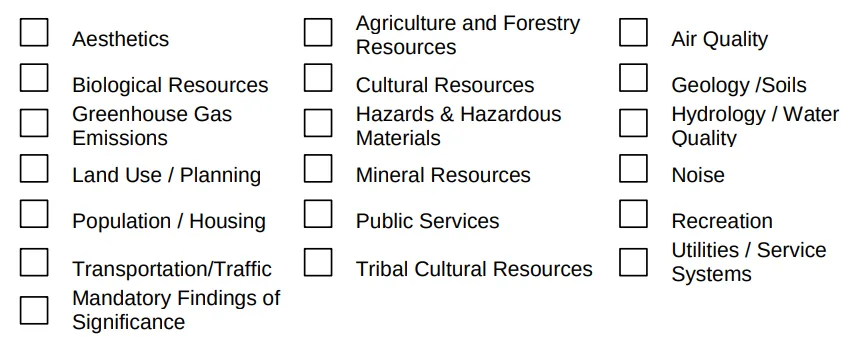
For the rest of this post, I will examine the 19 key triggers spelled out in Appendix G of CEQA, examining both the local and global impacts of the development of solar arrays, batteries, and synthetic fuel. Finally, I will discuss the human cost of permitting delays.
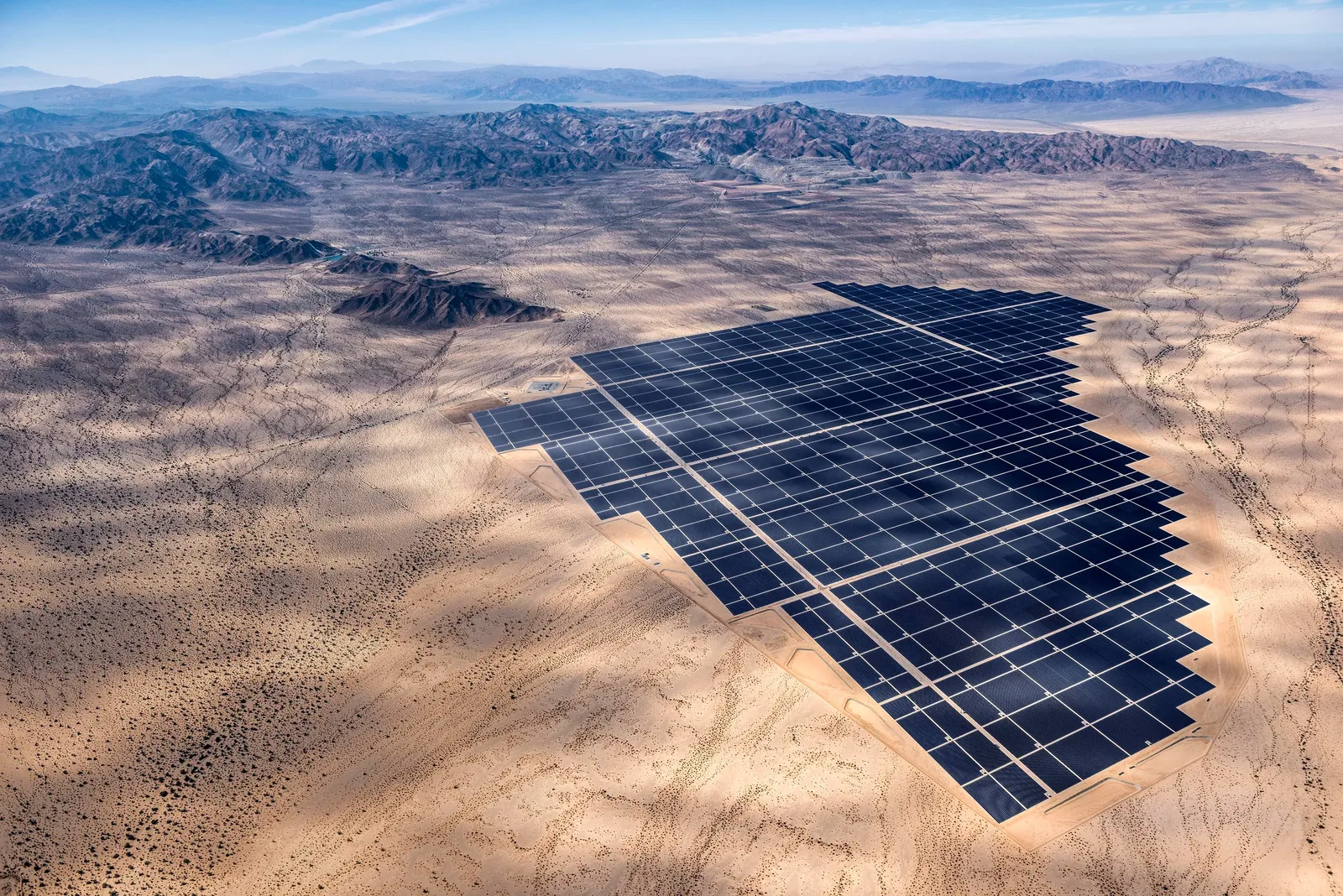
First, let’s consider a hypothetical 1 GW solar array, which covers roughly 6000 acres (10 sqmi) of un-irrigated, undeveloped, arid land in the American West, similar to the Desert Sunlight Solar Plant. For reference the west has several hundred million acres of such land, much of it federal under BLM or similar.
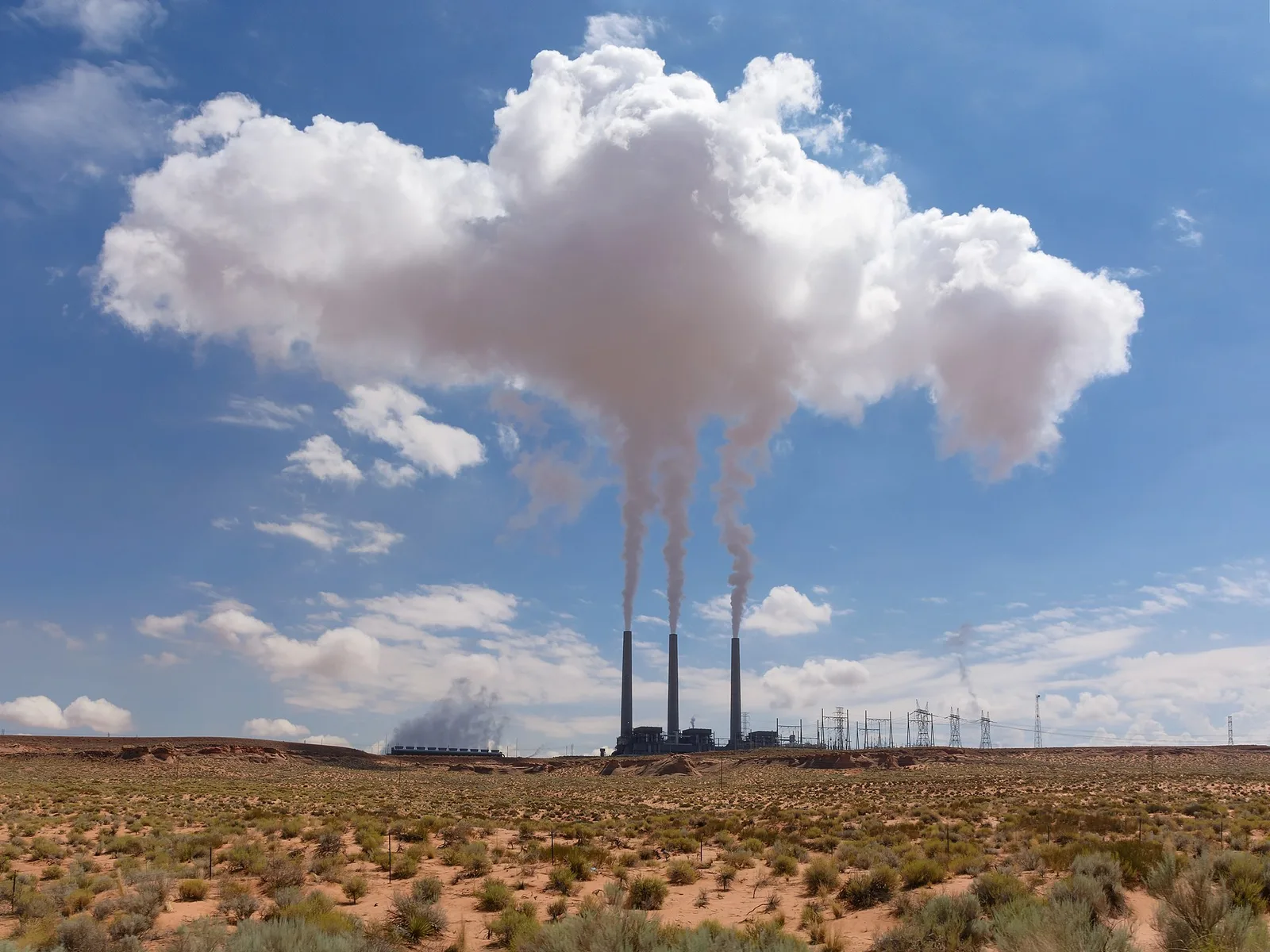
For global comparisons, we’ll compare it to a legacy large scale coal plant such as the Navajo Generation Station.
On all 19 categories, the solar plant has significantly lower impact than the legacy coal plant, except that it covers more land on an area per GW basis. So what is the impact of consuming this land?
Aesthetics: Barely relevant as the development areas are, at most, sparsely populated and the panels are positioned low to the ground making them hard to see, even for passing motorists.
Biological Resources: Desert plants and animals are susceptible to disturbance of their habitat in an absolute sense, however the ecological density of desert land is lower than all but land buried beneath glacial ice or extremely steep tall mountains, both of which are barely represented in the continental US on a per-area basis. Solar development has much less impact than conversion of desert land for agricultural usage, which requires a far less onerous permitting process, since the public good of growing food is recognized in a way that solar electricity is not. In fact, there are few uses of land which have less biological impact than solar development, and in some cases shading of arid ground has been found to improve moisture retention and to contribute to slowing or even reversing the ongoing desertification of marginal land. They also have much lower impact than open cut coal mining required to feed coal power plants. Finally, if a solar array is to be removed and the land remediated, the cost and difficulty of doing this is lower than any other kind of development. Unrack the solar arrays, and the land reverts to useless desert.
Greenhouse Gas Emissions: Solar land use only reduces the carbon intensity of generated energy.
Land use/Planning: Whereas the relatively expensive process of irrigating arid regions brings otherwise useless land into economic productivity, solar development is cheaper, lower impact, and about 100x more economically productive per unit area. Solar PV is the single largest land arbitrage technology ever invented.
Population/Housing: Not super relevant for solar, since production occurs in mostly unpopulated areas. Rooftop solar in urban areas, however, is more than twice as cheap in Australia, largely because of regulatory issues. It’s hard to believe Australian energy policy is less retrograde than the US, but in this case it might just be!
Transportation/Traffic: Solar deployment in desert areas requires extremely minimal road development, compared to any other human use of otherwise unpopulated land. Within the US, the national highway network provides an efficient way to transport panels to and from development sites.
Mandatory Findings of Significance: Applies to developments with potentially catastrophic impacts on environment or humans. This regulation was initially intended only for certain developments as a checkbox to force the writing of an EIS, but the process has since devolved to every development requiring a >1000 page EIS anyway…
Agriculture and Forestry Resources: Solar PV development on arid land doesn’t impact forestry, but there are valid arguments in favor of not paving over productive agricultural land with solar arrays. This discussion often misses the fact that solar PV electricity is 100-1000x more productive per unit area of land than biofuels or biomass-powered electricity. Essentially every acre of solar frees up 100-1000 acres of agricultural land. Remember that prior to the adoption of industrial mechanized agriculture, much of what we now know as infinite fields of corn and soy from Nebraska to Pennsylvania was ecologically productive land with prairie and forest, bison, deer, cougars and all the other north american animals now pushed to the margins or to extinction. People who are concerned about ecological restoration should continue to champion solar development in remote arid regions as it reduces pressure on temperate environments with leverage >100:1.
Cultural Resources: One virtue of solar development in arid sparsely populated land is that legacy land uses, if any, consist of long forgotten mines and abandoned ghost towns. See, for example, this map of documented ghost towns that mostly have no remaining traces.
Hazards and Hazardous Materials: Unlike coal, which is often contaminated with sulfur and radon, solar arrays are constructed of minimal quantities low cost, generic materials with no moving parts and trending towards automated deployment with little to no physical risk to anyone involved. Silicon-based solar panels are no more toxic than the sun-parched land they sit upon, and can be indiscriminately landfilled at end-of-life, if recyclers can’t economically recover the metals they’re made from. Compared to any other method of producing electricity, they are so safe I would let my young children play with them!
Mineral Resources: It is unclear how a solar development could block subsequent development of mineral resources, but in the event a valuable mine was discovered on developed land it is not expensive or difficult to remove a solar array. Not in an absolute sense, and not compared to any other electricity generation method.
Public Services: Solar development actively increases the supply of low cost energy to consumers with extremely limited externalities or impacts on public services. Increased economic productivity of remote desert areas may promote investment in resources to serve populations that serve development and maintenance.
Tribal Cultural Resources: While American Indians lived (and live) in desert areas and maintain connections to a variety of culturally significant places, there is no shortage of undistinguished undeveloped uninhabited land. Often, indigenous communities are best positioned to benefit from solar development in their areas and actively promote development but are stymied by the same well-meaning but counterproductive regulatory hurdles that consign their communities to under-developed poverty.
Air Quality: Solar has far lower air pollution than any fossil-based generation method. Solar development itself can result in limited soil disturbance but can also have a soil-strengthening impact due to shading and moisture retention, so even local impacts during construction are not exactly worthy of a >1000 page EIS!
Geology/Soils: Solar PV involves no significant disturbance of local soils, it displaces coal/oil/gas extraction and combustion, and creates no toxic runoff.
Hydrology/Water Quality: Unlike thermal power plants, which consume vast quantities of water, or hydroelectric power plants, which flood enormous river valleys, solar is typically developed in relatively arid, undeveloped areas and has no particular impact on hydrology. It has significantly less impact even than a parking lot, as its construction does not involve sealing off the soil from the atmosphere!
Noise: Solar arrays are inert glass panels with no moving parts. They don’t even make space-age whooshing noises like wind turbines. They require no ongoing shipments of coal on noisy, heavy trains.
Recreation: Unlike hydroelectricity, solar does not create huge new lakes to zoom around in on boats, but this is not a considerable environmental impact. Solar generates electricity without the emissions of coal or gas, both of which impact recreation.
Utilities/Service Systems: Ongoing solar development and increased energy demand places pressure on grid transmission – whose development is also stymied by regulatory inertia, now to the tune of a 10 (!) year delay in getting grid interconnects. Co-located battery development (with essentially zero environmental impact) can help improve utilization of the grid, which is otherwise built to match peak demand rather than average use. Further, beyond-the-grid solar development for industrial applications including carbon-neutral fuel synthesis can greatly increase economic productivity while actively displacing incredibly polluting legacy applications.
In summary, it is hard to imagine a lower impact use of low-value land than solar development. Considered within their own boundaries, solar farms in desert areas have significantly lower impact than practically any other human use of land, including farming, grazing, or building. In some cases they even improve soil quality and increase local biomass. At end of life, their removal and disposal is nearly trivial compared to any other form of construction or power generation. Thousands of solar farms have been successfully developed in the US with near identical EISes and ultimate findings of marginal impact, and yet every new development still has to endure the high cost and delays of yet another top-to-bottom regulatory process whose outcome everyone already knows is a foregone conclusion!
Solar stands on its own merits but considered relative to fossil power generation with which it directly competes, solar’s environmental impact is hundreds if not thousands of times lower, even if CO2 emissions and their effect on climate are not included. Including the effects of CO2, it is clear that solar is the only way to cut CO2 emissions at scale, and so it is only a matter of time before solar displaces legacy emitting processes. The primary driver of increased impact, longer time scales before displacement, and catastrophically high levels of avoidable pollution is environmental protection regulations. This is beyond ironic!
Regulatory reform isn’t a hand out or a subsidy – much of the current, and relatively modest array of green energy subsidies are already wasted on the army of consultants who churn out permitting paperwork whose negative impact, in terms of trees felled to make paper, is probably higher than the project they’re describing!
The previous discussion covers environmental impact but it turns out there’s a horrifying human welfare impact directly caused by regulatory delays. While permitting is usually held up as an essential safeguard on human well being, the stakes surrounding the energy transition are so high, and the relative safety of newer vs legacy energy sources so stark, that delays are directly responsible for the miserable deaths of millions of people worldwide, largely from pollution-induced respiratory failure – a bad way to go.
Let us consider a hypothetical 1 GW solar array which could be deployed today, but for regulatory issues. In this example, we ignore the compounding costs of permitting and consider only the time impact.
Our World In Data collates information on the morbidity and mortality of various forms of energy.
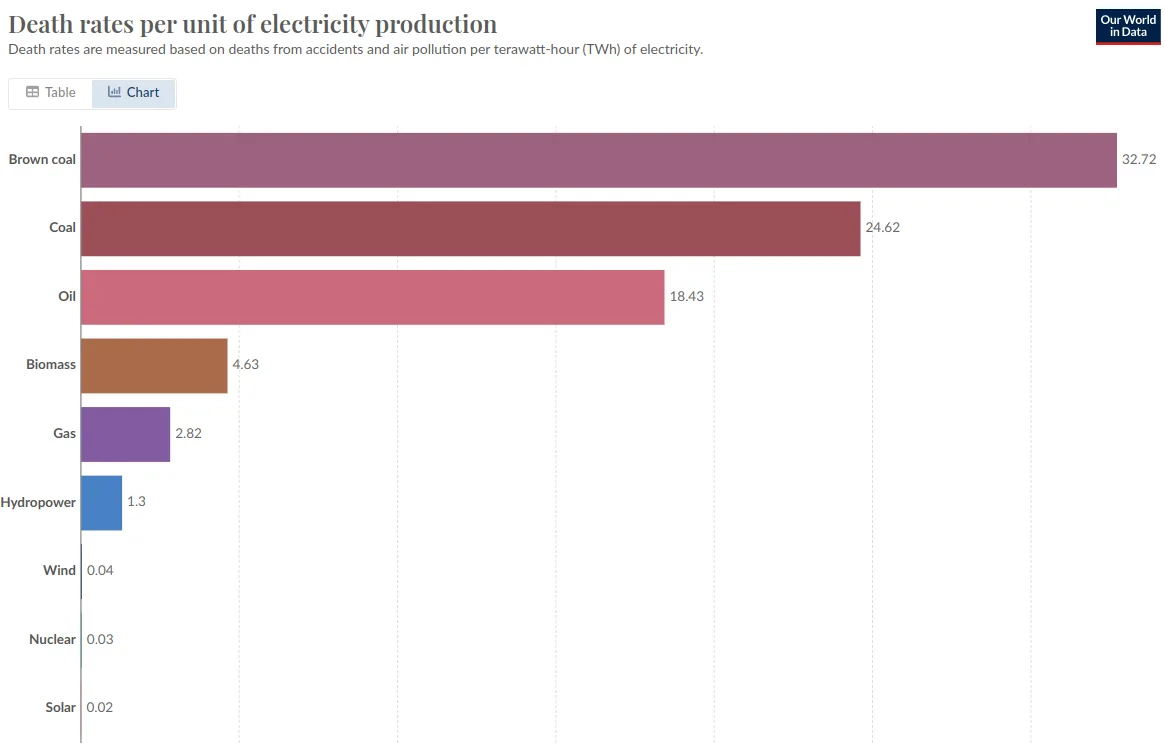
A 1 GW solar array at 25% utilization (the sun doesn’t always shine) produces about 2200 GWh of energy per year. The death rate of wind, nuclear, and solar rounds to zero, so let’s instead calculate the impact of 2200 GWh of legacy energy production from brown coal: 72 lives per year. In the US today, permitting adds about 4 years (288 lives/GW) of delay, while the growing interconnection queue caused by sluggish expansion of transmission capacity is already 10 years (720 lives/GW).
The US needs to add roughly 6 TW of solar to displace 220 GW of coal and 570 GW of natural gas, which together are responsible for about 4000 premature deaths per year.
Volkswagen’s “cheating diesels” emitted enough excess pollution to kill ~100 people from 11 million vehicles, and as of 2020 had cost the company more than $33b, or $3000 per vehicle sold. Shocking corporate malfeasance, with an impact roughly equivalent to the business-as-usual permitting delay inflicted on a 250 MW solar array – the typical current development size.
The terrorist attacks on 9/11 killed 2996 people in a day of singular horror. Our ongoing indifference to regulatory inefficiency, considering only the area of green energy development, kills more people every year – more than 10 people per day, and that’s only within the US.
This is the real human cost to slow walking regulatory reform for solar deployment. Solar is mostly privately funded development that is of almost trivially low true environmental impact locally and a huge net positive globally, and all we have to do is get out of the way.
Finally, we must remember that energy is the basis of material wealth. Our lives are unimaginably longer, healthier, happier, safer, and more interesting than those of our ancestors, because we found cheaper ways to get energy than chasing animals into swamps or picking berries after a winter of starvation. If we want to build a world of abundance for every human on Earth, there is a moral imperative to continue to fight our way towards cheaper and more productive sources of energy. In solar, we have a way to extend energy and material abundance to billions more people while positively improving the environment, and every year we waste is a billion wasted person-years.