
Doing It The Hard Way
Dawson James, Senior Direct Air Capture Mechanical Engineer
Where I come from
I am the fifth generation of my family to live and work on the same piece of land in the prairies of Saskatchewan, Canada. For over a century, my family has read the sky, worked the soil, and depended on the land staying productive for the next generation. On the farm, I learned a simple rule: you don’t take from tomorrow to pay for today.
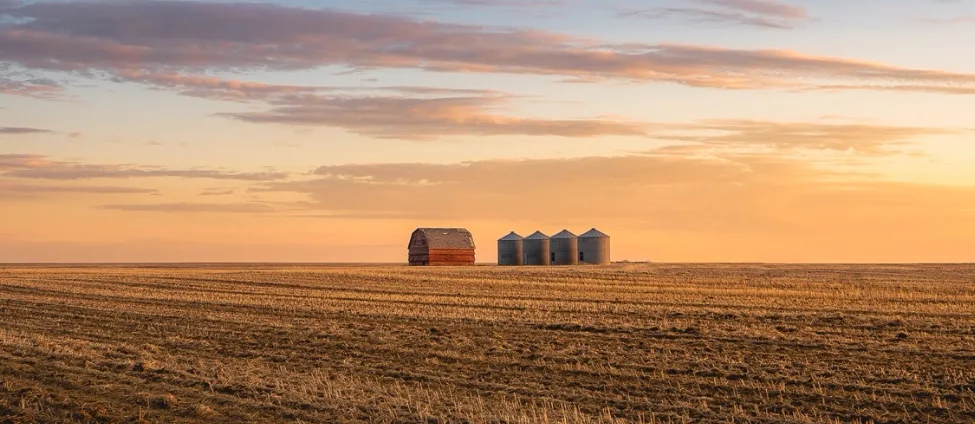
That rule is harder to follow than it sounds. A modern farm runs on diesel, fertilizer made from natural gas, and grid power. In the last few years, fuel and fertilizer prices have swung so wildly that if you bought at the wrong time, your profit for the year evaporated. For my grandfather, fuel and fertilizer were a fraction of the total cost. Now they are among the largest.
Looking for the right problem
I left the farm to find an answer to one question: how do we power a modern farming operation, and everything else, without drawing down resources that won’t come back?
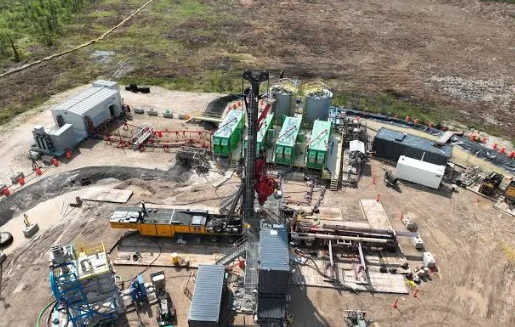
I’ve spent most of my career chasing pieces of that answer. Right out of school, I joined Areva (now Orano) at McClean Lake in northern Saskatchewan to work on SABRE, a way of mining uranium by drilling from the surface and cutting ore out with a high-pressure water jet. I ran a shift during the 2014 campaign, the first time the program pulled a significant amount of ore with equipment built for the method, and that season locked in most of the techniques the program still uses. Then the project slowed into a long design phase, and after two years I left to find work where I could build things faster. The first commercial SABRE mining started in 2025, more than a decade after our campaign.
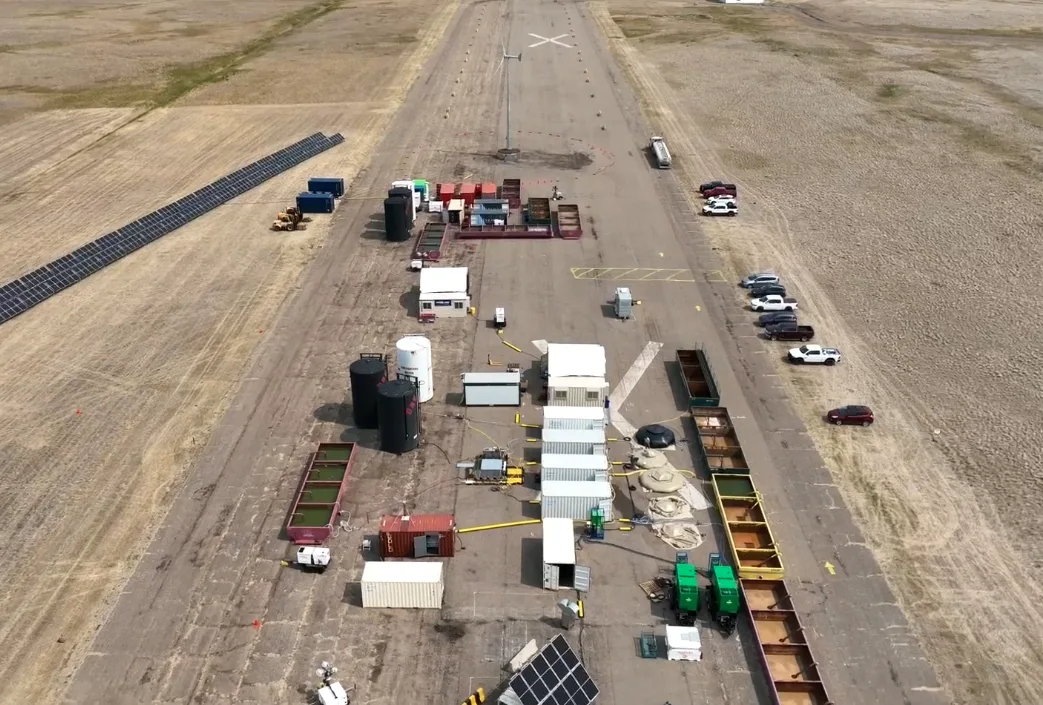
Alongside all of that, I was building a company. A few friends and I founded Innocorps Research in university, starting with equipment built in my garage, and I worked other jobs to keep it going while we patented a method for recovering clean water from industrial waste and black water. That work took us into the Department of National Defence’s IDEaS Pop Up City contest, a four-round competition to rethink how the Canadian Armed Forces supply temporary camps with water, power, and waste handling. Our Circular City team won the $2 million grand prize at Canadian Forces Base Suffield in 2023, cutting solid waste tenfold and recycling the camp’s wastewater into drinking water that met Health Canada guidelines. I drank it straight from the output before the lab results came back, and I’m still here. But a prize isn’t a procurement contract, and a small company can’t wait years for one. Eventually I couldn’t justify paying myself anymore, and I moved on.
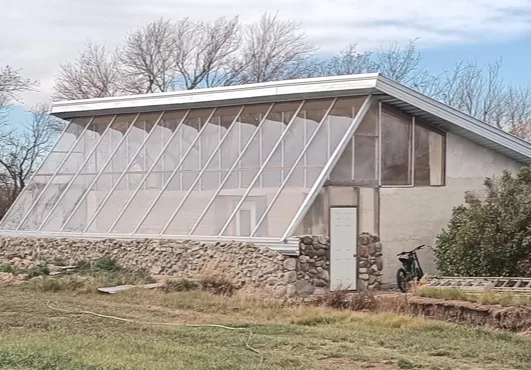
Then my brother and I went back to the farm and built off-grid homes, with the goal of producing more than they used. We designed for thermal efficiency first: thermal mass walls to store winter sun, and roof overhangs sized to let the low winter sun in and shade the glass from the high summer sun. Solar panels and batteries supplied the power, water and wastewater were treated on site, and our second building was coupled to a four-season greenhouse that grew food year round. The first one overshot and ran too hot to live in, so it became our workshop. They hold up from -40°C to +40°C. A house can collect enough sunlight to run itself, but a farm, let alone the plants that make its fuel and fertilizer, needs far more energy than that.
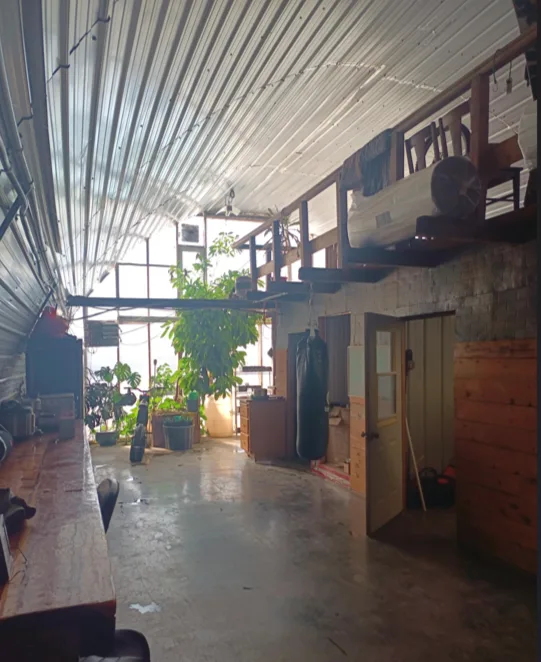
Each of those projects solved a piece of the problem but none got to the core. SABRE showed me how long good technology can take to reach the field. Innocorps showed me that technology that works still loses if it can’t win on cost and timing. The houses showed me that sunlight can run a household, but not an industry. Back on the farm, we still needed diesel and fertilizer to turn a profit, and fossil fuels keep winning because they are cheap, dense, and available on demand. Anything that replaces them has to beat them on cost.
Finding Terraform
I was researching ways to turn solar power into fuel and fertilizer, the two biggest bills on the farm. Fertilizer interested me most: the nitrogen is free in the air, and the hard part is making the hydrogen and finding the energy to break the nitrogen bond. But I was still looking at fuel too, and that research led me to episode 36 of the S3 YouTube channel, which covered Terraform Industries. They had just run their first full-loop Terraformer, making methane from air, water and electricity, with the goal of producing it cheaper than gas pulled out of the ground. It was almost exactly what I wanted, because farm machinery can run on methane. The only problem was that there was nothing I could buy yet. So I decided to go help build it.
By then, I was mostly a seasonal hand on the farm, and my dad, uncle and brother could handle the work without me. I wanted a challenge, so I applied. A day or two later I had a screening call with Casey Handmer, Terraform’s founder and CEO. The way he thought about the problem convinced me the project was feasible. After a deep dive with one of the DAC team members, they invited me for an onsite and gave me a week to prepare, along with a homework problem: design a flash calciner with cyclones that could calcine carbonate material. Flash calciners with cyclone separation are a standard industrial method, and at the time it was the path Terraform’s calciner was on. It later proved infeasible for our process, but that homework was my first look at the problem I’ve been working on ever since. I flew from Saskatchewan to Burbank, from farm life to the biggest metro area on the West Coast, did the day-long onsite, and got a job offer that evening. They wanted me to start in three weeks and they wanted me to lead the Direct Air Capture team, to pull carbon dioxide (CO2) from the air as cheaply as possible.
The problem
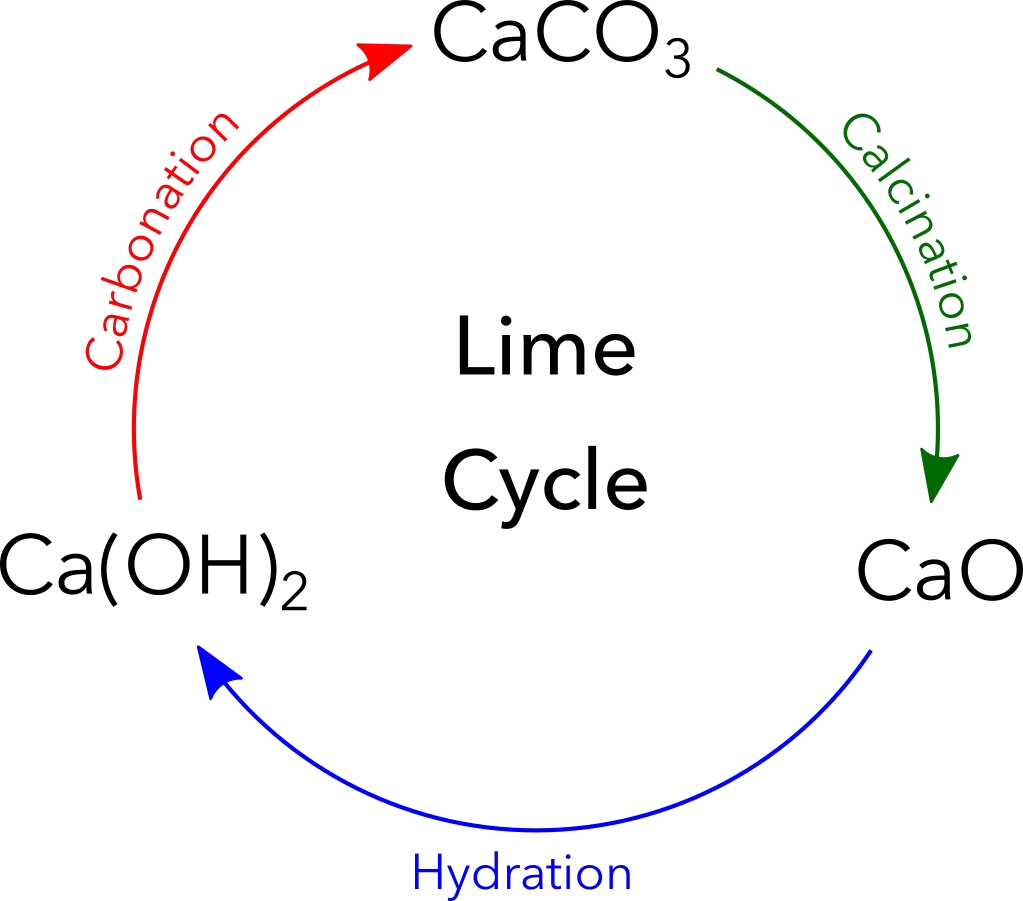
We had to build three major components that work together in a loop to pull CO₂ out of the air and deliver it as a pure stream suitable for a reactor. This is called the Lime cycle. The carbonator moves a large volume of air past the sorbent, which captures CO₂ and turns into carbonate. The calciner heats the carbonate to release pure CO₂ and leaves quicklime behind. The hydrator turns the quicklime back into fresh sorbent so the loop can start again. None of the three is as simple as it sounds, and that’s where doing it the hard way starts.
Pulling CO₂ out of the air
To make fuel from air, you first need a pure stream of CO₂. CO₂ in the atmosphere is about 425 to 430 parts per million, so you have to move an enormous amount of air to collect a useful amount of it. On a volume-to-volume basis, it’s roughly one million to one.
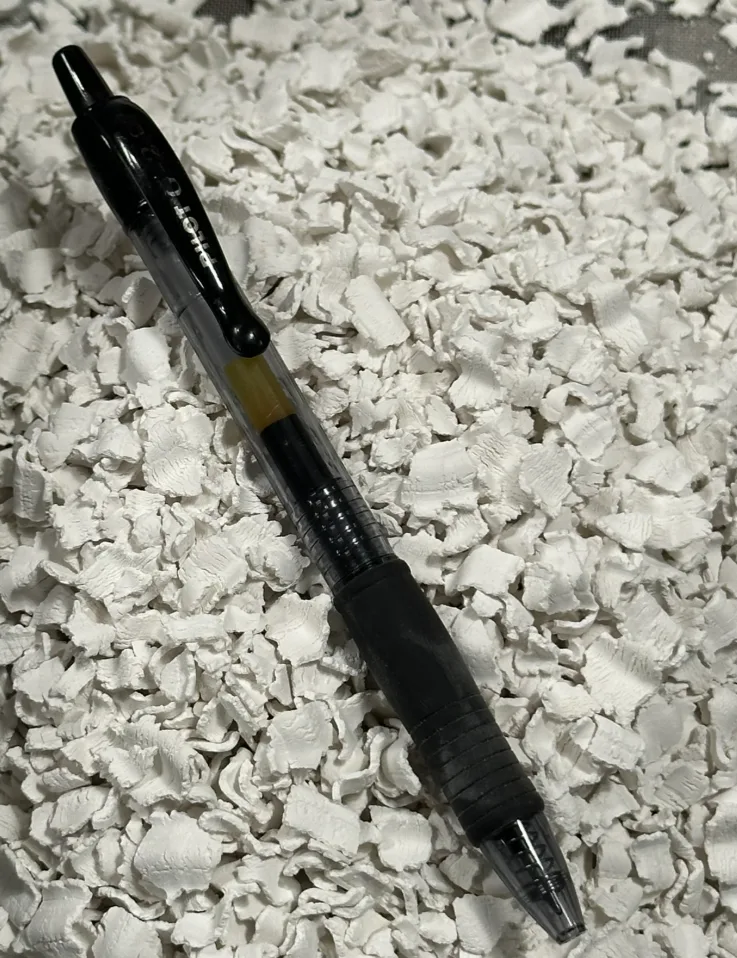
Our Direct Air Capture (DAC) system uses hydrated lime, Ca(OH)₂, which reacts with CO₂ in the air to form calcium carbonate, CaCO₃. The chemistry is old and well understood. The hard part is material handling. Lime wants to be a powder, and powder blows away. We have to form it into a structure that holds together and doesn’t turn to dust, leaves room for air to flow through, and still reacts fast enough to be worth the energy spent moving the air. That means hitting several narrow windows at once: humidity, temperature, and how the material is formed. One of my first successes at Terraform was finding a way to form flakes effectively in large amounts using off the shelf equipment.
The team
When I started at Terraform, the DAC team was small: one senior engineer and two technicians. Several approaches to calcium looping had already been tried, and none had worked yet. Casey was upfront with me: I might be taking on a problem that didn’t have a viable solution, but the company needed one to succeed. I’m not one to back down from a challenge, so we got to work.
Russ, the senior engineer, had been on the team the longest and had seen nearly every method we’d pursued. His focus was hydration, but he got me up to speed on where the system stood and what had already been tried. He had an encyclopedic knowledge of the tests available to us and was good at explaining complex processes, like the energy flows through a system, with diagrams. Our two technicians, Jo and Eghan, each brought their own set of skills that made the builds possible, spanning trades and art forms from welding to pottery.
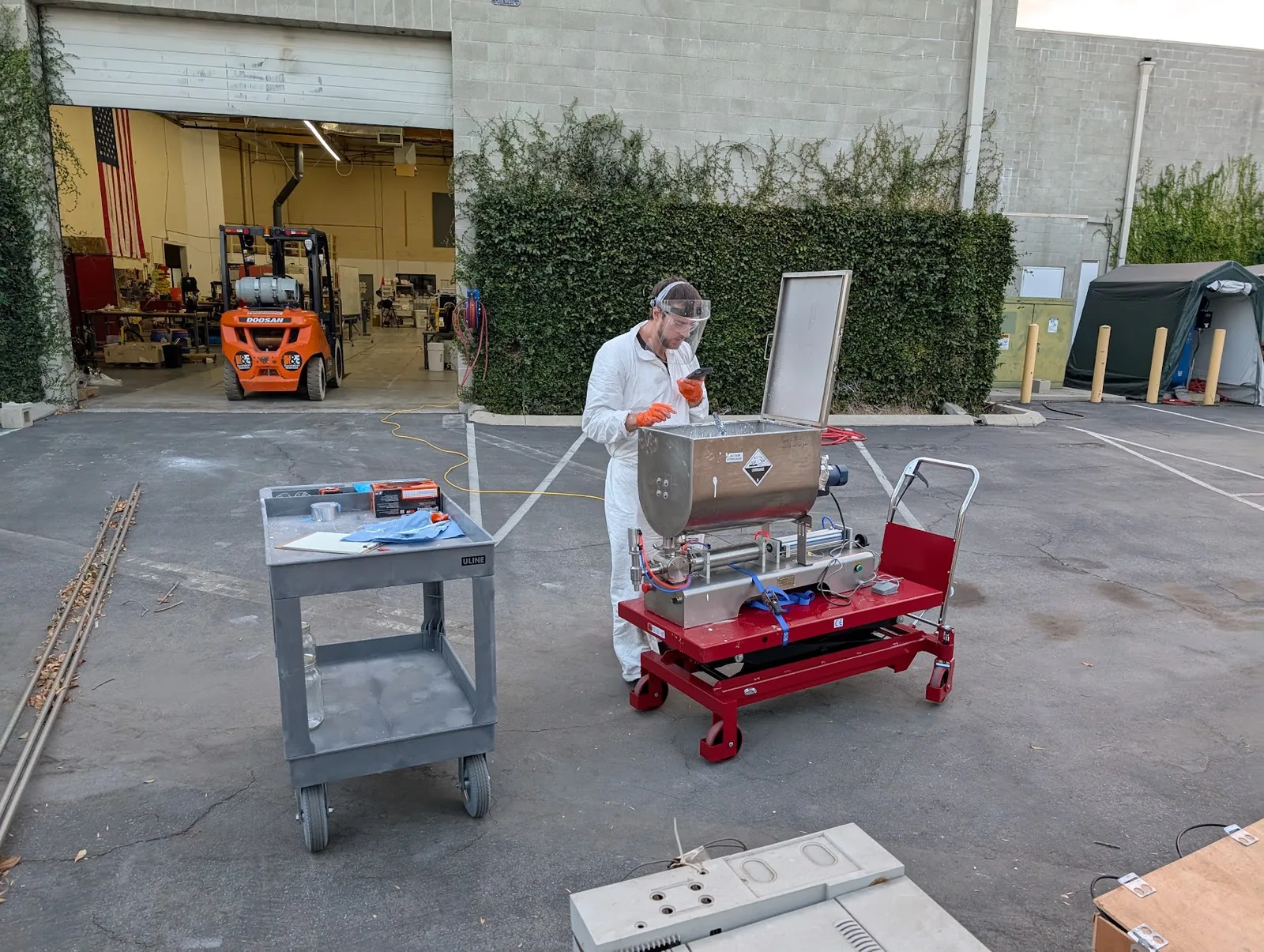
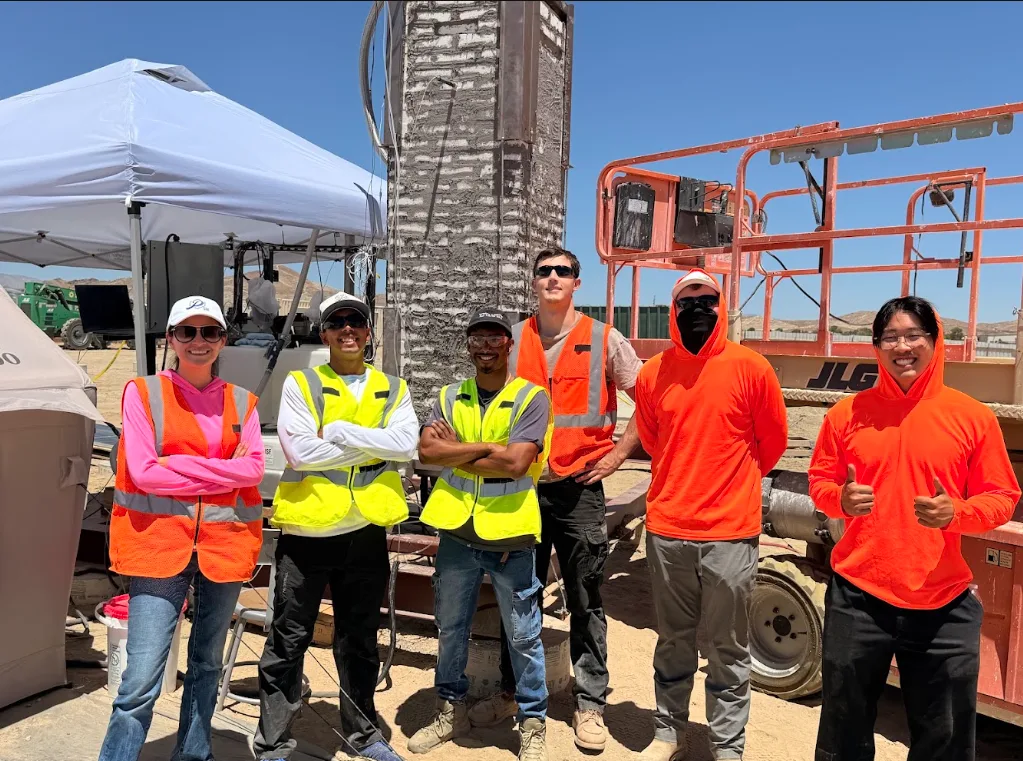
We built out the rest of the team with interns, starting with Jake and AK, and later Aggy. They came straight out of school with a lot of drive and energy, and all of them moved up the skill tree quickly and took ownership of projects across the three main branches of calcium looping. Along the way, Katie joined as a summer intern and Brian as a consultant. That was the team for the first year, and this year we’ve started expanding again.
Getting the CO₂ back out: the calciner
Once the CO₂ is locked up as limestone, we have to get it back out. That step is calcination, one of the oldest chemical processes people use. Lime has been made by heating limestone since the Neolithic.
Heating limestone drives off CO₂ and leaves quicklime, CaO. Pure CaCO₃ loses about 44% of its mass as CO₂ when it calcines. The CaO goes back to the hydrator and the loop starts over.
Industry does this every day in large kilns, but the normal way breaks every one of our rules.
Why conventional calcination doesn’t work for us
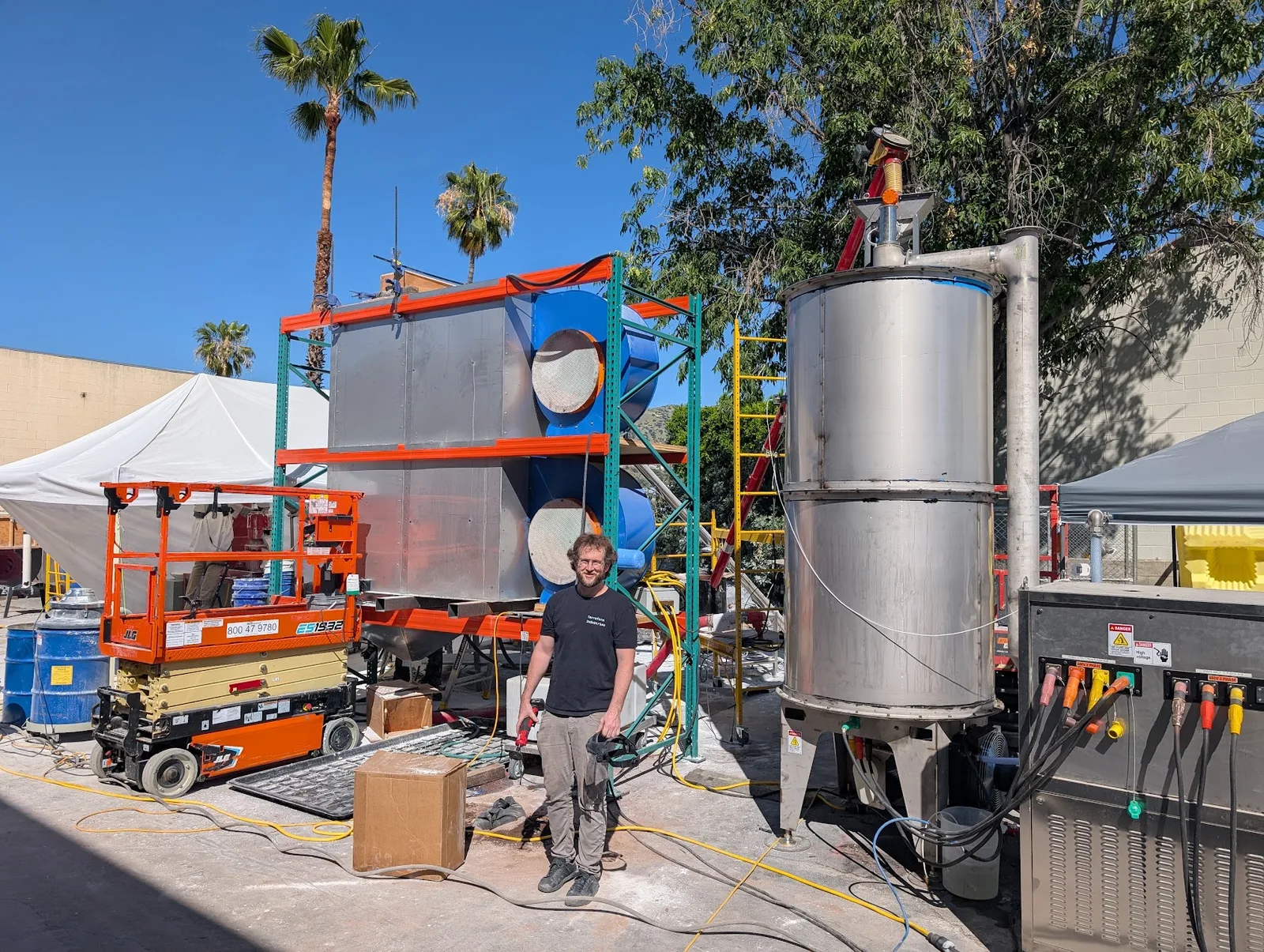
A cement or lime kiln burns fuel to make heat, and the CO₂ from the fuel and from the limestone goes up the stack together. We can’t burn anything, and the whole point is to capture the CO₂ that comes off. Industrial kilns also take days to reach temperature and run continuously until they need a rebuild. Because our power comes from solar panels, the calciner has to go from cold to operating temperature in about an hour each morning, run through the day, and cool down overnight. That combination rules out almost every conventional design and a lot of unconventional ones.
What we tried
Before building anything new, we went back to how calcination is done elsewhere. Rotary and shaft kilns, and the flash calciners used for fine material, all burn fuel, so the CO₂ they release comes out diluted with combustion gases. Vacuum calcination drops the decomposition temperature from about 900°C under one atmosphere of CO₂ to roughly 750°C at a tenth of an atmosphere, but nobody has made it work as a continuous process. Plasma calciners deliver enormous power in a small space, but they overshoot the temperature by thousands of degrees and wear out their electrodes. Electrochemical routes run at room temperature, but they use more energy and make Ca(OH)₂ instead of CaO. The closest match to what we wanted was the electrically heated fluidized bed, where the CO₂ released by the reaction is itself the gas that fluidizes the bed.
Terraform had also built numerous calciners of its own before I arrived, and each one taught us something. One of the early ones was a tube furnace: a quartz tube inside a clamshell of Kanthal wire heaters, loaded with a batch of carbonate and sealed. It made CO₂, but it was a batch process, and hot CaO attacked quartz. Next came what the team called the giant toaster, an array of plates with embedded heating wire that flakes flowed down between. The material sintered, bridged the gaps, and locked up the whole machine with no easy way to clean it out. The rotary valves at the top and bottom couldn’t handle the powder, and steam clogged the inlet and corroded the heating wire.
The Thor heater was the flash calciner with cyclones that Terraform was building when I interviewed. An array of silicon carbide elements heated a stream of CO₂ that carried the carbonate through a cyclone, then a recuperator cooled the gas and a blower sent it around again. It was partly built when I joined. After some initial tests on the gas heater, I ran the numbers and showed it couldn’t work: the gas couldn’t be heated enough in a single pass, and the cyclone would lose heat faster than the heaters could put it in. We changed direction before the buildout was finished.
So, I pursued the drop tube calciner instead. Silicon carbide elements surrounded a ceramic tube inside a sealed vessel, and material dropped through the heated zone to flash calcine above 1100°C. It worked in the way that mattered most: It produced CO₂ and fully calcined material. However, it never reached our purity or production targets. As a continuous process, it depended on feeding material in and taking it out without interruption, and we couldn’t make the feed and takeoff systems run reliably. The tubes were prone to failure, the CaO attacked the insulation, and too many parts were running at their limits.
We stepped back and ran a fast, cheap prototyping sprint, building and testing candidate approaches in weeks instead of months. Most were ruled out, some on paper before we built anything, and we settled on a new design.
Then testing surprised us. One of the hardest parts of the design turned out to be unnecessary, and taking that part out deleted a large share of the system’s complexity, along with the grinding, the particle sizing, and the material loss that came with it. We reused what had worked in earlier systems and deleted everything else. The result is a simple, electrically heated batch calciner that produces CO₂ at 99.9% purity and meets our production target.
We scaled this architecture from a simple prototype to a ~30 kW unit in just two weeks, brought it out to the Muroc test site, and operated our first fully solar-powered calciner, generating pure CO₂ directly from off-grid DC electricity. It was our tenth ground-up redesign, and now I understand why many other teams have not managed to solve this problem – they gave up after the ninth attempt.
The hard part for me
The hardest part wasn’t the technical problems. It was managing the team. The DAC system threw a wide spectrum of problems at us at once, and trying to cover all of them pulled my focus away from overseeing the work and delegating it well. Our leadership saw it before I fully did, and brought in Stephanie to manage the team so I could focus on the engineering. That’s why I spent the final stretch on the calciner’s latest prototype, the one that hit our production and purity goals and proved our models for scaling. It’s where I did my best work. Knowing where you’re most useful is part of doing it the hard way too.
Why this matters
Every one of these problems is solvable, but none of them are solved by copying what industry already does. That is what doing it the hard way means here: going back to first principles on processes that have barely changed in centuries, because the old way only works if you can burn fuel and vent the CO₂. Now, we have a calciner that works, and the next hard problem is building them by the thousands.
Someday I want the sixth generation on our land to fill the tractor with fuel made from the same sunlight that grows the crops. No more taking from tomorrow to pay for today.
Join us
We’re hiring. If you want to work on problems like the calciner, where the textbook answer doesn’t work and you have to build your way to one that does, there’s a place for you here. Open roles right now include Direct Air Capture Mechanical Engineer and Direct Air Capture Technician, along with roles across our electrolyzer, reactor, methanol, ammonia and solar teams. The full list is at terraformindustries.com.
Send your resume and one page of evidence that you can execute, like a summary of hardware you’ve designed, built and tested, to hiring@terraformindustries.com. I showed up from a farm in Saskatchewan with a homework problem and a week to prepare. If you build things, we want to hear from you. Every role is on site at our castle in Burbank.