
My “Free” MBA
Ken Nelson, Manufacturing at Terraform Industries
Journal entry from January 2021: “Something bad is going to happen this year. I just hope I don’t die.”
And the adventure begins…
Steel pipe is an unforgiving seat, especially two hours in. The back of the truck is perforated with a few grated windows that chop the passing world into meaningless slivers of light. It’s hard to tell where we are. The guy next to me needs to pee—a delicate situation when all twenty of you are handcuffed together. A bottle was procured, assistance rendered. Thankfully his needs were not of a more substantial nature.
We have to be close.
At about three hours we pass through metal gates. Big metal gates. Like a castle. But this isn’t a castle. I’m relaxed.
This is all a grand misunderstanding.
Although my confidence dips at the sight of multiple six meter fences.
My friend is going to pick me up.
Then logic erodes hope: The sun is going down. Must be 6ish. Government workers leave work at 5. These are the night-shift workers.
I’m spending the night here. Fuck.
What do they care that I’m innocent? As they say: In jail everyone’s innocent.
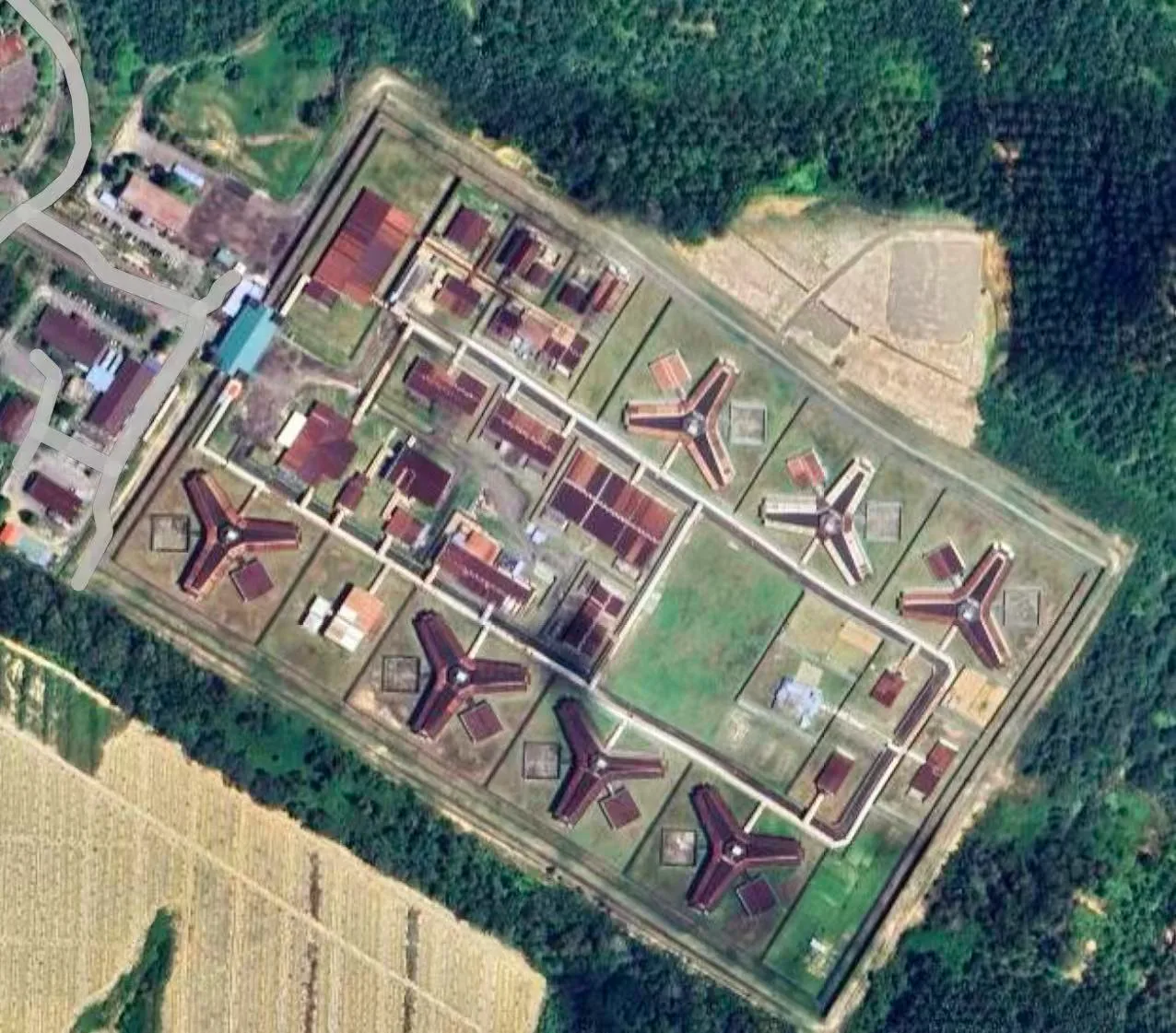
We are ushered out of the truck and taken to processing. First, to plastic chairs where inmates administer less than pleasant haircuts.
“Strip off your clothes and do ten squats!”
I don’t actually know what they are saying—it’s Malay—but I get the gist. One guy with a bad leg gets kicked. Then they hand us colored clothing. I’m given purple, which means foreigner.
“Foreigner.” He pronounces that surprisingly well.
I look around but don’t see any other purple.
We are given a bowl, a cup, and soap. They organize us in rows on the asphalt and we sit. Criss-cross apple sauce. A position I would learn to loath over the next couple weeks. After a while the ground feels like hydraulic pistons digging into your body. We pledge allegiance to the prison system’s governance. After that, it’s time to go inside.
The night is dark, but artificial light follows us. We walk bent over. At each doorway we kneel and wait for further instruction. Through the final door they hit each of us on the head with a wooden block, for good measure. I’d been feeling pretty bad for myself up to this point, but I barely contained a laugh as a thought occurred to me…
All the guards are in Nike tracksuits. Is this prison sponsored by Nike? What a turn of events. I used to make their packaging…
Part 1: Origins
Leaving home
My freshman year at Cal poly was full of great memories. But I was anxious about taking out $80K to finish. I was probably going to make a pretty mediocre civil engineer and I desperately wanted to be more than mediocre. I wanted adventure. I wanted respect.
Dustin Hoffman once said something on Inside the Actors Studio that stuck with me. He needed to yell in a scene and couldn’t get it. Take after take. Finally in a fit of frustration at himself, because of his own incompetence, he yelled, and that was it. He fulfilled the director’s vision without a deep connection with the character’s plight, and to the viewer it didn’t matter. It still felt authentic. That resonated: Frustration at my inadequacy propelling me forward just as genuine interest would. Who can tell the difference?
I went to the study-abroad office and asked for the cheapest, most obscure place I could go. In hindsight it’s funny they recommended Taiwan but at the time my reaction was “WHERE??”
I enrolled. On my last day of freshman year, saying good-bye, I shook a friend’s hand and he said “See you in 6 months.” “I’m not coming back.” That was the first time I articulated this, even to myself. Even if I did come back, I would not be the same.
Now I’m going to fast-forward through 18 months of language study and four years of university—love, heartbreak, ups and downs—because I want to get to something useful. Writing this down is my attempt at a small contribution to all the internet content that has made my life better over the years.
So here is the super-expedited version of that period.
Start:
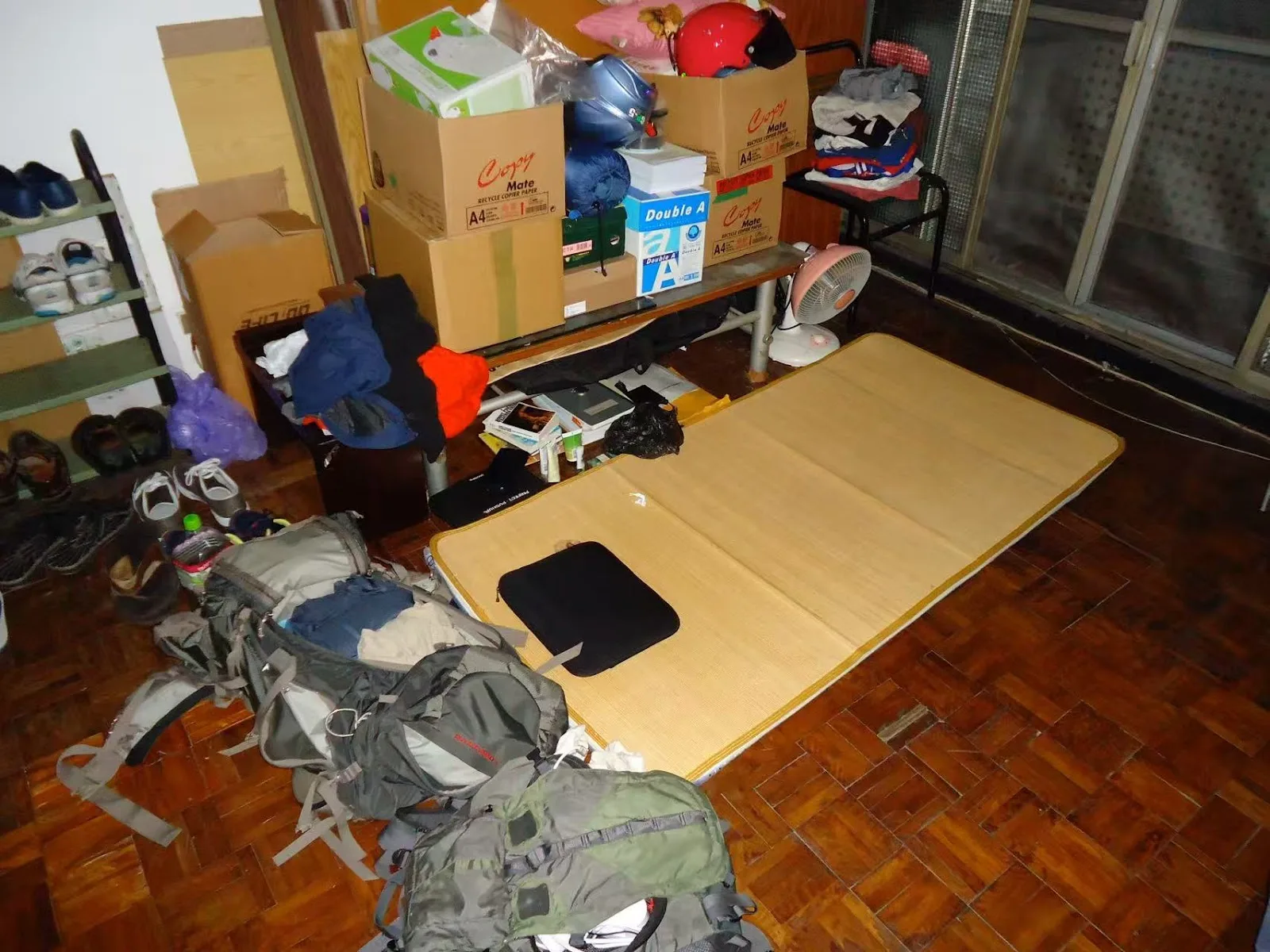
Finish:

Now on to manufacturing.
I’ll start this story from when I graduated from National Taiwan University with an econ degree and an inflated view of myself, then ate shit over and over for the next six years.
Mr. M: The teacher and The Test
Mr. M’s spirit haunts his facilities. You think you are safe, talking trash about his lunatic timelines with a colleague in the back corner, and then bang, he’s right behind you, footsteps light and quick like a cat. The floor workers had a special whistle, a little bird call that meant the devil is coming. I think he loved it.
Unlike the line workers, I got to talk with Mr. M 172 times a day. In hindsight, not a great way to run a business, or maintain the vestiges of my sanity, but I also can’t discount its effectiveness.
He’d start the conversation with a simple, infuriating question.
Saturday at 10 p.m. “Where are you?”
Sunday at 7 a.m. “Where are you?”
Sunday at 11 p.m. “Where are you?”
… “I’m at home in my bed…”
90% of the conversations were less than a minute. I would answer the phone and he’d already be talking. “3 things, 1……2……. 2a……..2b…….2c…….2c1……2c2……..3….. That’s it.” click.
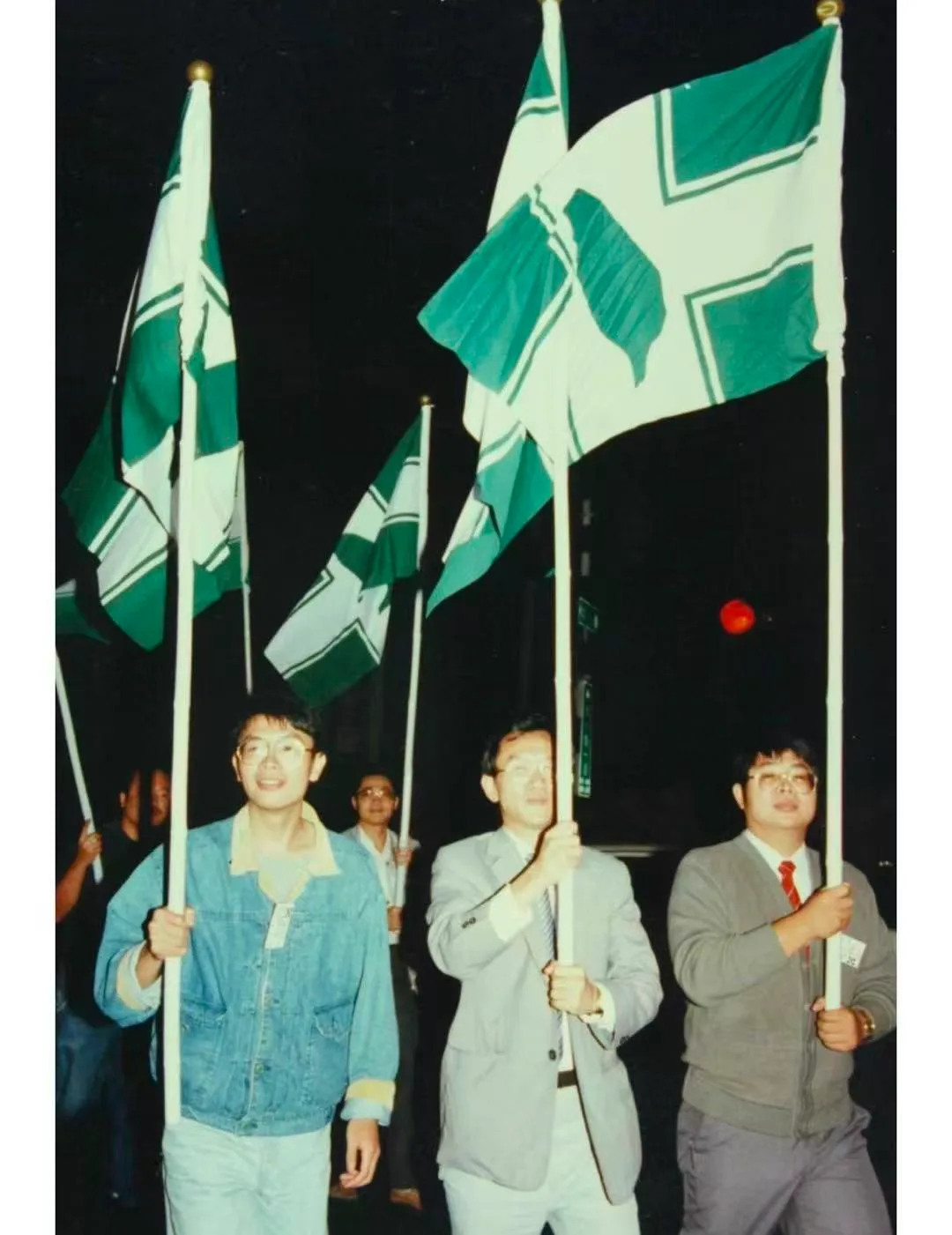
To me, Mr. M was a mentor, father figure, boss, tormentor, all wrapped in one. He cut an unassuming appearance, but his energy was uncontainable. The center of any room, among people of any stature. Typical uniform: Sneakers, light athletic pants, an outdoorsy collared shirt and a hat. Late fifties. Jet-black hair, never dyed. Young, intelligent eyes. Photographic memory. One of the first few hundred signators of Taiwan’s Democratic Progressive Party, which was still outlawed when he initially joined.
Old school, too. Rarely said “good job.” Occasionally he’d say how thankful he was for something. That emotional moment lasted 10 seconds. Then: “I wish I was as lucky as you. You know you should be paying me for this. You’re getting an MBA for free.”
In many ways he was right. I did get an MBA in those years. It didn’t come free though. I paid for it. Norm Macdonald had the best response to the “what doesn’t kill you makes you stronger” line.
“Now, metaphorically that’s true.
But literally it’s not true at all.
Literally it’s that what does not kill you, makes you weaker!
And will probably kill you the next time it shows up!”
Condensed story of how I met Mr. M
- Friend meets Mr. M’s daughter on tinder date. As most modern stories begin.
- Introduced as a ‘white math tutor.’ The irony didn’t fall flat on people.
- Pitched for a chance at a ‘real education.’ An internship in a Chinese factory town named ‘The Ancient Pit.’ With a name like that, how could I refuse?
- After 3 months, quit abruptly. Internship fell short of A Knights Tale fantasy—no reading poetry to princesses or jousting.
- Flew back to Taiwan to apologize in person. Conscience wins out, the treacherous bastard. Get ignored by Mr. M.
- Back in Hong Kong—broke, shame mounting. Mr. M calls with another offer. “My friend is looking for someone to help him in China.” Accepted within hours.
- Prepped with Infernal Affairs. Maybe you know this one, the one The Departed ripped off, with double agents. Mr. M tells me to watch it before going to work at the other company. But my need for money trumps any reservations I might have.
- Completed ‘drinking bootcamp,’ preparation for drunk negotiations with Tier-1 clients.
- Entertain many clients. Among them, a Portland-based sportswear company.
- Landed at SFO to a text from Mr. M. “Welcome back to the US. Stay in touch.”
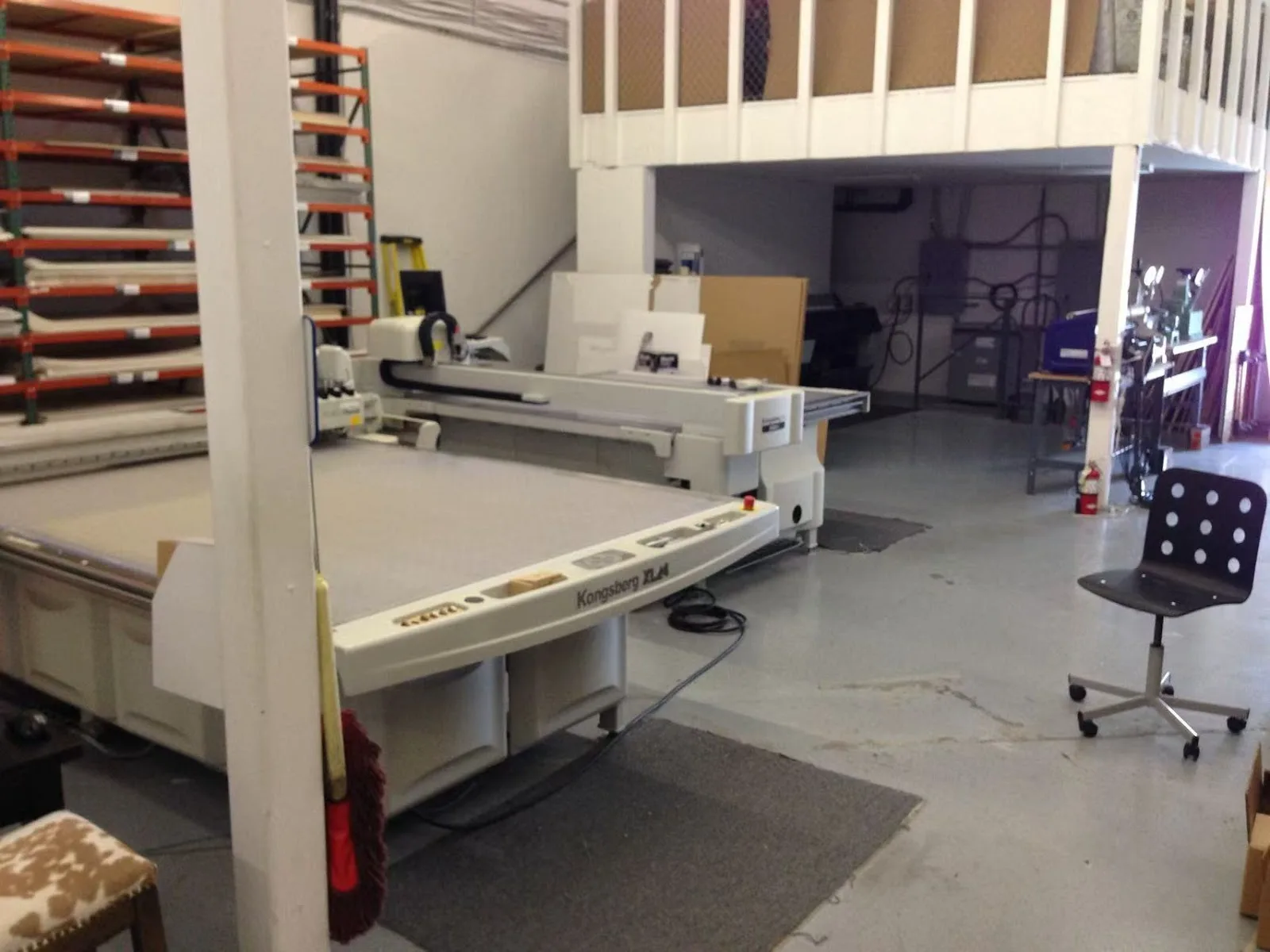
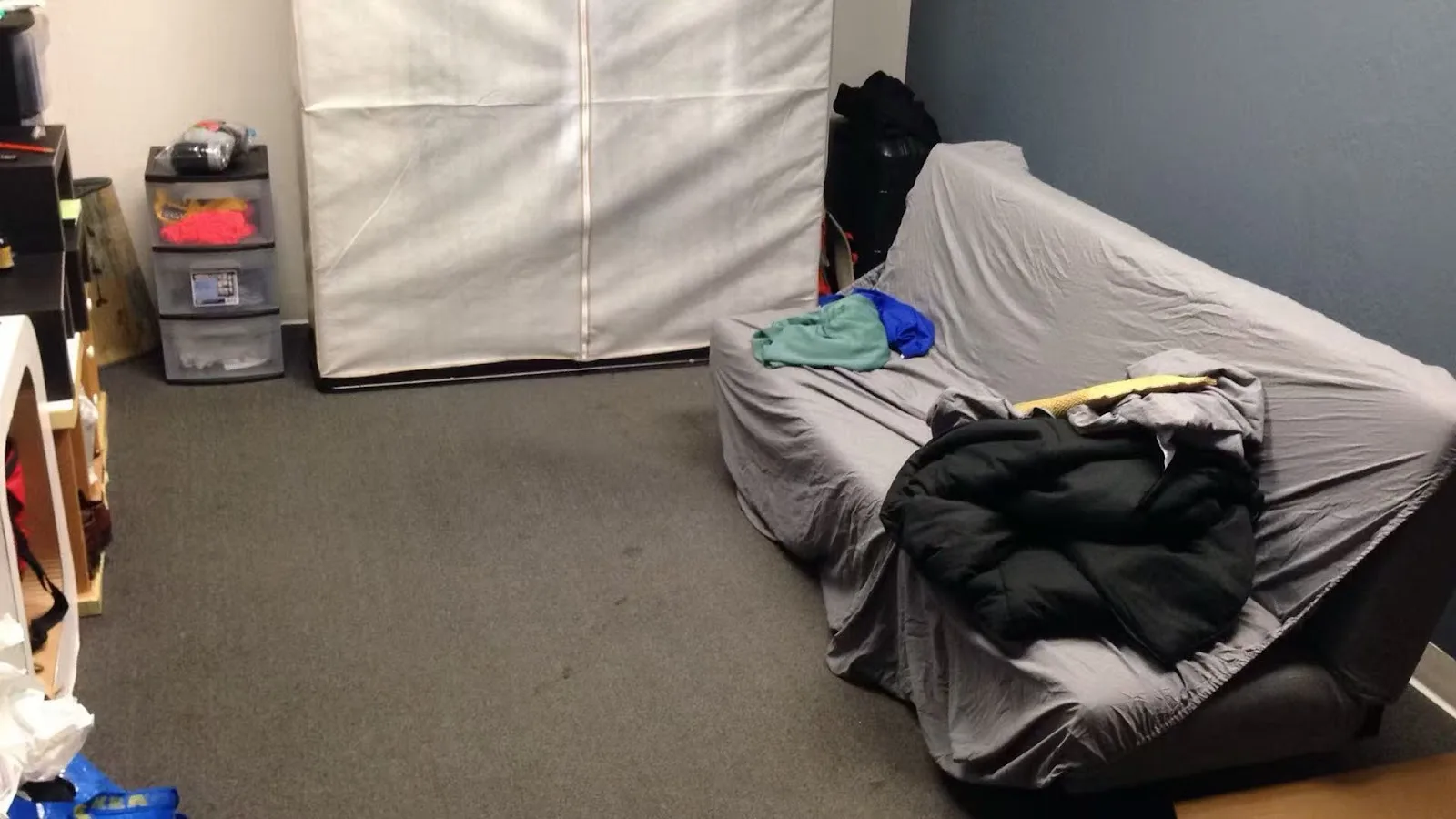
- Installed to run a Milpitas design office. Slept on a cot in the office for 6 months. Purgatory with slightly better food.
- Resigned. Scouted factories in Mexico. Flew to China to finalize a contract. Then got catfished.
Malaysia by accident (or the plan all along)
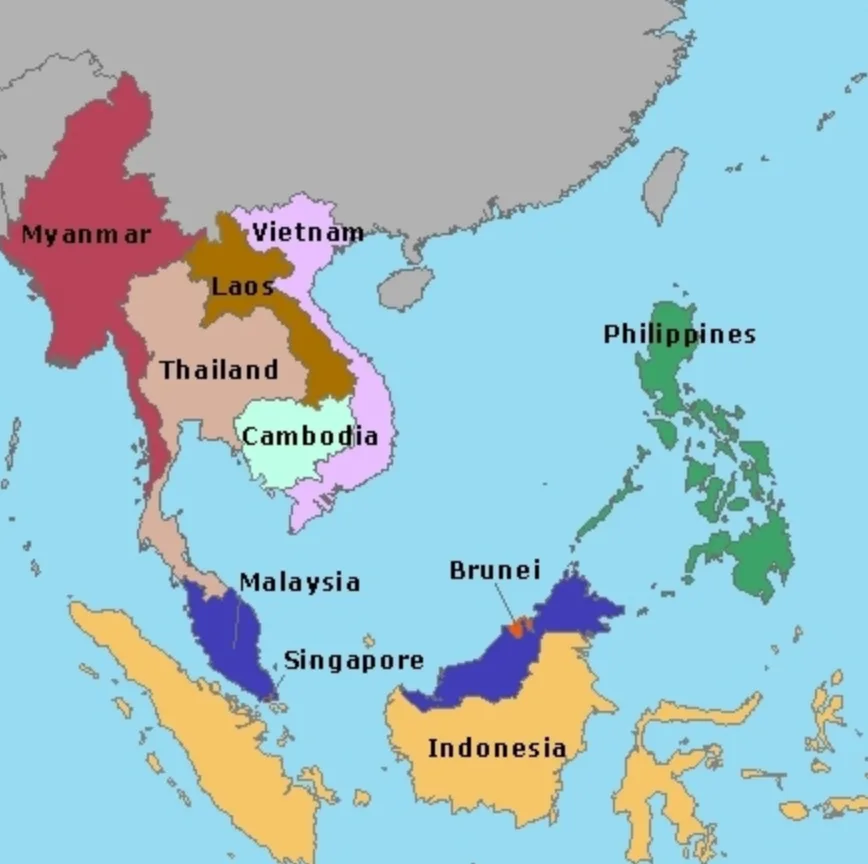
Mr. M: “Go to my Malaysia factory first. Charles just left. I have no one there. Maximum one week, then we’ll go open something in Mexico.”
Two weeks later: “Just stay there a few weeks while I find someone.”
A month later: “What can you possibly learn in a month? You need to spend at least three months here. Then you’ll be ready for Mexico.”
Three months later: “What’s the difference between 3 months and 3 years? You’re still in your twenties!”
I arrived in Malaysia on January 1st. 2019. As with my previous jobs, I was representing a Taiwanese company.
Disclaimer: Some of the anecdotes don’t flatter us, and I won’t claim innocence, but there are two sides to any story. When buyers, QC (quality control) personnel, and mid-and-upper level managers (employ-ees) threaten an employ-er whose life is wrapped up in this business, it gets personal fast. Standard disclaimers apply: Do I seem like a reliable narrator to you?
Fly on the Wall: Damned if you do, damned if you don’t
One of the easiest attack vectors is through quality control. I didn’t realize this at first, but it became obvious quickly, and it happened many times.
We were in the QC office of a major OEM (original equipment manufacturer, the entity that does final assembly). They had locked out 70 pallets (worth $10K) and were threatening a $100K fine if we didn’t ship 70 more pallets by tomorrow. We didn’t have inventory.
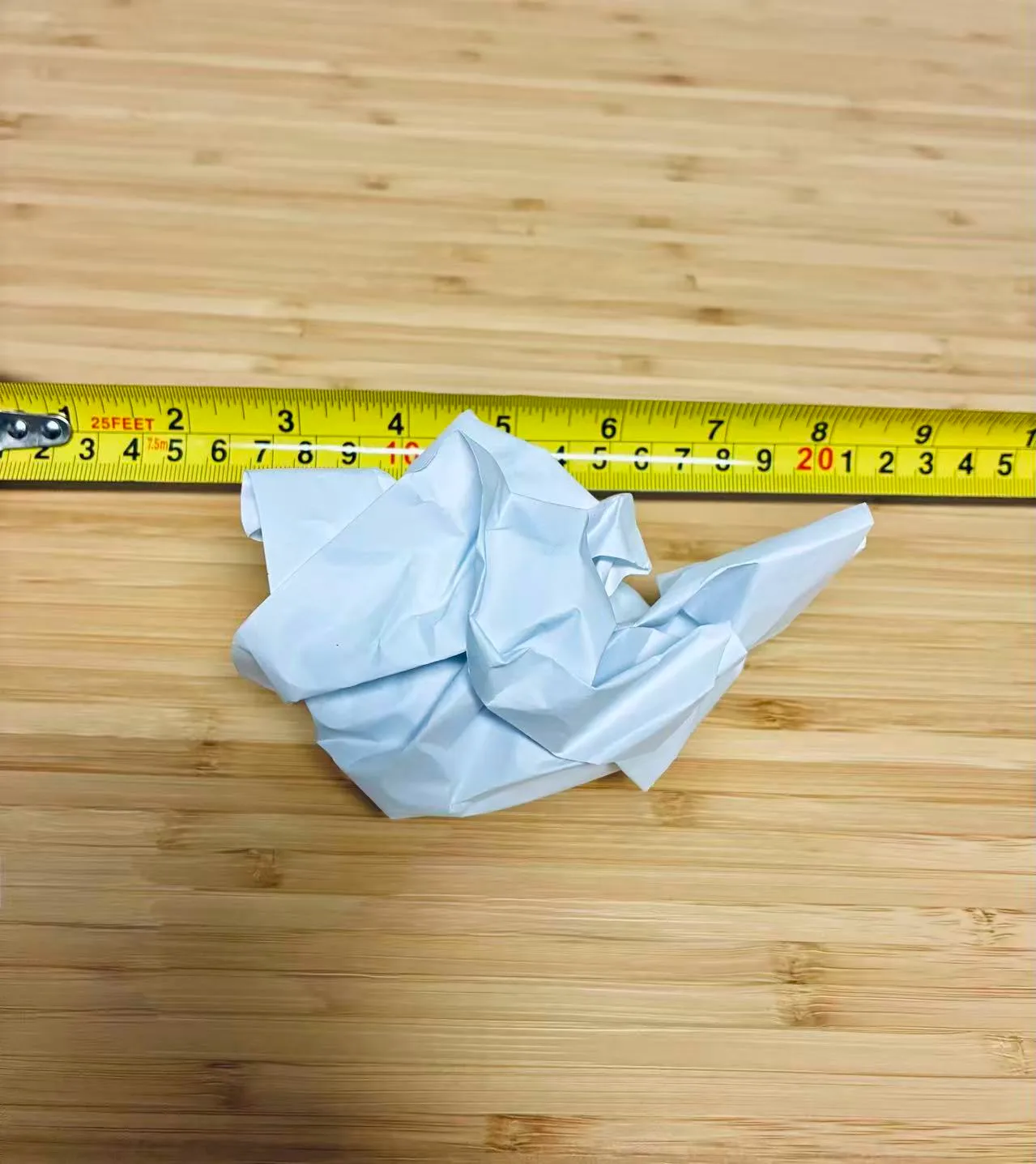
The head of QC theatrically squeezed our part and dropped it on a ruler lying on a desk.
“You see? It is out of spec. The dimensions are off.”
Mr. M: “My apologies. It won’t happen again. How about dinner tonight? Do you play Mahjong?”
That night we went for dinner at a nice Japanese restaurant. Multiple bottles of Sake were opened. Our guest got very drunk. Mr. M stayed sober. He’d brought us along to drink for him.
“Oh I can’t drink because…”
He always had the best excuses. More importantly, he could stay sober in a room of drunks and remain infinitely engaging. Anyway, Mr. M lost miserably that night at Mahjong. I’d never seen him play so poorly.
It was so bad it was brilliant, like getting every question wrong on a true/false test. He let the guy know ‘I’ve got you’ while still making sure to lose a decent sum.
Sure enough the next day we were personally escorted to their warehouse. On the spot, each ‘rejected’ label was swapped for an ‘OK’.
A year later, this QCs appetite had grown. He knew the market rate; competitors were paying. Thankfully, I was there the day Mr. M had had enough. It was equally spectacular. Same office, this time with the head of quality, procurement, a few people from the end customer and the CEO. Mr. M took the QC’s phone, threw it into a wall, flipped a desk over, and walked out. I followed. Shocked, but also in admiration.
Part 2: The chess board
Cat and mouse… and the elephant
The cat-and-mouse game between customer and supplier overlooks an important player: The OEM.
The end customer issues an AVL (approved vendor list) and insists on cost breakdown from the OEM. OEM pricing is expected to match prices quoted directly by suppliers. For example: suppliers A, B, and C report $1 each to the customer. The customer then tells the OEM: Your price should be $3 + cost of assembly & logistics + 3%. Something like this.
OEMs across Malaysia, Vietnam and China are competing for the same projects. They must team up with suppliers to bid, but ultimately they’re the price makers. That power is often overlooked by those not close to it. Foxconn employed half a million people at its Shenzhen campus alone in the early 2010s. Right now in Zhengzhou there are two hundred thousand people working on the iPhone. Two hundred thousand people!
The customer wants cheap, fast, perfect—and the right to change orders without eating inventory. Owners want profit without front-loading millions for a line that might vanish to another country. That tension births some creative behavior.
The Big Vacuum Cleaner Company
This particular vacuum cleaner company had already chosen a designated supplier in Malaysia, but the order was big, and multi-year. Packaging alone would be US$100K per month, enough to start a factory. That means $10 million a month revenue for the entire product, since packaging usually makes up 1-3%.
The game was afoot. As the designated supplier, you’re always on defense. This time, we got to be on the attack.
We approached the OEM and said we’d produce for 10% less. Since the order has been allocated, there was no budget for tooling, meaning we’d have to do it at risk. There was no way in hell we were going to open the full set of six tools for free without guaranteed orders.
So Mr. M made his move. Knight to F6. With a few quick calls he found who was already making the part in China, prior to the Malaysian OEM being brought in. Another call, and he had the production manager. Just 10 hours later, under the veil of night, a truck pulled up outside their facility and 40 sets of samples were placed in the truck. A few days later those samples were in Malaysia on the OEM’s table as our first article.
“Wow Mr. M, I can’t believe you opened those tools so fast! Amazing.”
“Anything for a good friend.”
Kickbacks
I learned, too, that a kickback is not always a cut-and-dry case of greed. It is often a down payment on future competence. The most brilliant supply chain manager I ever knew had a portfolio of homes across Asia, all funded by the “generosity” of his suppliers. The board knew, of course, but the man could move mountains with a single phone call, and so they contented themselves with looking the other way. O.K. Lim, the chain-smoking maverick who could move tens of millions of barrels of oil with a phone call, wasn’t taken down until he no longer had utility.
My 2 cents: There’s rarely grand villainy in the bribe. I wouldn’t take offense if asked. It’s routine business, just part of their quote. Funds earmarked for dinners, golf, cash, KTV (karaoke bars), etc, usually 1-3%. But my strong recommendation is that the juice isn’t worth the squeeze. I’ve watched a lot of cash change hands, and what was asked of the people taking the money was always worse than what was being given. Also that 3% becomes 2.8%, then 2.5%, then ‘a little late’, to 0.5%, then nothing.
Running a company, you have to play whack-a-mole and take a hard stance even when the employee is critical. But be ready, when a fiefdom is toppled you must take the controls and be ready for some turbulence. From direct reports to QC to production to suppliers that might have been complicit. It is not for the weak and is usually very messy.
Attacked from all sides. “Qing soldiers are coming!”
Profits in Malaysia were too good in 2021. 30% net profit in manufacturing is dangerously high, especially as Chinese industrial overcapacity hit new highs during COVID. We were on high alert. Mr. M strung a story together that had us prepping like it was the battle of Stalingrad! We must hold our ground!
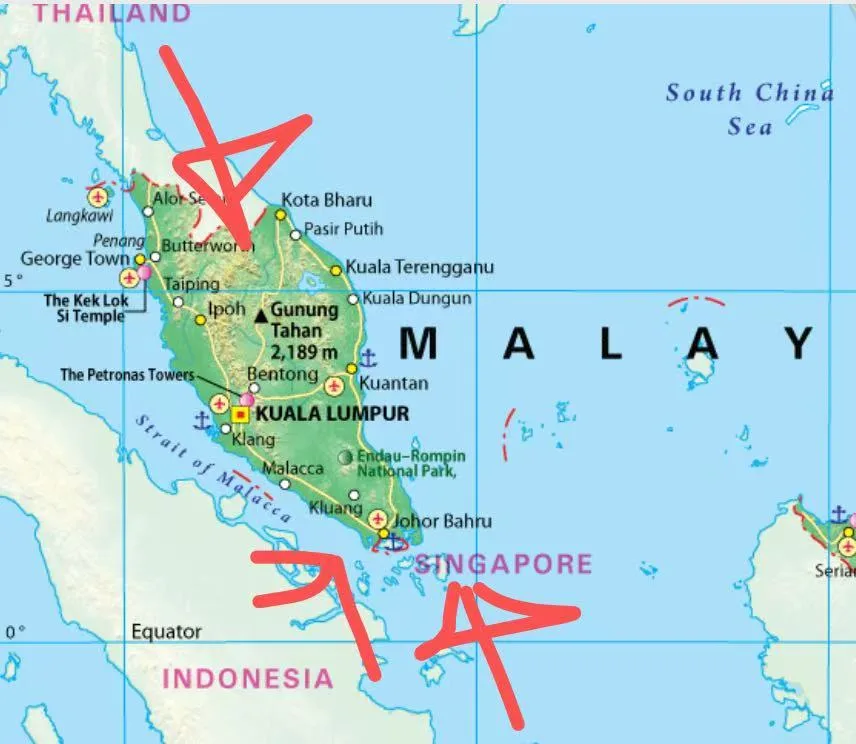
Chinese businessmen poured in from Batam, Singapore, Thailand. Some were already behind our lines, quoting crazy prices and offering generous gifts, just to get a foothold. We’d match them quote-for-quote at every turn. Profits fell, but that was still better than letting them taste blood, because allowing a Chinese supplier to get a foothold doesn’t bring in one competitor; it brings in ten. And they play to win.
Free is the most expensive
I learned this lesson before Mr. M, at my first job in China, but it’s served me well since. The FAANG guys—the initiated ones—were particularly eager to hit the KTVs (karaoke) and experience the whole dragon, head to tail, as the saying goes. If you don’t know Dongguan’s history before Xi’s crackdowns, over 10% of its GDP came from the sex industry. The infamous Prince Hotel once had over 1000 ‘technicians’ working nightly, with underground tunnels in and out. When the owner was finally brought to justice in 2014 they sent in 6000 police to surround the hotel. 6000! The legend is harder to kill, and many still land in China with lust in their eyes dreaming of the past.
One night sticks with me. I was in a room with very senior people from a Silicon Valley company. They wanted the usual treatment, but they’d also put heavy pricing pressure on us and our allocation was down. My boss wasn’t happy. So someone in our org hired working girls to wear our uniforms and accompany these three—and video taped the entire thing.
Part 3: The COVID Pressure Cooker
The start of COVID
For me, it started in January, 2020. I stepped off a cargo ship in Odessa, Ukraine after some vodka-filled days at sea. We had to wait at the docks for customs, outside. I was woefully underdressed. On board, I’d met a few guys who said they’d take me to Kyiv if I drove one of their cars, as one of their guys had stayed behind in Georgia (hopefully with all extremities still attached!)
Everyone on the ship was Ukrainian. They’d gone to Georgia to buy broken cars and bring them back—either evading import taxes for foreign cars or flipping used cars as new. Whatever it was, not completely kosher.
From the port, we drove to a small farm house in the middle of nowhere. Nothing for 10 minutes and then one house, a barn out back. We pulled into the barn, then went into the house for coffee. As we left I noticed new license plates. I just need to get to Kyiv.
Halfway to Kyiv, the front diffuser fell off my car. I reattached it with the strap from my luggage. An hour later, we were in Kiev. We stopped at a metro station. I got out, another guy got in. I never heard from those guys again.
Late that night, I received a text from Mr. M.
“Check for N99 facemasks.”
I slipped into a pharmacy and replied.
“They don’t have any. I’ll check once I’m in England.”
I had a flight to London in the morning to meet with engineers at a customer’s office.
In London, Mr. M kept asking when I’m coming back. Then he got direct.
“Go look for facemasks, buy what you can, and get back here.”
There were hints that what was going on in Asia would get more serious, but it wasn’t broadly recognized. I started going to pharmacies in London. Nothing. Everyone’s inventory was zero. If I were smart, I would have shorted stocks at this point.
It wasn’t until I was in Leicester the following day that I found a hardware store on the outskirts, owned by this little old lady.
“Do you have face-masks?”
“Yes, all different kinds. Which one do you want?”
“I’ll take all of them.”
Jackpot. I changed my flight for the next day and drove back to London. I felt like a conquering hero, returning with a trash bag full of spoils worth nearly $2,000. In a large transparent hand-carried bag I smuggled them from London to Bangkok to Singapore, a journey fraught with the peril of thieves and the strange looks of fellow passengers.
Upon return, we immediately packaged the facemasks, inconspicuously in a box and shipped it off to our factory in Dongguan, China. But they never made it. They were seized by the Chinese government!
Tensions rising
For all Mr. M’s bluster, I saw the mask slip once. We were on a monotonous ribbon of highway from Johor to Kuala Lumpur. Endless palm plantations. Without a word, a shudder ran through his shoulders, and the man who in my eyes could handle anything began to weep. It was the raw, unrestrained anguish of a man pushed past his limit.
I drove in silence, blinking furiously to hold in my own tears at seeing the man I revered so greatly reduced. I knew of the private war he was fighting—a long, silent illness that had taken up residence in his home and was slowly stealing his wife away. Then it was over. He wiped his face, straightened his hat, and stared out the window. We never spoke of it.
3/18 – Malaysia officially shuts down.
Malaysia shut down but never really shut down. You just had to avoid check points. Customers were complicit. “You have a choice. Figure out how to fulfill orders, or we will move it to Vietnam, Thailand, China… whoever can deliver.” That threat hit the OEM, and then the OEM passed it down. So, in the beginning, we did a lot of shipping under the cover of night.
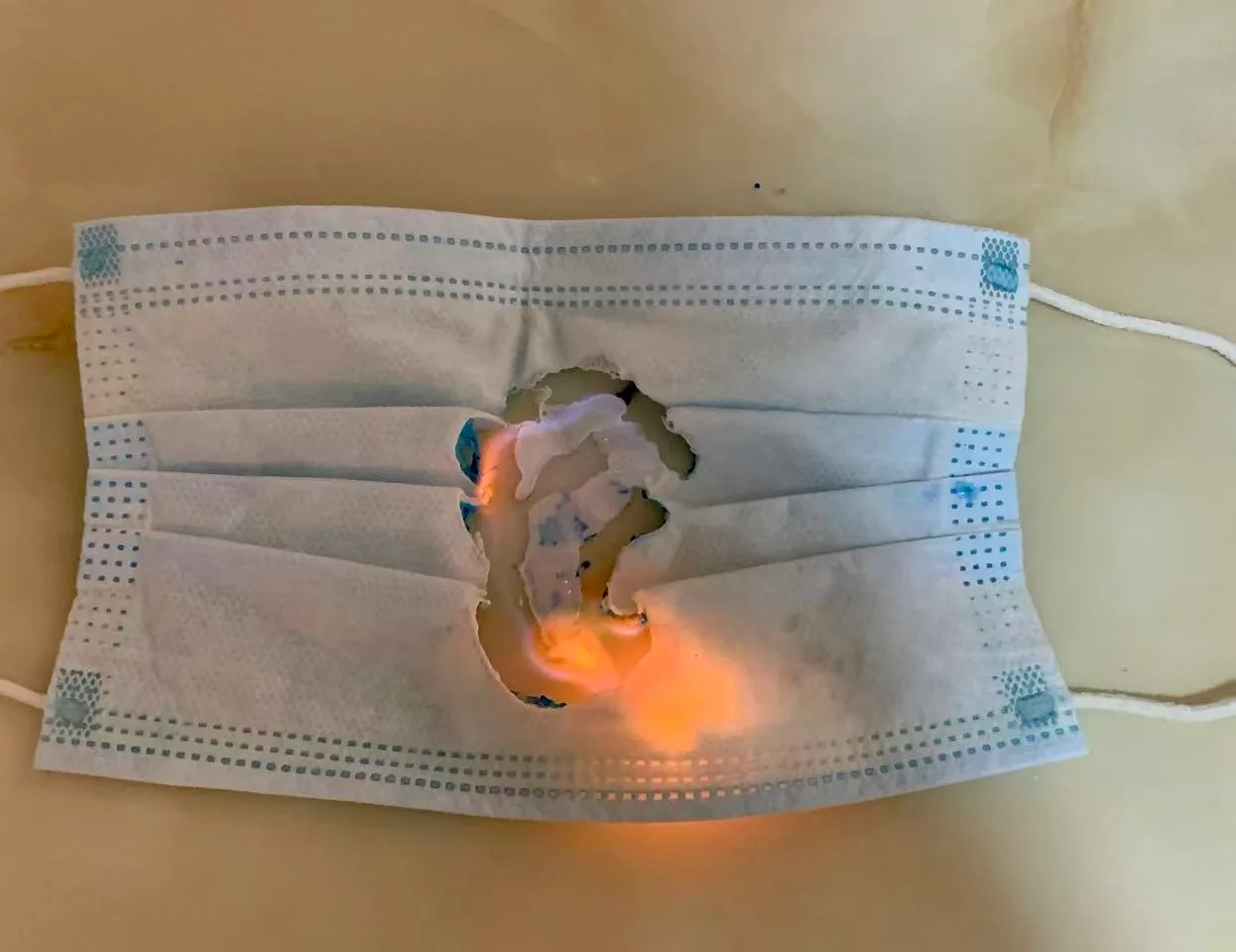
Quarantine
I spent 56 days in different quarantine hotels, usually 7-14 days at a time. I actually got pretty good at this part. Even now, I have bouts of nostalgia.
I’d bring tools to unlock the windows. Typically, the hotels were large, 20+ floor buildings. By the second or third time, I was sending tips to delivery guys to pour out water bottles and fill them with baijiu (rice liquor), put cigarettes in food (I since quit smoking, mom), and buy more books.
I’d bring a pile of books and spend my days with a nice draft from the open hole in the wall and read.
I even lucked upon a beautiful romance, started by writing messages on paper signaling the girl being quarantined in a tower directly across.
But these days were like happening upon a hot spring while lost in the mountains.
Disinfect THE AIR!
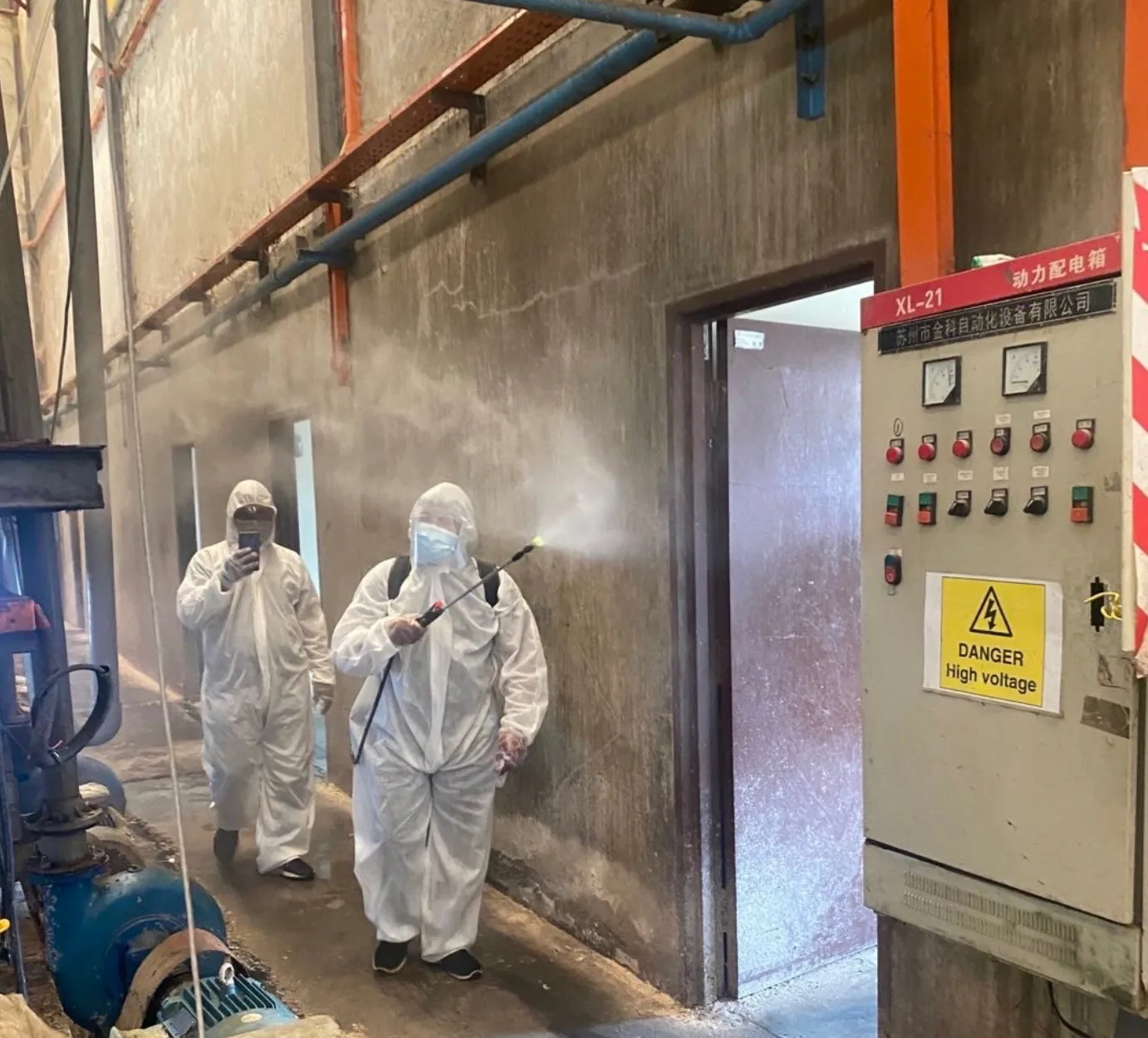
COVID was mostly constant stress. But occasional moments still bring a smile to my face. Below is something we had to pay for, and to a proper government agency! It wasn’t horribly expensive or anything, just … well, I leave it to you to be the judge.
Our factory was 60 m x 90 m x 12 m, with 6 open bay doors. I’m sure this did the trick though.
Staying afloat
Manufacturing is suffering, followed by more suffering. If you can withstand the suffering and have just a wee bit of luck, you are rewarded. But you MUST remain vigilant! Because as you are rewarded, you shall be tested once again!
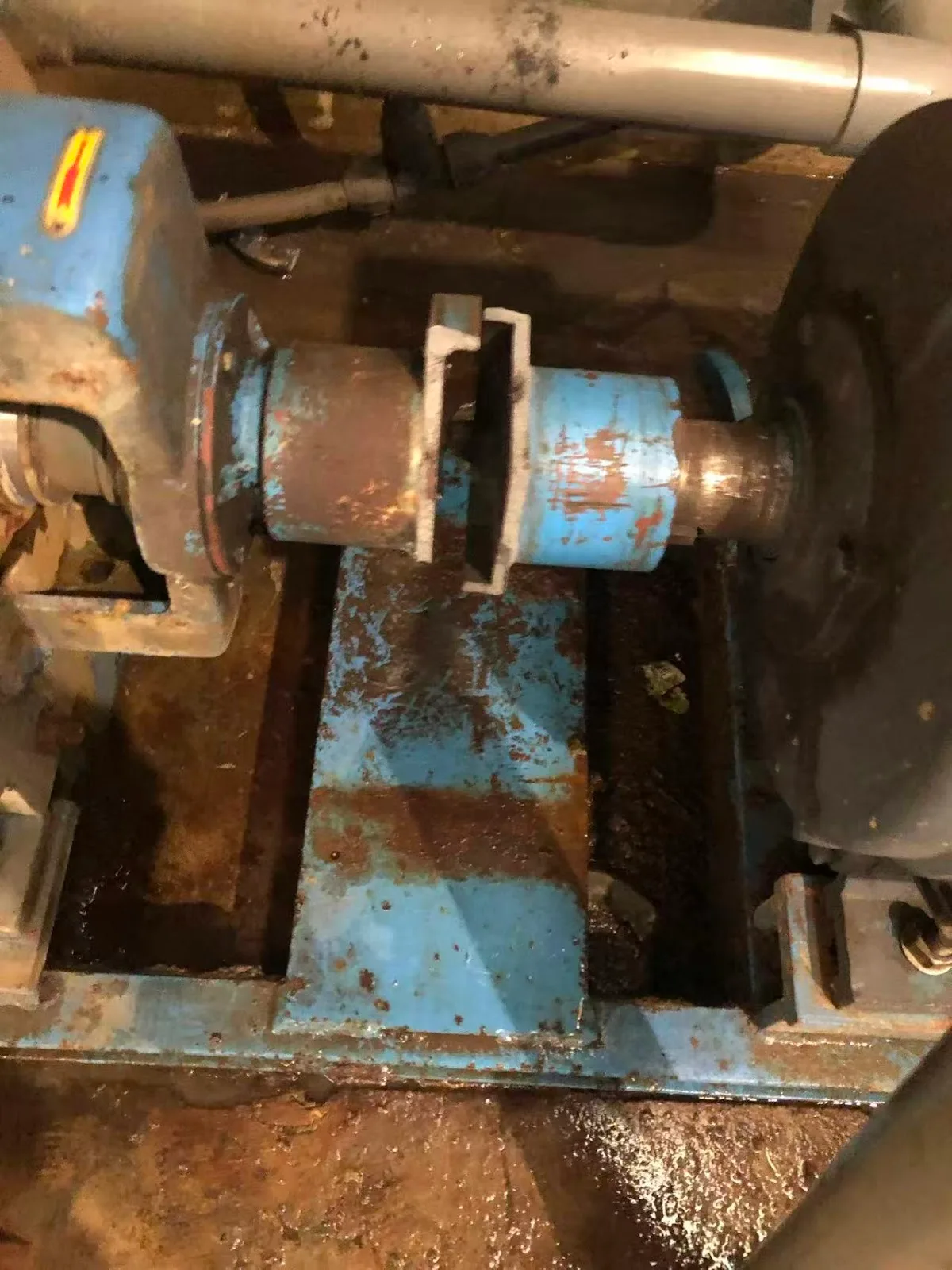
The bit of luck was profit. Prices were great for anyone that could keep going. But everyone was without a lifevest. It was hard to get parts. Even getting basic maintenance was hit-and-miss. So we did it ourselves. We ran our factory everyday. 24 hours. The production manager and I were there for every daily meeting: 7:45 a.m. and 7:45 p.m. When things needed fixing, they happened on the spot. The goal was simple: keep going.
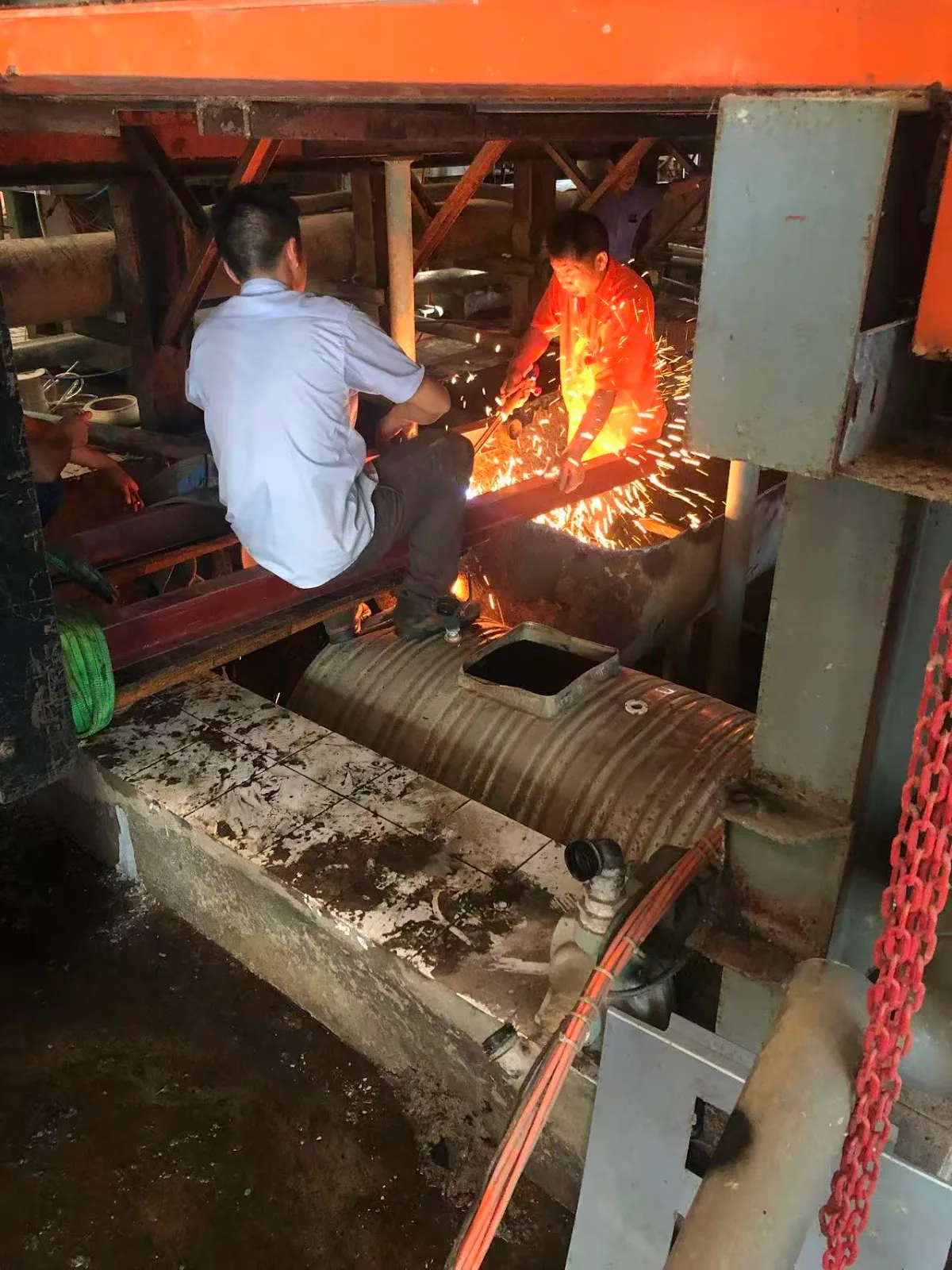
***Don’t copy this—this is incredibly fucking dumb.
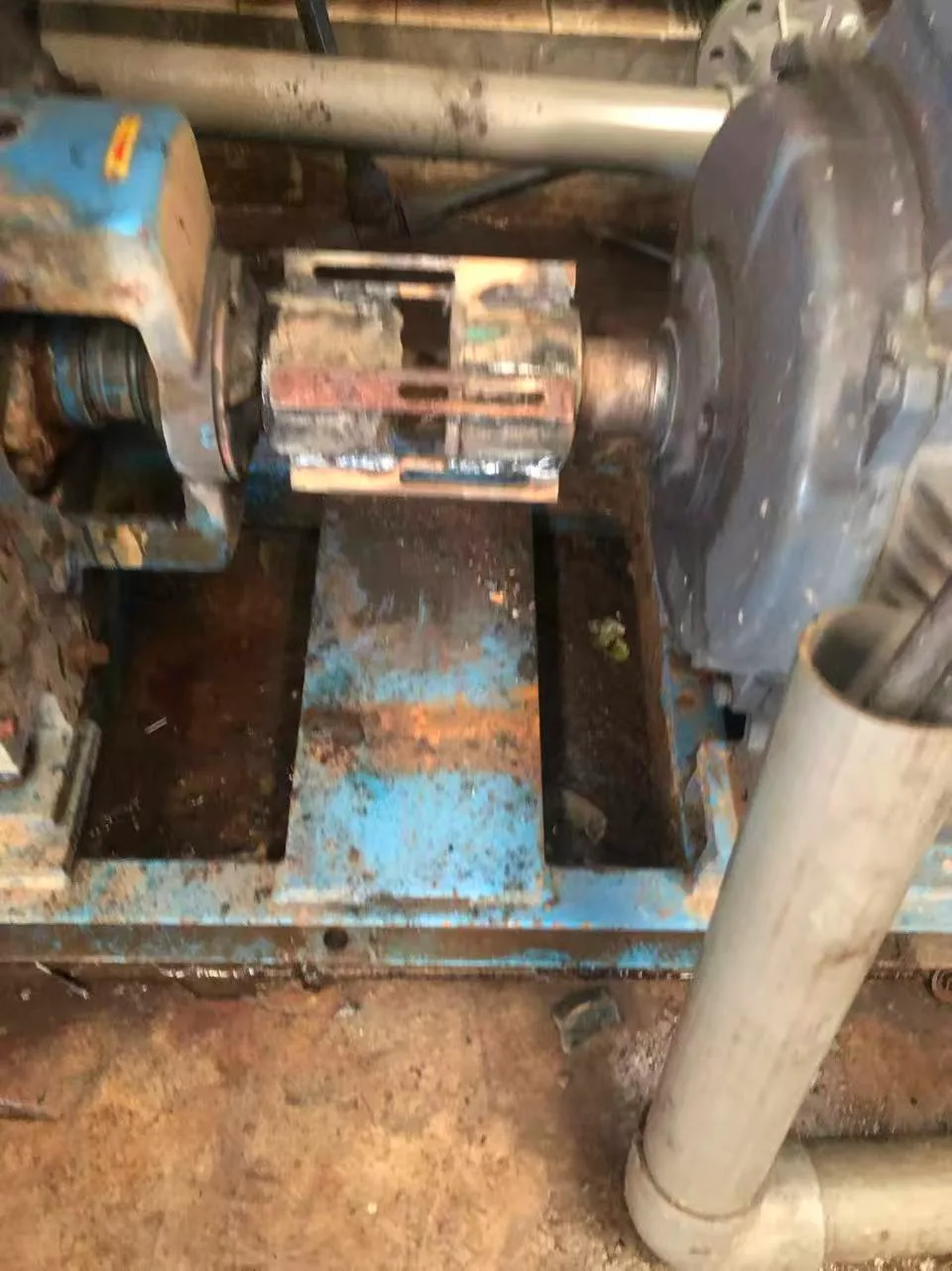
***Don’t copy this—this is even dumber.
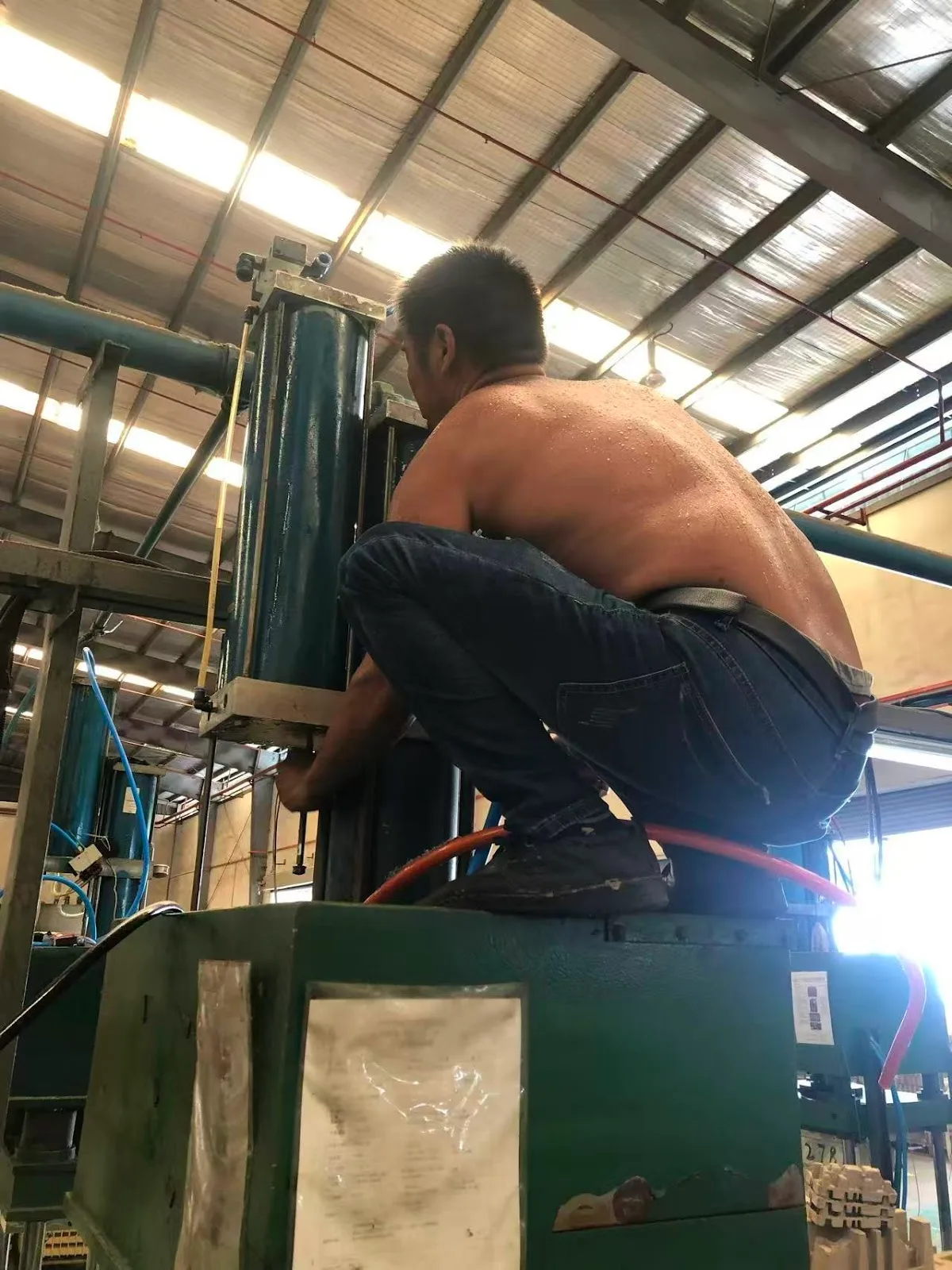
***Don’t copy this—not safe
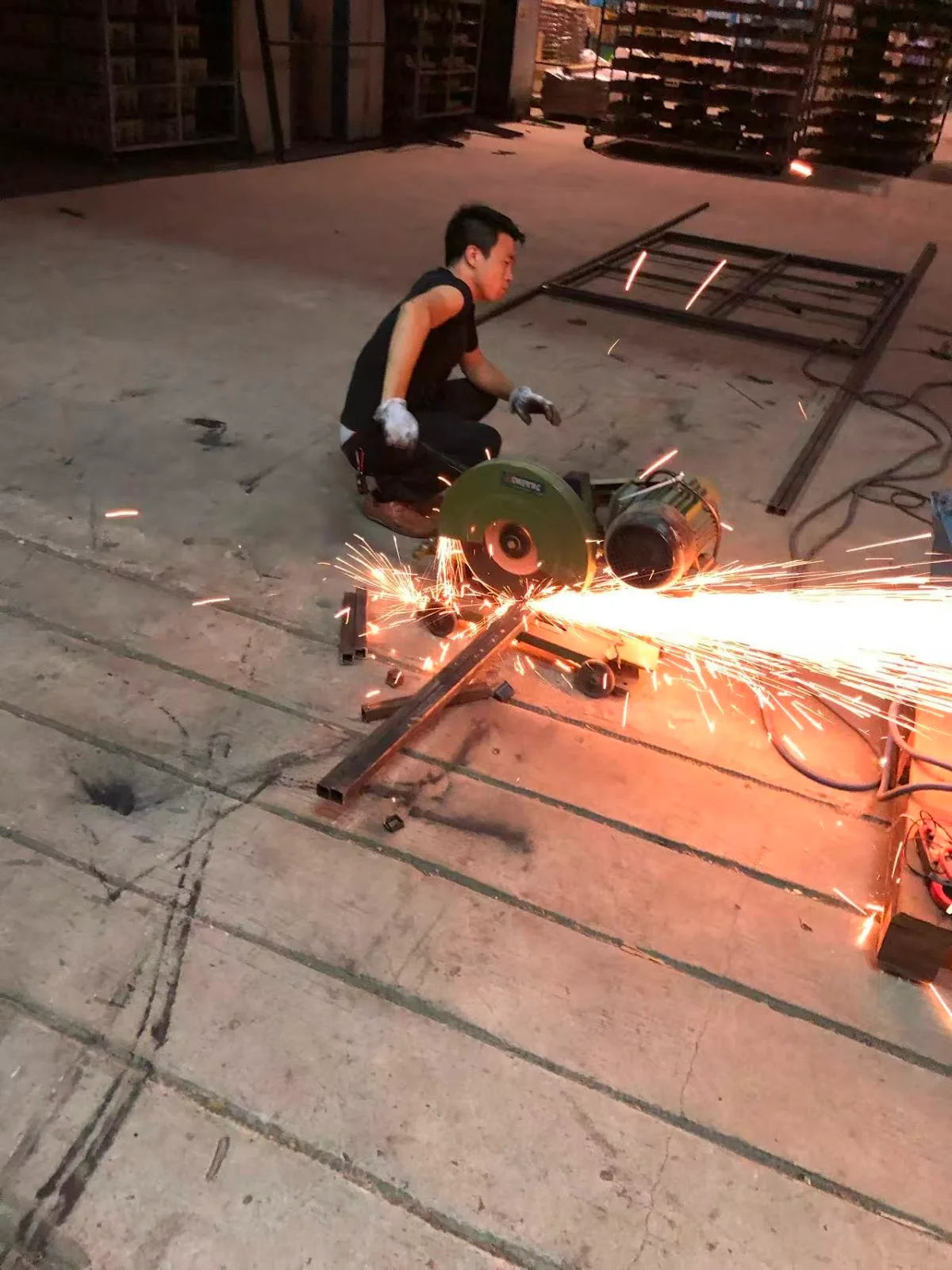
***Don’t copy this—still not safe
Part 4: Russian Roulette
Not so different
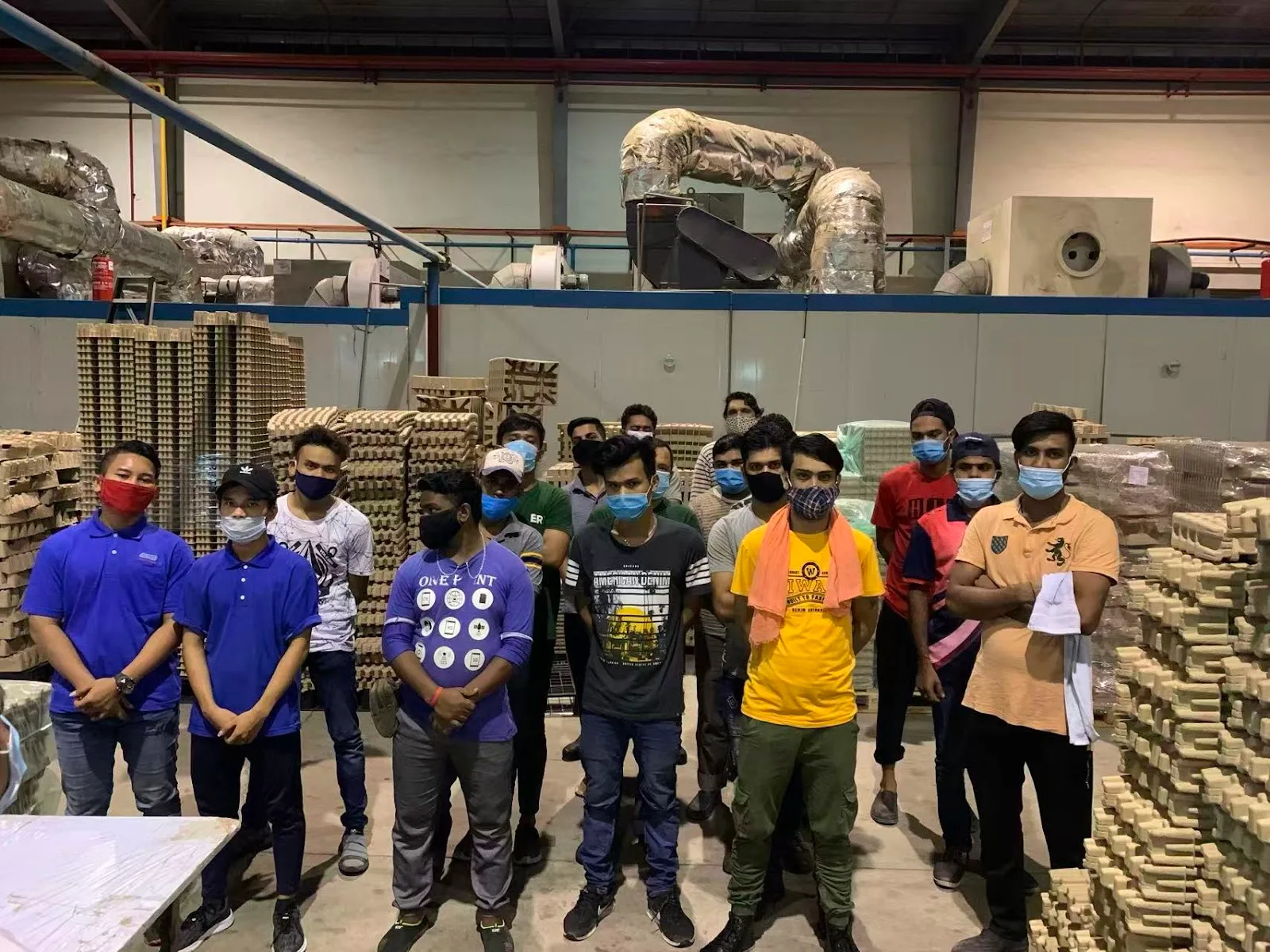
Most factories in Malaysia were filled with foreign workers. From Bangladesh, India, Myanmar, Nepal, Indonesia, the Philippines. Half the time, we were miming commands. If it sounds radically different from the US, the conflicts weren’t—usually caused by someone not pulling their weight or the Brownian motion set off by boy-meets-girl. Racial flashpoints happened, but rarely. A pack of cigarettes and a chilled can of Coke was an essential part of the manager’s kit.
Every morning, workers showed up dressed to the nines. Hair jelled. A visible plume of cologne could be seen around the morning meeting.
During my time in Malaysia I happened on a “free vacation” at an immigration holding camp. What a shitshow. Guards beat people by day then brought contraband to us by night. A story for another time. When I got dumped there, a guy who’d worked at our factory spotted me and shouted “Hey boss!”
I shook my head.
“Here. You-me, same-same.”
He smiled.
Road stop negotiation
Our factory was less than a kilometer from our dorm. Left out of the parking lot, immediate right, straight, right and you’re there. The roadblock was right outside the dorm, and I still drove into it. The cop asked for my passport, flipped through it, then motioned me out of the car. I couldn’t speak Malay; he couldn’t speak English. He walked me to their van, where two other officers waited.
One pulled out his phone, opened the calculator, and typed: 1000myr ($250).
I shook my head dramatically. Took the phone: 100.
He typed: 800.
I typed: 200.
He typed: 500.
I tried: 300.
He snatched the phone back, done with the game, and pointed at the backseat. I said, “OK, OK, OK” and handed over 500.
I gained a strange kinship with the foreign workers in our factory through this. We were all strangers in a strange land, trying to earn a living, all one traffic stop away from disaster.
Fun and Games
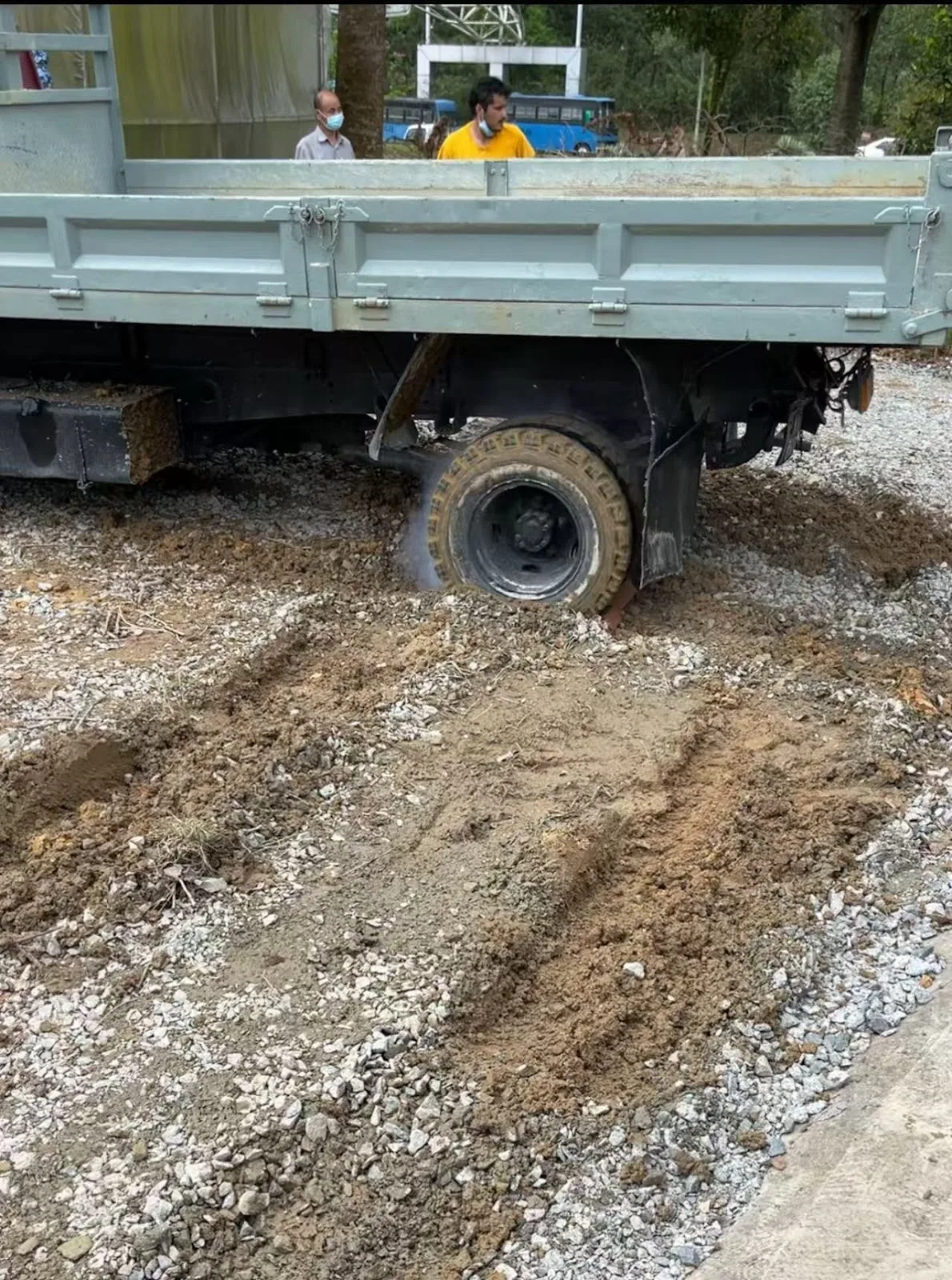
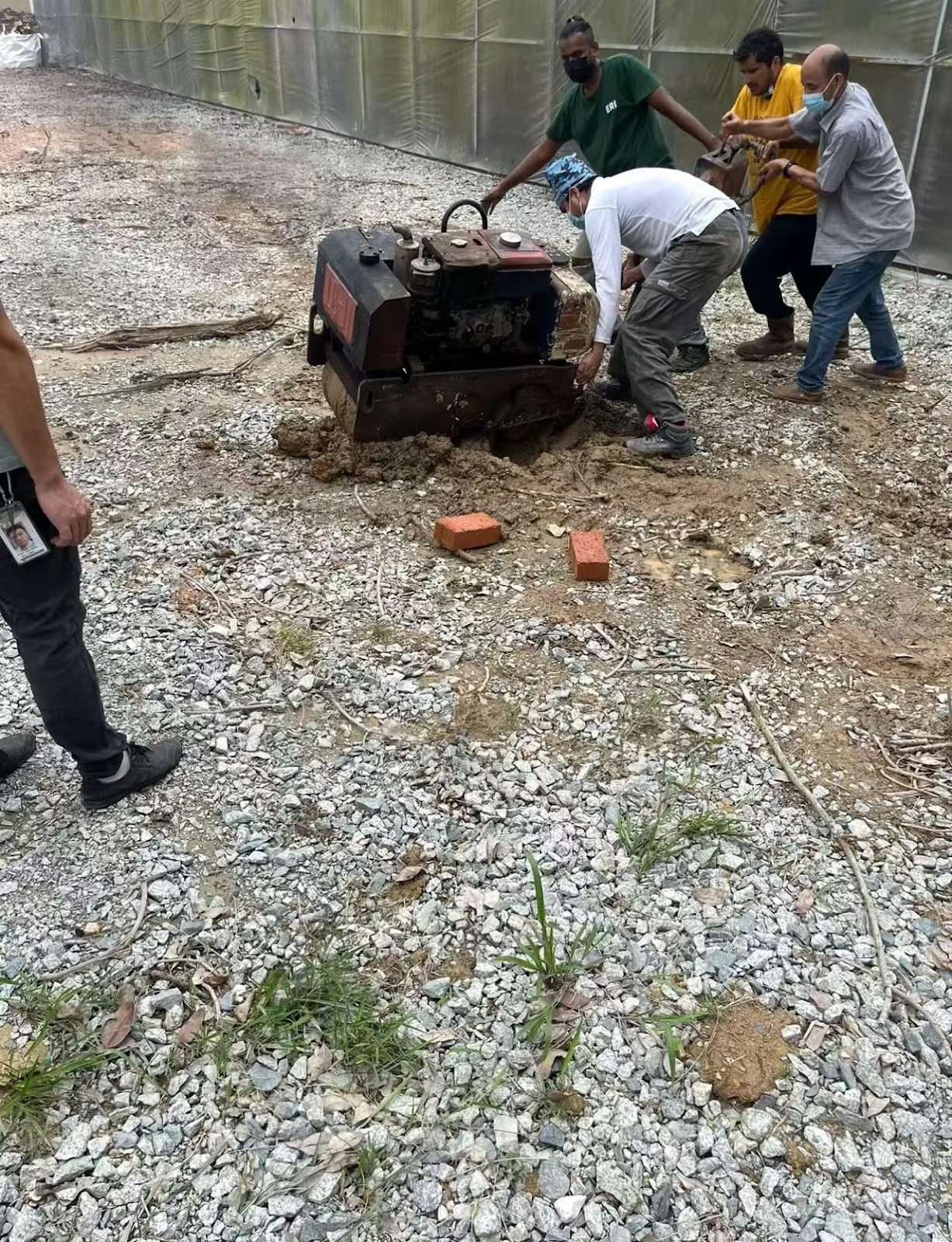
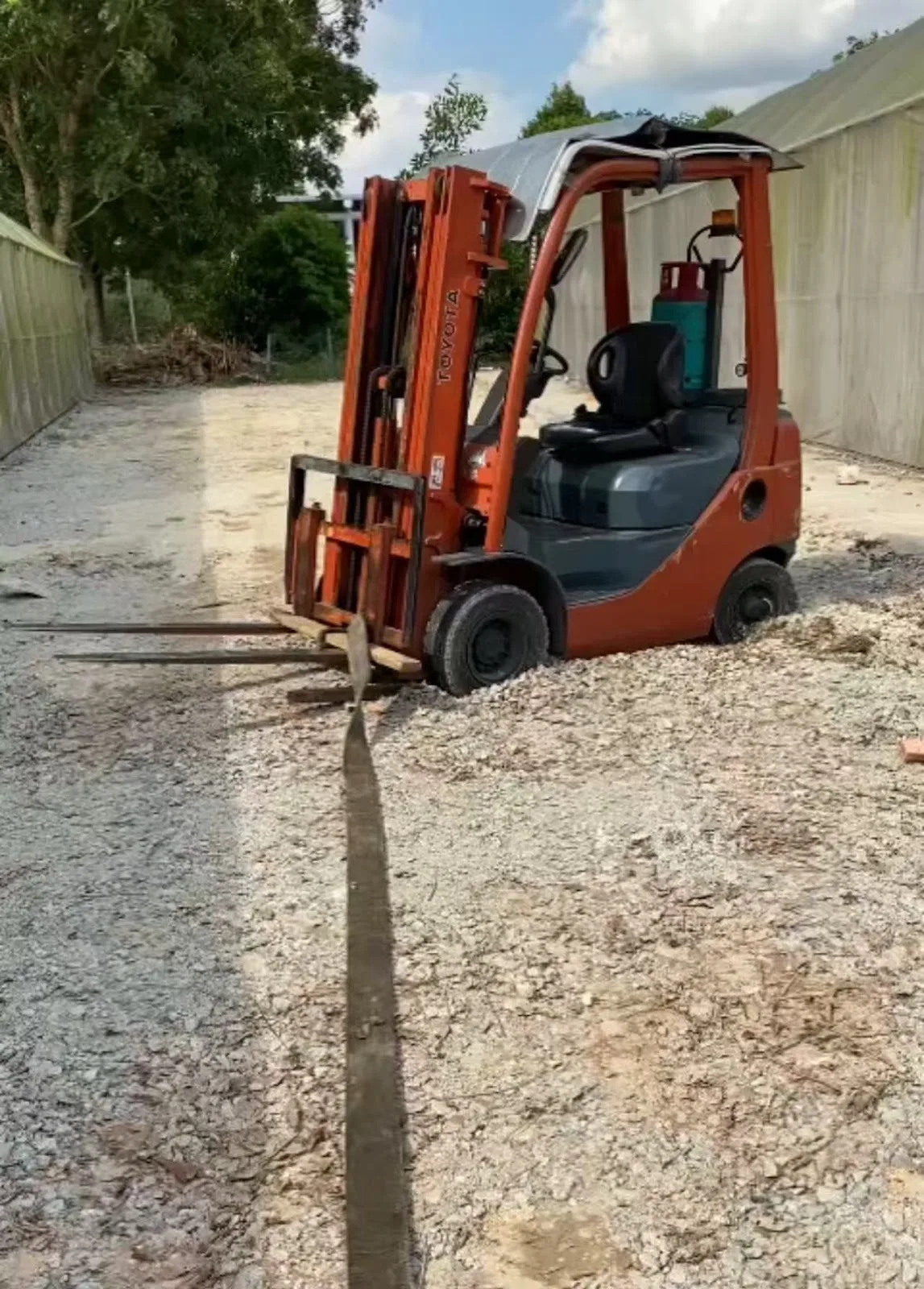
We were trying to flatten the ground to pour concrete. This was our method. The music seemed fitting.
On the same day, we got 3 separate vehicles stuck.
Things change in an instant
What I didn’t see creeping in was sloppiness. Instead of killing it at the root, we laughed at it, let it slide, and it spread—layering on top of our exhaustion. People were getting sick, dropping out, and the agency sent replacements—that were inexperienced. And we didn’t onboard them properly. One night shift, one of them flipped the oven into a manual override and forgot to switch it back. By dumb luck the factory didn’t burn down.
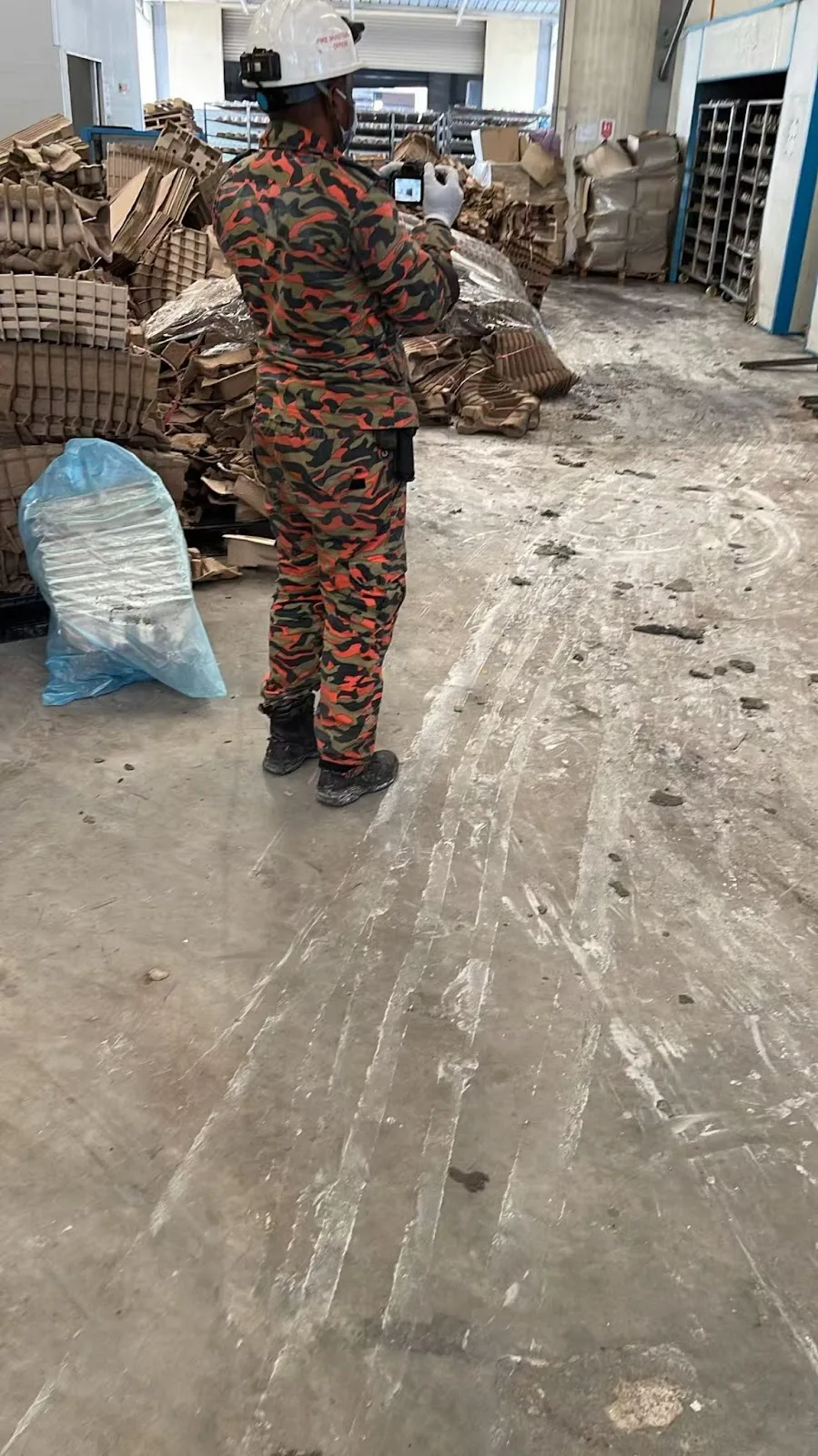
And then someone did get hurt.
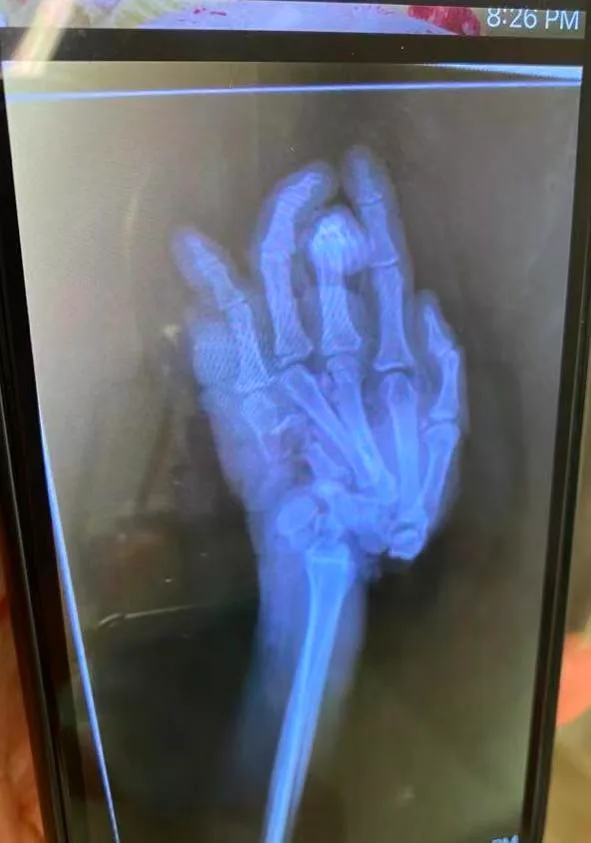
I was next to it. Heard the scream. Smelled the burnt flesh. I drove her to the hospital, and they amputated her hand.
This is still hard for me to think about, and it’s woken me up in the dead of night more than once since. Maybe if the project were grander, It would be easier to make sense of, but this was so one more coffee maker would make it onto the shelves. I don’t have much to say regarding how to avoid injuries in manufacturing other than—somehow you have to internalize that the stakes are people’s loved-ones, children. You can lose everything in seconds.
It will always be the job of the seasoned to hold the unseasoned accountable. This was one sensor that went bad and wasn’t fixed immediately. A new employee came in and did something stupid. And if there is anything that can be counted on, it is for people to do stupid things. Make it so they can’t. Some things in life, 99% isn’t good enough.
Our customer’s buyer was on-site when this happened.
“Is the tool damaged? We are behind schedule. Keep going!”
Part 5: Expansion & In Charge
Building factories. First you have to find one. And before you do that, learn what to look for.
”Go visit 50 factories first, then we’ll decide.” Mr. M.
We were in production hell, but over 4 months, I visited 80. He was 50% stalling, 50% teaching. Every factory was his own money (no leverage) so he would only pull the trigger on a new factory when alternatives were exhausted. And even then he’d wait a few moments longer. Like redlining your car. Oil boiling, pistons rattling, then at the last second, swerving into the pit stop. Maximum pain for all involved because, too many times, customers have overstated volumes or cut and yanked entire production lines to another country.
Any person that owns a small business and is still open after 20+ years, without giving up ownership has chutzpah. I tip my hat to all of you.
Finally I got the message: “Settle on a factory now.” He gives me a week. Typical Mr. M. Stall. Stall. Stall. Go! All the options were bad, so I picked the least bad. The next day I selected a factory and transferred the deposit from my personal bank account, just because it was quicker. I had all the contracts ready and I camped outside the landlord’s office. “Have you signed it yet? Have you signed it yet? Have you signed it yet?” Sometimes you can annoy people into action.
That weekend, another agent messaged me. “There’s a factory next to your customer with 500KVA and enough space. Want to take a look?” I didn’t, because we’d already settled on another factory but said “OK”. Sometimes it’s the mere act of deciding on the final path, this is final and no one can change my mind otherwise!!, that flushes the right solution to the surface.
The factory was in disarray and had been on the market for a while. It didn’t have floor plans. No fire system. Everything was in disarray, but in an instant, I could see our entire production inside the factory. I knew this was it. We’d have to redo everything, but god dammit. Who cares?
I sent my boss a message. “I found our second factory.”
His response was typically short. “OK. Go get that deposit back”
Thankfully my ego was long gone. I went back to the first landlord and made sure to embellish my boss’s lack of sanity and my impending doom if I didn’t get the money back. I returned triumphant.
Setting up the factory
In 3 months during COVID, amidst an even stricter lockdown, we went from this:
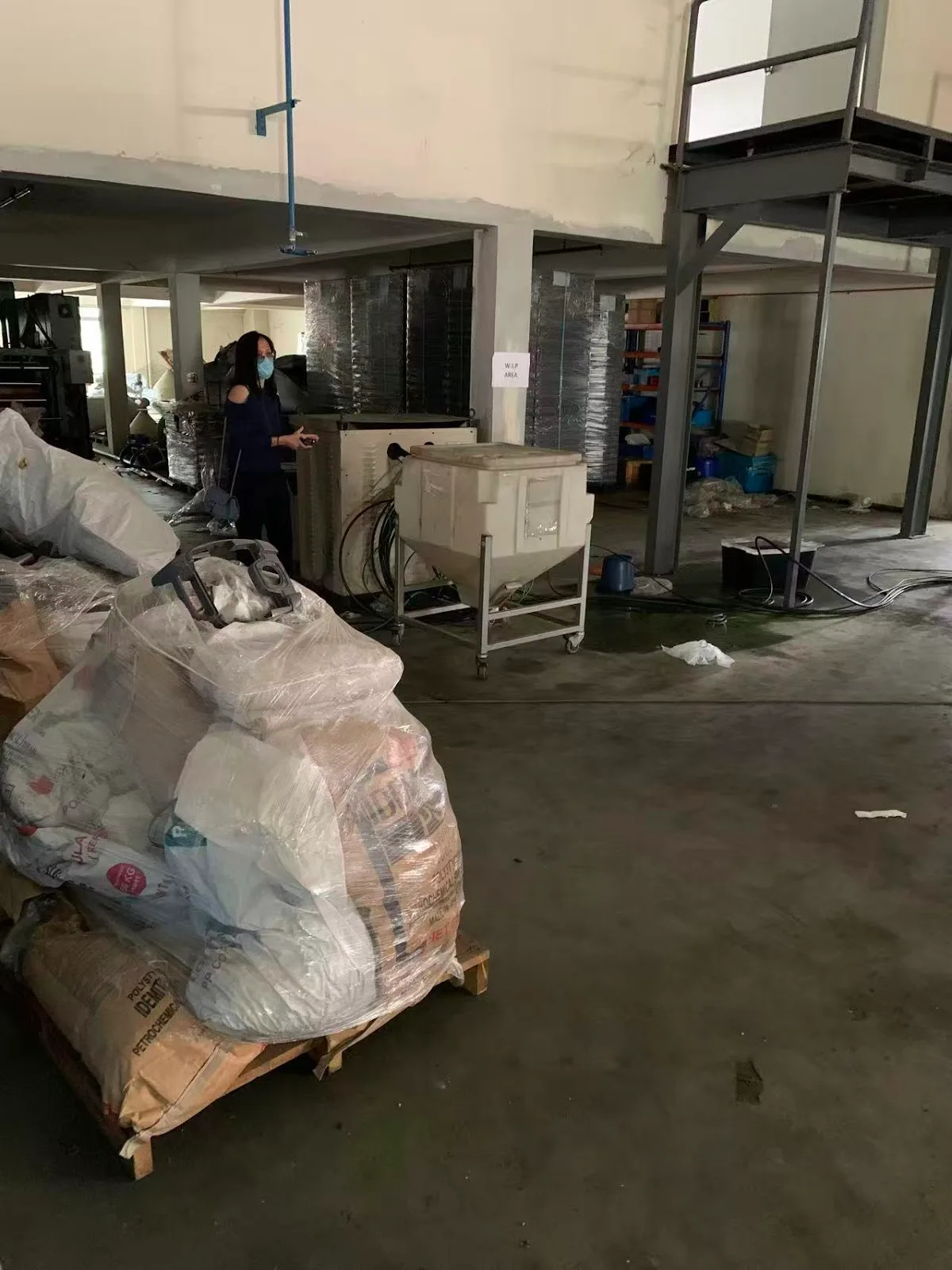
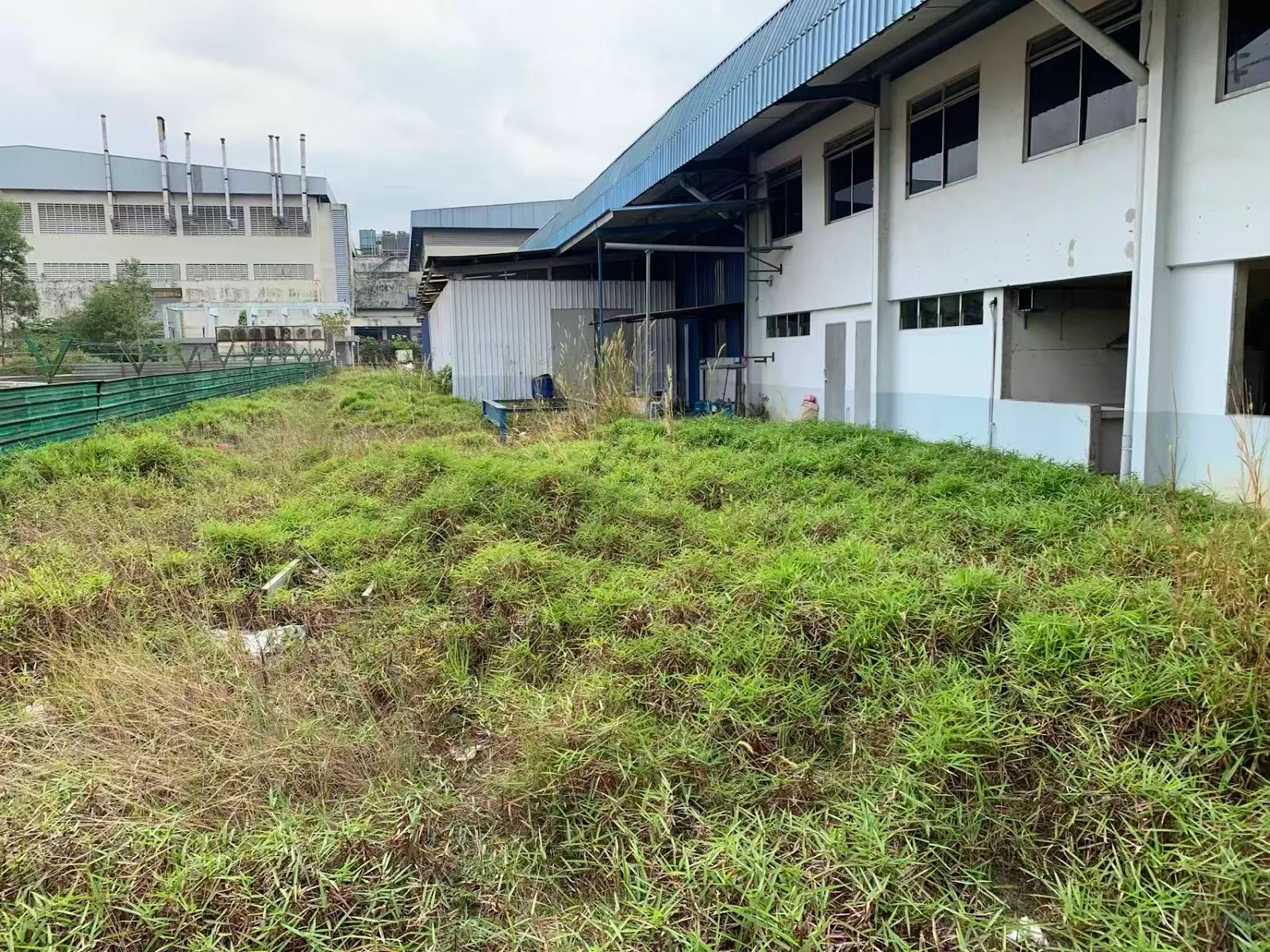
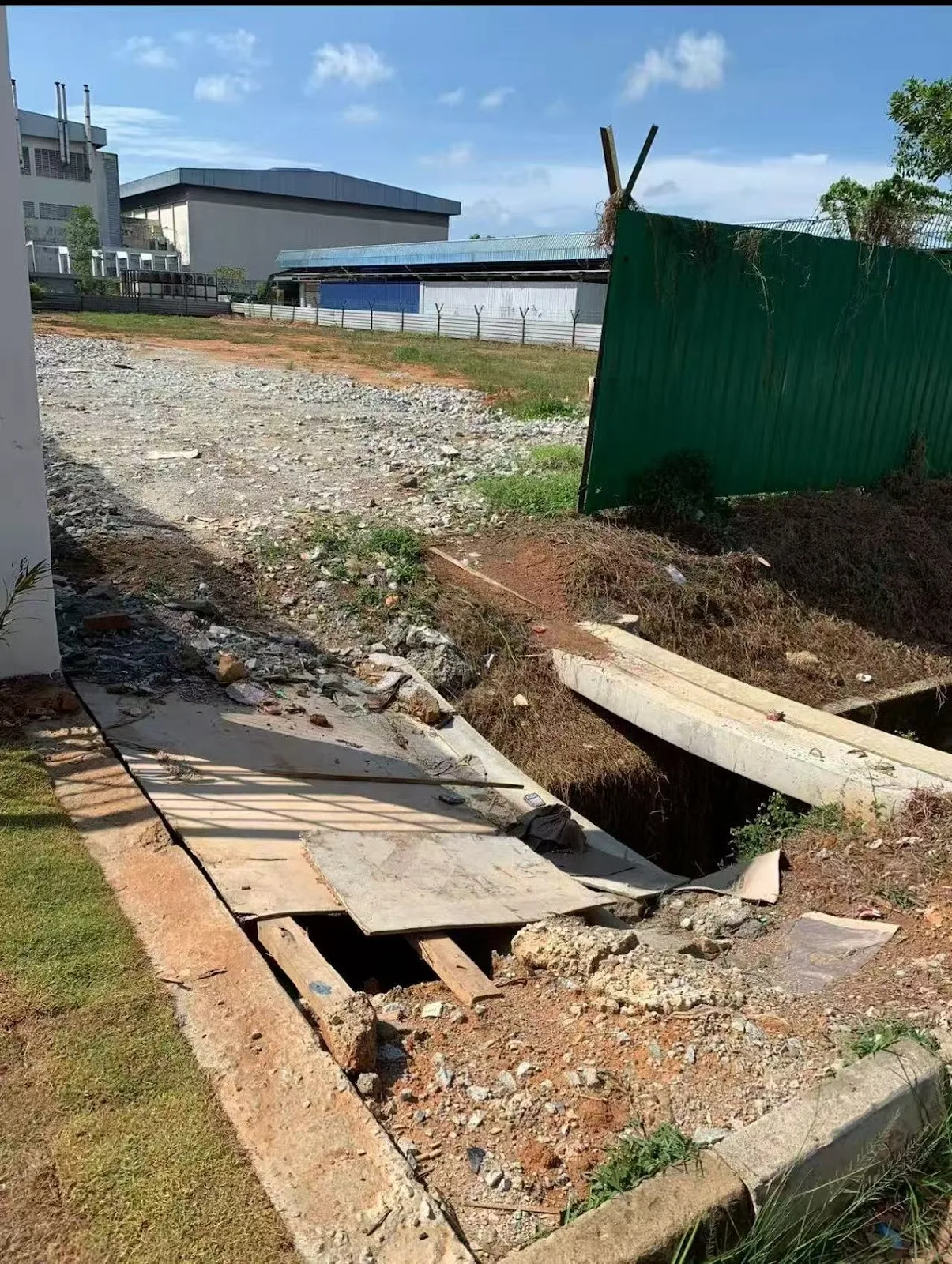
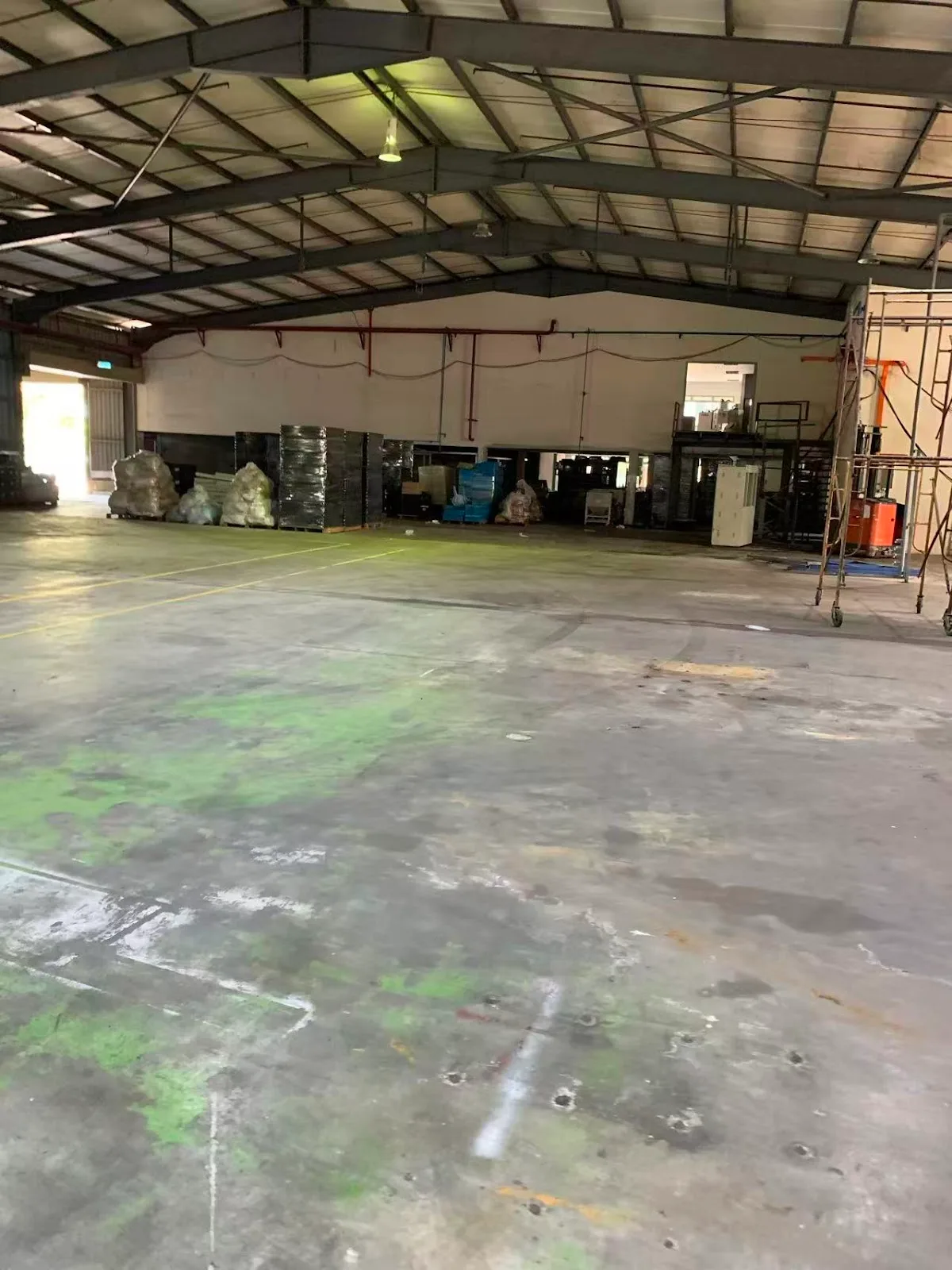
To this:
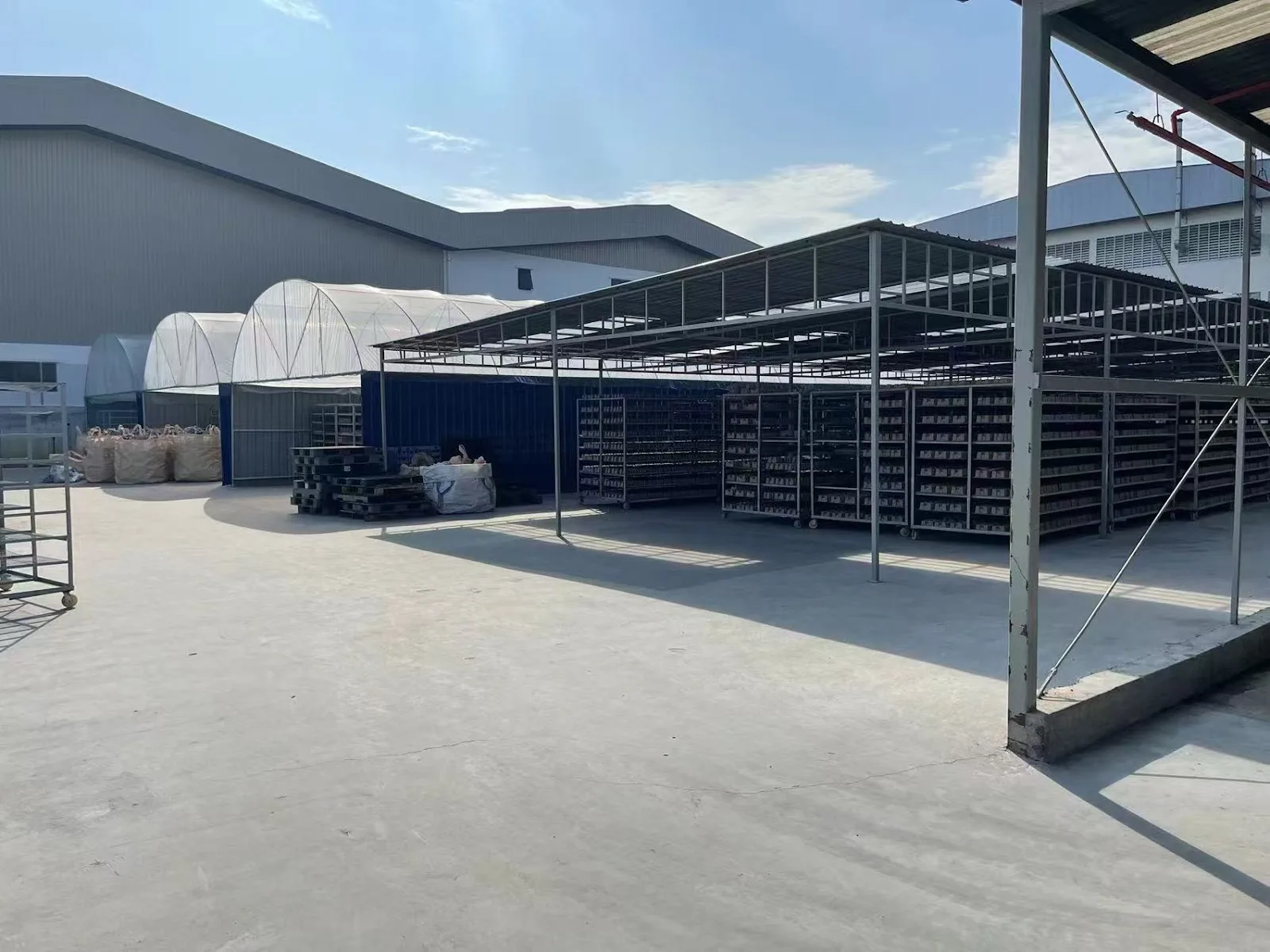
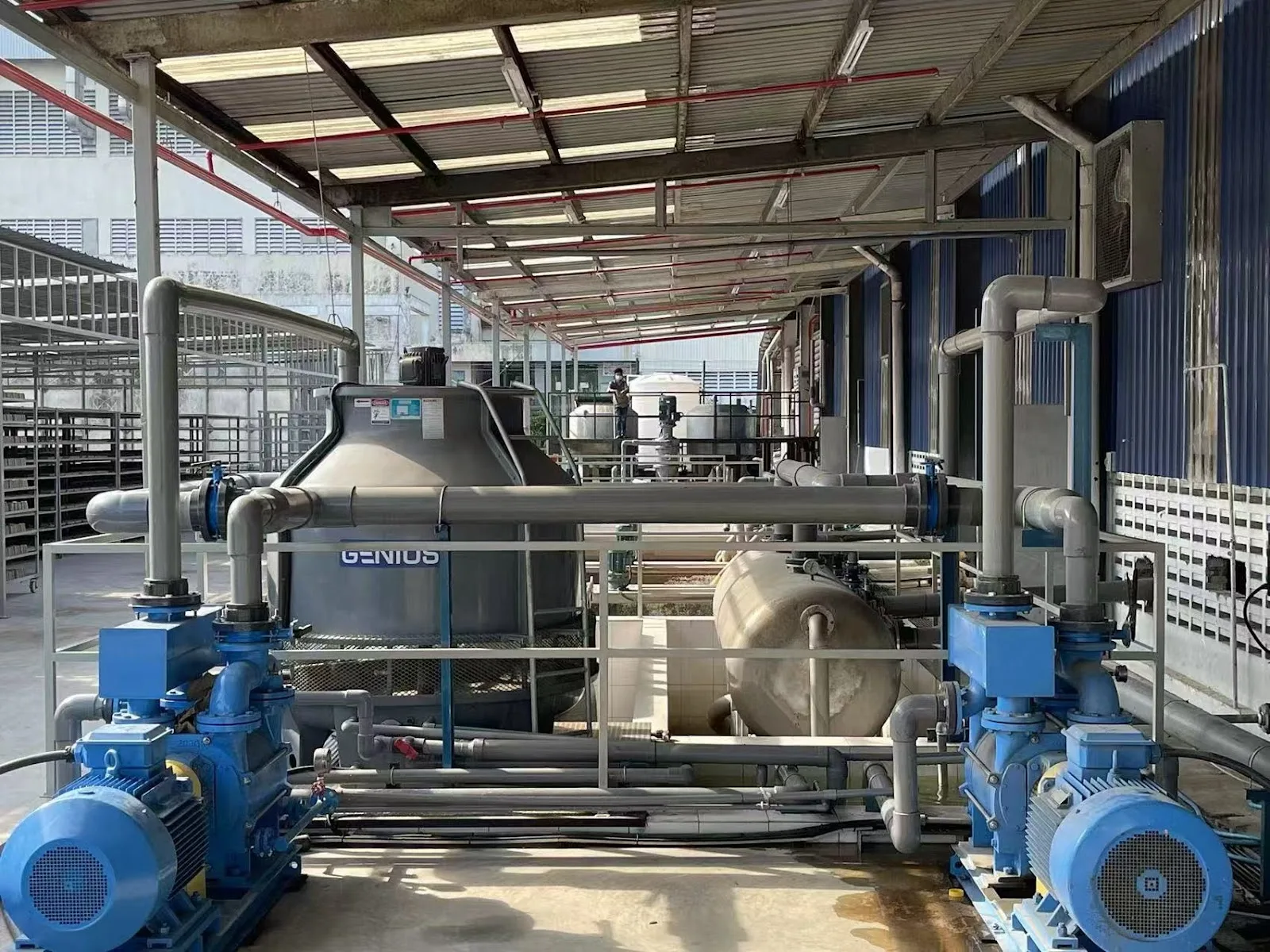
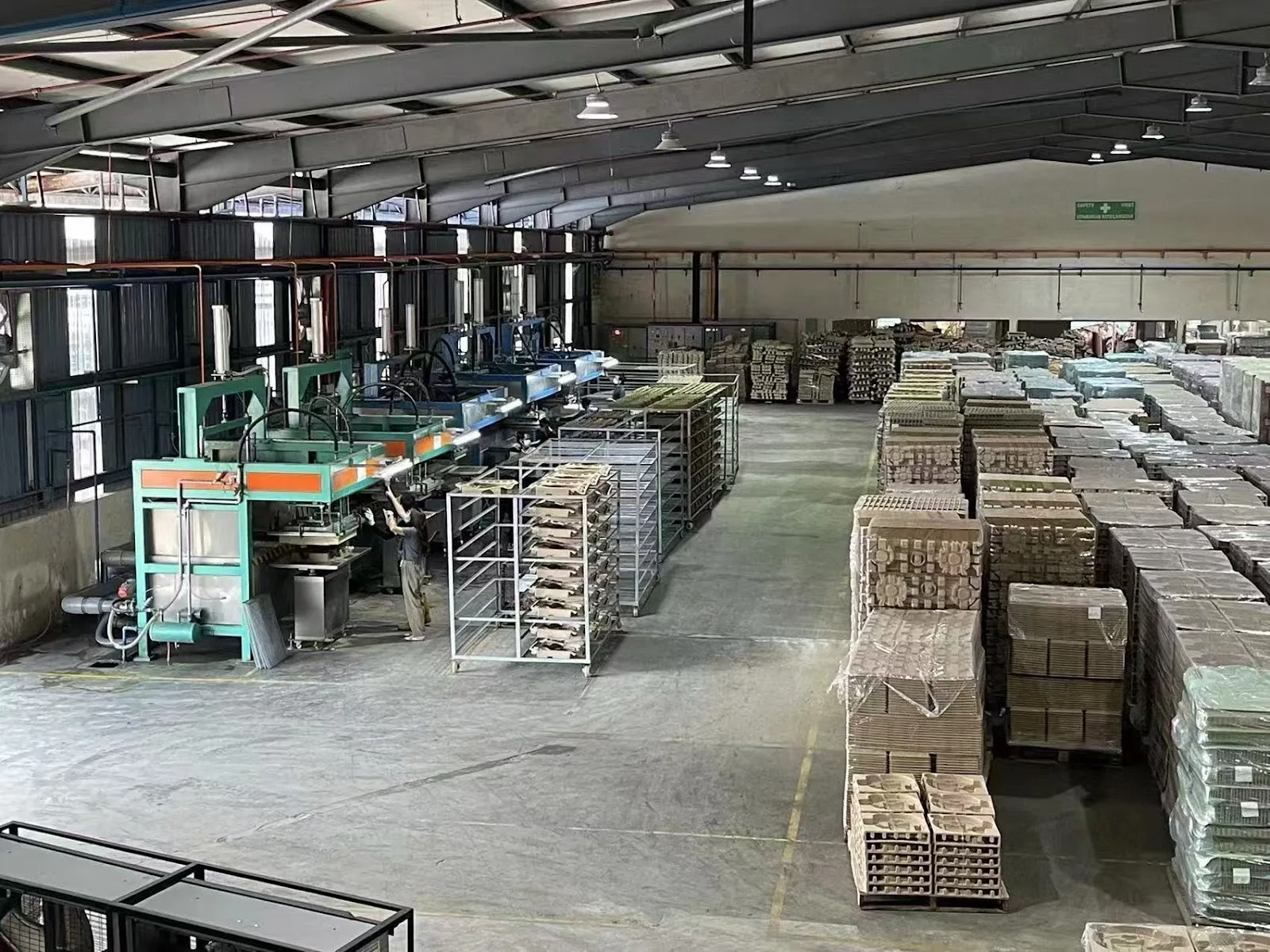
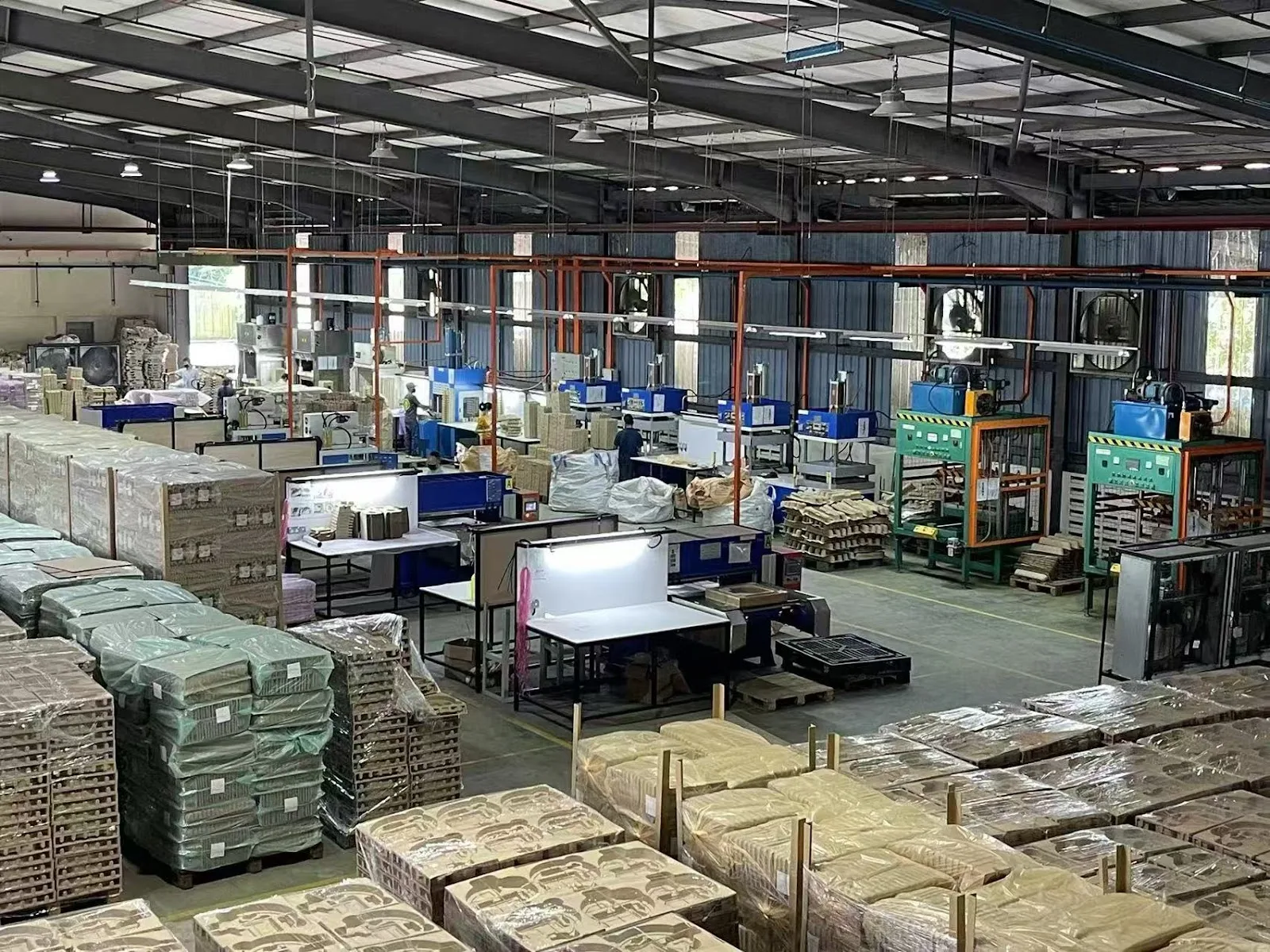
No pain involved whatsoever!
COVID barbecues and calling ahead to change the production schedule when you’re in a pinch
COVID barbecues after 12-hour shifts are some of my best memories. I wouldn’t allow beer on-site now, but back then it was different. Special. In my head it lives as the best of times and the worst of times—straight out of Dickens. We’d invite customers, and it became something people looked forward to. They’d message asking when the next one was, if they’d made the invite list.
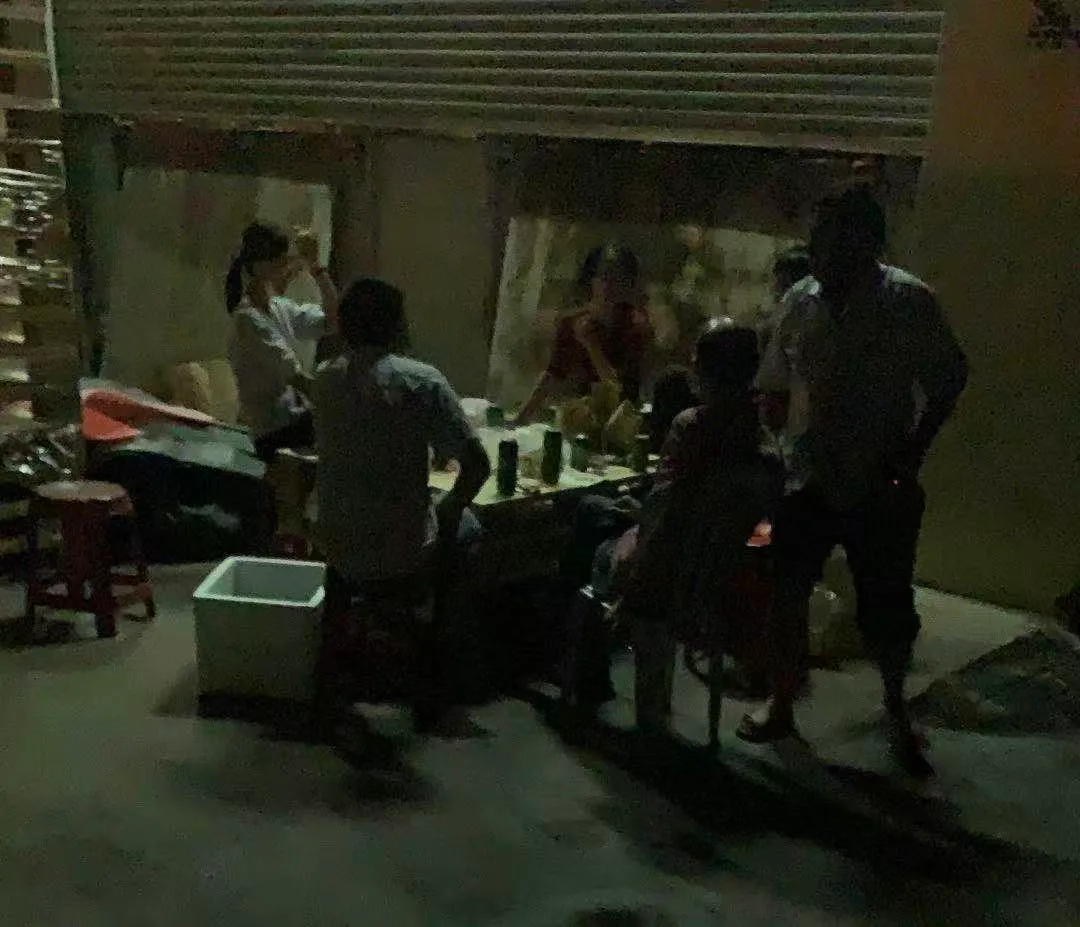
The kernel here is that through those barbecues, we stopped being suppliers and buyers—we became friends. And that simple thing, being friends with our customers (what a radical idea), went a long way. Actually liking your customers, feeling like you’re on the same ship together, is still worth something.
Because sometimes, when you’re in a pinch, you need help.
Two examples: We were massively behind for multiple clients. On paper at least. OEMs routinely build a little inventory so there are no last minute surprises. As the supplier when you are hand to mouth, it can be the difference between being placed on the chopping block or not, knowing who is building inventory and who is actually using what you are sending. This buys you just a little more time. This friend would send me their internal production schedule and tell the warehouse to hold off on escalating if our shipments were late. If there was a problem, he handled it with us directly. If this isn’t amazing to you, it’s because you’ve never had to rely on forecasts for production.
On another occasion, we were again headed towards cosmic death. All of our orders for clients tripled overnight, and we had no way to run all the tools at once. Don’t oversell your capacity, you might be thinking. Hold more inventory. Yeah, yeah, if you think that, just wait. Customers won’t reimburse you for the inventory you build, even when guaranteed by their purchase orders. Or they pay you 18 months later. Also, 9 out of 10 times their orders don’t live up to their forecasts.
The same friend saved us again. He shifted production that day to a different model, one we had a little inventory of and could produce faster. Several other suppliers were hanging on the edge. He simply decided who would take the full wrath of the CEO and the customer, and steered the fire away from us. The supplier he turned the fire on suffered greatly.
Haunting the factory
Mr. M was slowly passing the baton. I was also starting to find my rhythm, doing things the way I wanted to. Now it was me haunting the facility, and I did. I would stop by at 2 a.m. and see if things were working. You’d catch people sleeping all the time on the night shift. I’d show up right at 4 a.m. and make sure the 15-minute break didn’t bleed into twenty. It’s the curse of running something 24/7. On one hand, it’s hard to make money running one shift, but that money comes at a cost: your sanity.
The local guy
I’ve found investing in a supplier that can be a fixer when you’re in a pinch pays dividends. My guy was Bin. He owned the shipping company we used. Bin was a solid figure with dark eyes and tattoos edging out from under his sleeves. A man with presence. A good guy with a bad background, filled with stories he didn’t volunteer even after a few beers. Good maybe isn’t the right term, but he was rock solid. His drivers knew everything that was happening, as drivers often do, and he made sure that information got back to us. If I called, he answered. 3 in the morning, if I needed a truck, he’d light up a cigarette, slip on his flip-flops, and be on his way.
During COVID, we were short-staffed for eight months. I didn’t have a warehouse manager or anyone to load the trucks. We were still shipping 100-200 pallets per day, and through these eight months, Bin’s drivers labeled and loaded all of our finished goods. I don’t recommend this as a strategy, but leaks in the ship are unavoidable. Having really good people to help plug holes is a lifesaver.
Drive-by forklift
I could write a few chapters about Bin saving our ass, but for time’s sake, here’s one more.
Most OEMs require JIT (just-in-time). We were in Johor, but the OEM was in Penang: 12 hours by truck. A truck to Penang cost $500 USD. The twenty pallets on board were worth maybe $5,000. The truck left Wednesday night, delivered Thursday morning. Inventory: zero. We were shipping hand-to-mouth. Then we got a call. Shipment locked out.
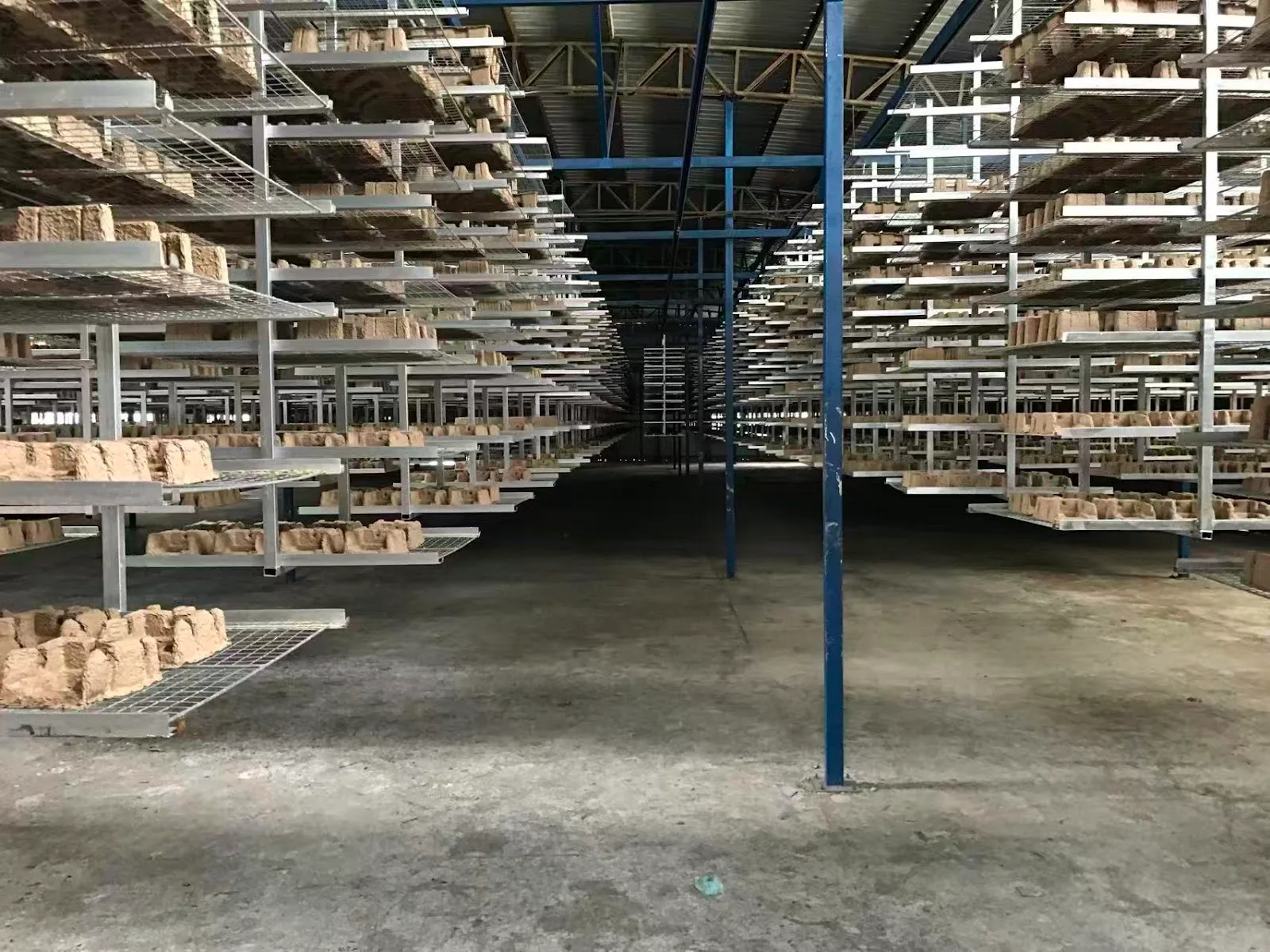
AQL 2.5. From the lot, they sample 200 products, with a max of 5 defects. They found 8 or 9 pieces under/overweight. For pulp trays, if you weigh them right off the press, they can be 5-10% lighter than a day later. Especially if it rains, because they absorb moisture. Normally, for non-egregious stuff, you can make a call and someone will help, especially if you have good rapport, but we were the new supplier, and the QC was very disgruntled about management bringing us in. (I wonder why…) They gave an ultimatum. Replace immediately, or they’d escalate to the end customer.
We couldn’t admit we didn’t have any stock, because that would get escalated too. I called Bin to send a truck with four pallets up to Penang. Rented a forklift for a couple of hours. We rendezvoused on a rural street. Bin’s driver, Aman, unloaded the 20 pallets, stripped the top layer off each, swapped them for in-spec parts, relabeled, reloaded, and sent them back in.
All in a day’s work.
Part 6: Personal Payoff
Attaining Wisdom
God, I hope I got wiser. The alternative is too horrible to think of…
Mark Twain said it best in Roughing It:
“The moral of it is this: if you are of any account, stay at home and make your way by faithful diligence: but if you are “no account,” go away from home, and then you will have to work, whether you want to or not. Thus you become a blessing to your friends by ceasing to be a nuisance to them–”
You’re here, so I’ll assume you coughed up the same ticket I did for this rust eaten startup freighter—steaming toward glory through a fog of self-inflicted pain. The only certainties on board are leaks in the hull and midnight doubts about why we ever left port.
So here’s my first piece of advice.
Many suppliers carry PTSD from brutal OEM treatment. Every exporter has their war stories. You might be thinking: I’m a great customer, so why don’t they treat me better? It’s because they’re waiting for the other shoe to drop. Building rapport takes time. Remember this.
Second: There is a Chinese saying that goes “A distant relative is not as good as a close neighbor.” Yes, Chinese shops are faster and cheaper. Sometimes just getting quotes from US suppliers feels like pulling teeth. But be wary my friends, when the roof leaks on a Friday at 5 pm, that 8 000 mile relative can’t mop the floor, or your tears.
Use Alibaba as a crash course, not a lifeline. Need prototypes? Fine. Need production critical to your launch? Layer backups. Place the same RFQ with three vendors. Then sleep with one eye open. Sometimes you’re up shit creek and have to throw a Hail Mary pass. Fine. But make sure your bases are covered. Imagine the flip side: Some stranger across the globe, barking demands in broken English, expecting a quote by tomorrow. Add in shifting politics, where the fading brand of the American Dream is now being overshadowed by TikTok clips of homelessness and gun violence.
“The equipment of guerrillas cannot be based on what the guerrillas want, or even what they need, but must be based on what is available for their use.” “On Guerrilla Warfare” by Mao Zedong, Chapter 5, Part 3.
My third piece of advice is keep a check-list for talking with suppliers. Not every supplier will check all the boxes. Sometimes you have to do a risk buy, but do so consciously.
Add to it, delete it, tailor it however you want, but then paste it to the side of your computer.
- Where is this supplier from? Is that product known for being produced in that state/province?
- My volume vs. their stated capacity. Am I ordering a box of screws from an iron ore company that’s listed on an Exchange?
- Who is this? The factory? Trading company? An apartment?
- Can it legally ship? Any export controls?
- Packaging Spec? Wooden box or plastic box?
- Am I sending aerospace specs for a garden rake? Tolerances match process capability; if the CNC can only do ±0.1 mm, don’t send ±0.01 mm drawings.
- Have I checked the raw material prices? If a kg of aluminum is $2.50 and I’m buying a block that costs a dollar, I’m in for a surprise.
- Did they say it will be done “Friday”? This often translates to “Monday-ish.” Holidays?
- Is this your forwarder? If you care about time, handle the forwarding yourself.
- Has the supplier given the packing list, invoice, information about the product to the forwarder? This delays more orders than you can imagine.
- Did you check that the raw materials were purchased? Photo! Progress of the products? Photo! Progress of packaging? Photo! Did your forwarder pick it up? Photo!
Fourth – first appearances can be deceptive.
We were running 24 hours a day, seven days a week, and still couldn’t meet our supplier’s demands. The customer had buyers sitting on our factory floor with stopwatches.
My phone rang. It was Mr. T.
“Let’s have dinner tonight. Meet us at Spicy Momma’s Hotpot.”
Oh, shit.
Mr. T is the most humble customer CEO I’ve ever met, and not in a way that puts you at ease. It makes your skin crawl. He was six feet tall with a medium build, graying hair, a uniform of shorts, flip-flops, and a QC hat, with a cigarette always dangling from his mouth. He could out-drink anyone in Malaysia, was a fearsome gambler, a genius with numbers, and even better at reading people. And his bite was vicious. He would bring the wrath of God down on anyone who crossed him. Fear, that’s how he managed. Mr. T radiated warmth, but if you touched his skin, you’d pull back from the cold.
That night at the restaurant, I dutifully drank myself into a stupor without a word being said about my recent inability to deliver, which only made the reprimand worse.
At some point in the haze, I stumbled up to the counter to pay. The only thing I remember saying to the poor woman behind the register was a complaint about her beer. She didn’t have any in stock, so she had personally walked 400 meters to a store and carried two 24-packs back herself. I thanked her by asking, “Those are $2 a bottle. Why are you charging us $3?”
Here’s her side of the story: Sophia opened her restaurant in January 2020. Flawless timing. She was just trying to keep the lights on, and Mr. T was an important customer who used her restaurant for meetings/punishing suppliers. Sophia was secretly keeping the place open despite the country-wide lock down, just to survive. On this particular night, Mr. T brought in a particularly obnoxious foreigner—her words were “scum from the bottom of the barrel.” This asshole staggered up to her register, looked her dead in the eye, and complained that her beer was too expensive.
I radiate charm and charisma. Reader, I married her. Yes, really.
Fifth, make sure to check your own hubris every now and then.
…from personal experience…
My Triumphant Return to the States. It’s been 13 years and I’m finally moving back home. I tell my wife–why use air freight when we can save all this by sea.
“I’ll handle it.”
I get multiple quotes. At this point I’m an expert. I know what to look for. Everything is smooth. I brag to my friends how much I’m saving. $1.40/kilo. Damn good! Then the add-ons start. Fabrics, +$0.07/kg. Residential address, +$3.6/box. Oh, you have brand-name items, +$0.07. For 61kg of stuff, I’m ultimately charged for 78kg. Total cost: $135. Ha! I knew that was coming. No problem! I pat myself on the back for saving $500 and a job well done.
Two and a half months later, two withered packages showed up on my doorstep, one with my books, and the other with 1,000 plastic kid tiaras inside. My wife’s shoes, clothes, and bags are gone forever, but at least they eventually gave me a refund. $78.
Which in a broader context sums up this entire piece quite nicely. I left Cal Poly in order to save $80,000.
And look at me now! Think of all the money I saved!
Part 7: How I got out of a Malaysian prison
Kneeling at the final gate, I looked out into an expansive, two-story corridor with cells on both sides. The silence changed to a hum, then a buzz. A cacophony of yelling inmates erupted as they saw the lonely foreigner being escorted in. Oh, fuck. I’ve seen the movies.
They led me to a cell and slammed the door with extra force. A mixed-race tree trunk of a man walked over, wearing nothing but a pair of tighty-whities. Next to him were what I gathered were his henchmen, one with a long gash across his head. Both looked dumb, but the way their bodies were scarred up, it was clear they didn’t care much for their own well being. So they probably wouldn’t care much for mine, either.
50 inmates to a cell. Something like 4 steps by 15 steps. I paced this many times. Here’s what Gemini says:
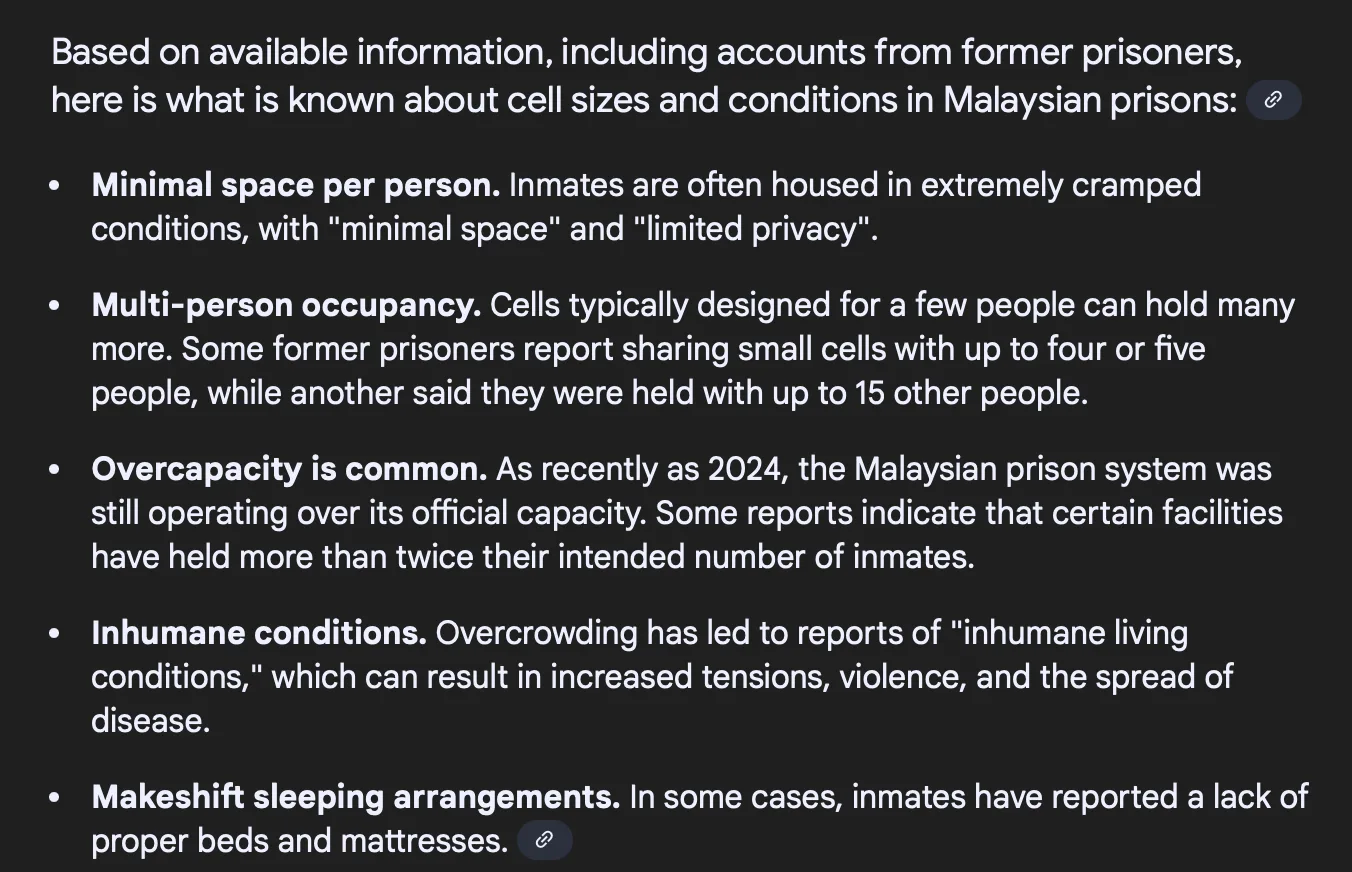
“I’m Big Baby,” the tree trunk said. If I wasn’t scared out of my mind, I might have found this funny.
Wait… did he have a Chinese accent?
I said something to him in Chinese. “Nǐ hǎo, xiōngdì…” (Hi, brother…).
A smile broke out on his face.
Then, a beautiful voice cut through the noise. The chaos of the prison hadn’t stopped since I’d arrived; men from other cells were still yelling to get my attention. Another voice joined the first, in perfect harmony, and the sound became unmistakable—it was the last call to prayer of the day. It’s hard to put into words, but the acoustics of that prison were wonderful. The sound echoed smoothly off the walls. In each cell, voices began to chime in. I forgot how long it lasted but it ended with everyone shaking each other’s hands. I’ve never been so grateful to stumble upon religion.
To some, two weeks in prison sounds like a lifetime. To others, they’ll scoff that I’m making such a big deal of it. Neither of these relate to my point. I never felt pity for myself. I did cry once, a moment of emotion I was sure would make me a target, but I was immediately comforted. “This place breaks everyone down,” an older inmate told me. What I felt then and still feel today is some weird gratitude. I was there by accident, but my trajectory would have put me there eventually—or in some place much worse. In hindsight, it was one of the best things that ever happened to me. The stay was short, but it was just the nudge I needed. I got COVID inside and spent a week in a delirious state, probably closer to death than I like to admit. The experience didn’t make me stronger—it definitely made me weaker, ha!—but it was all a small price to pay for a new lease on life.
Part 8: How I’m currently wasting my life
For a brief period, in this niche field, I was known. Mr. M was looking for a successor and thrust me to the edge of the industry. “I was 34 when I started this company!” he’d say. “You’re not even 30. You’re barely at the starting line.”
What future do you want for your kids? Many have said something similar but I first heard Elon say this.
Sometimes you just hear something at the exact right time that you need to hear it. I’d always wanted children, but thought marriage would be better if treated like a factory contract: fixed amount of time with the option to renew. In practice, 18 months into raising my first child, I’m damn happy it turned out a bit different in practice!
I left the packaging industry not because I think there’s more honor in tech. Packaging, the noble art of preventing catastrophic disassembly during transit, will still be important when we’re living among the stars. What drew me back, and ultimately to Terraform, was the chance to work with people who are either optimistic about the future or pessimistic enough to have the agency to try and change it, which the US still has the highest density of. Everyone told me I was dumb. I was throwing away my career, everything I’d built, just to start over.
There’s an ancient Chinese saying: “Break the kettles and sink the boats.” It refers to Xiang Yu’s order at the Battle of Julu (207 BC); by fording a river and destroying all means of re-crossing it, he committed his army to a struggle to the end with the Qin and eventually achieved victory. I took this approach.
It wasn’t a straight line. For a quick minute I was lost—I nearly pivoted into manufacturing dried orange peels, then tried to rope a friend into a dumpling franchise. Thankfully he had the good sense to decline. I had decided early on I was going to read my way out of this fog. A book that I credit with setting my new trajectory in motion is Deutsch’s Beginning of Infinity. The entire book is phenomenal but the first seven chapters are some of the best and most inspiring pages ever written. Don’t trust me though, Naval speaks ad nauseum about this book. Then I found myself in the tech-manufacturing corner of X, where Jason’s S3 pointed me to Terraform.
So here we are. The world is burning, the AI is coming for us, and we’re all probably going to die in a fiery heat death by the sun. But hot damn, it’s exciting! Because it is a thrill of a lifetime to be at Terraform Industries with so many top shelf atom-manipulating MF’ers fighting to live another day.
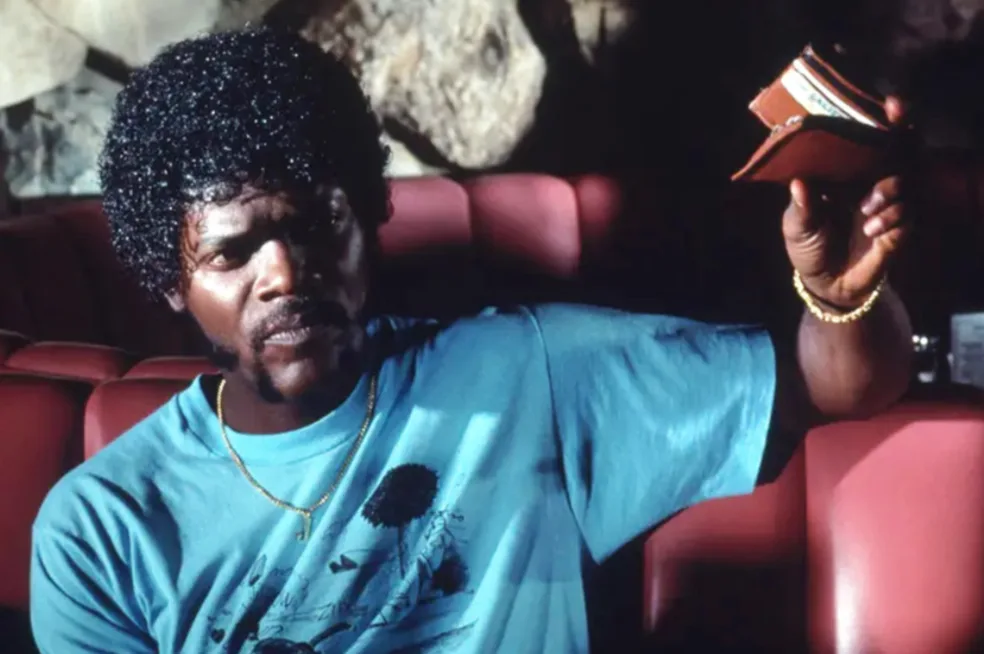
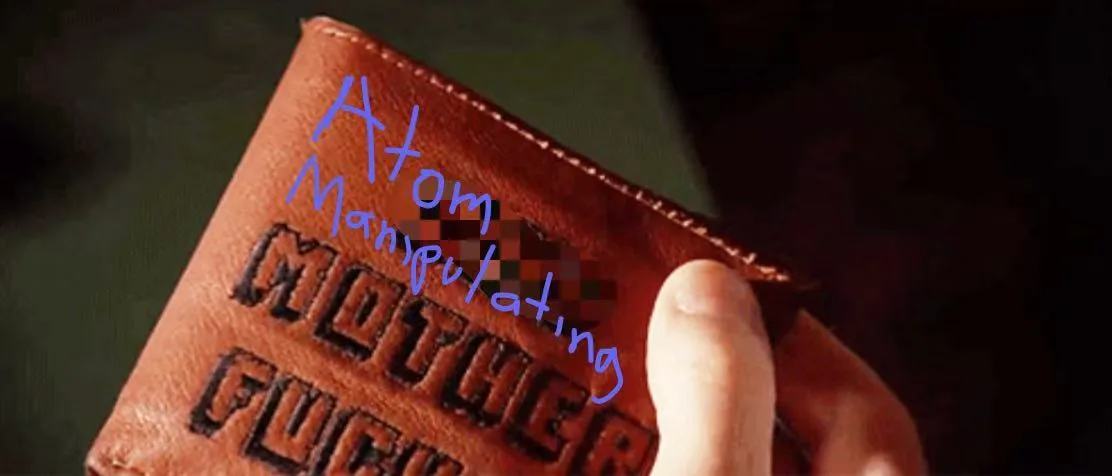
I finally found the right castle.. 😎
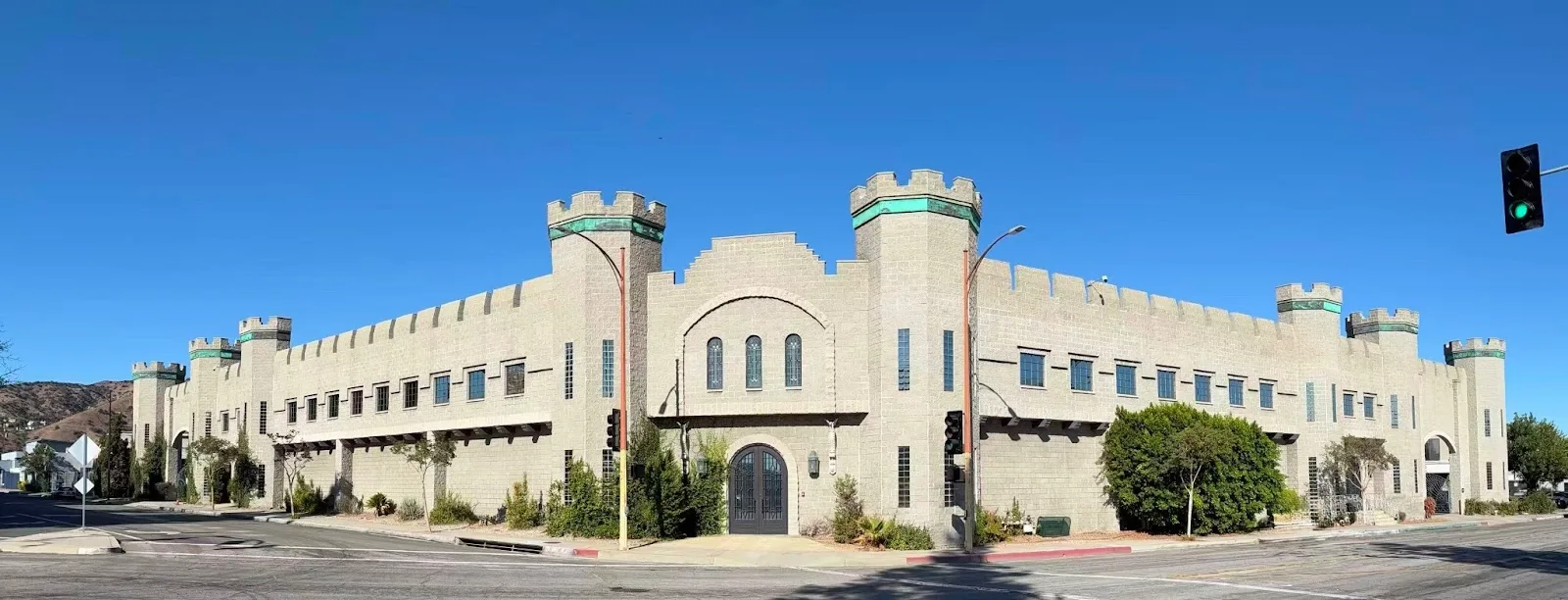
Terraform has a wide range of life-ruining, career-ending opportunities for anyone sufficiently psychotically ambitious to, like Ken, believe that yes, really, we can upgrade the way humans get raw materials. Come over and build synthetic natural gas, oil, ammonia, steel, non-ferrous metals, desalinated water by the millions of acre-feet, cheap solar, AI power systems, and so on!