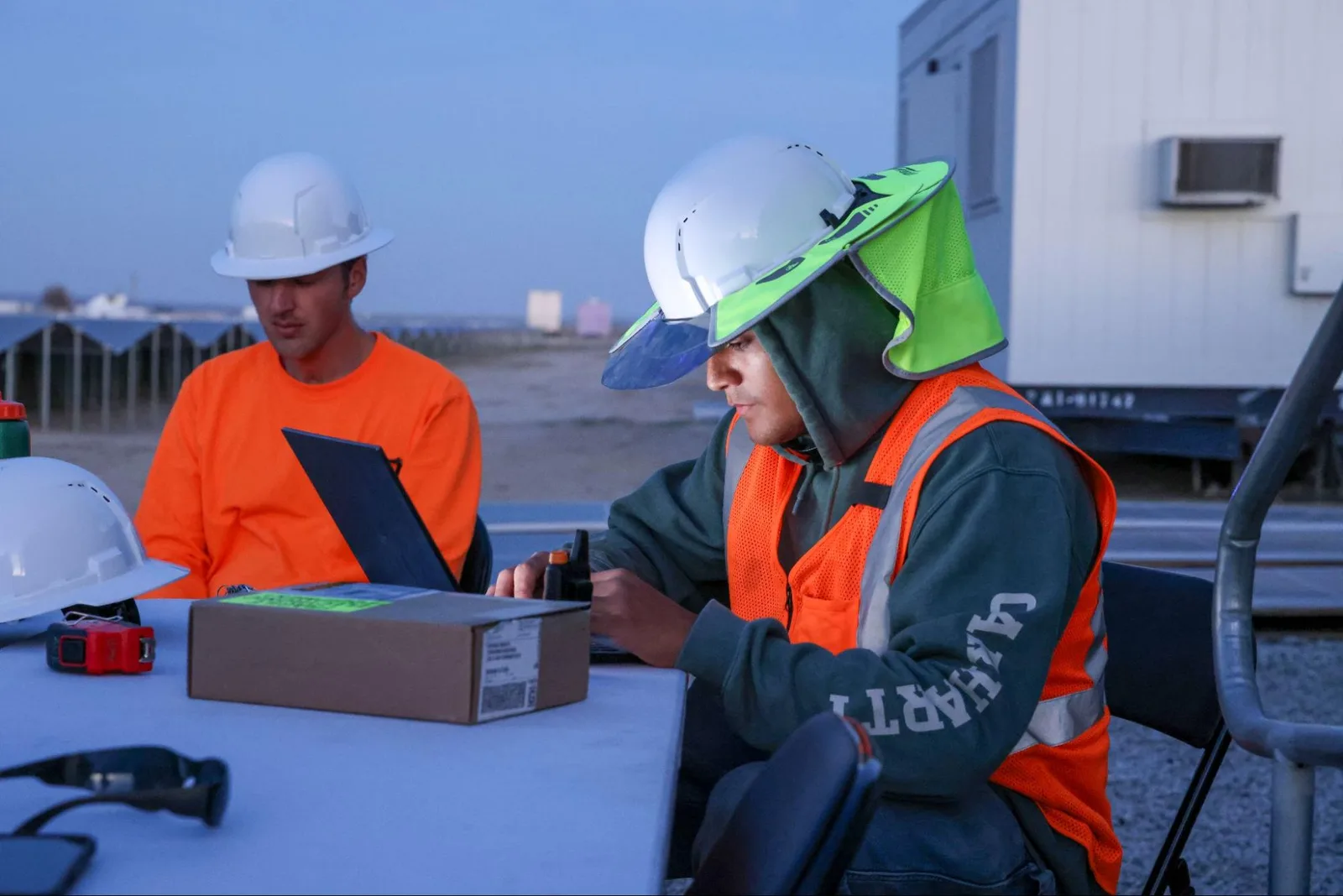
Terraform Industries Activates Muroc Desert Test Site
Makes synthetic fuel from sunlight, water and air
Terraform Industries was founded to make unlimited oil and gas from sunlight and air. Cheap energy is fundamental to our civilization, and we are here to increase supply. We believe our descendants must be radically wealthier than we are.
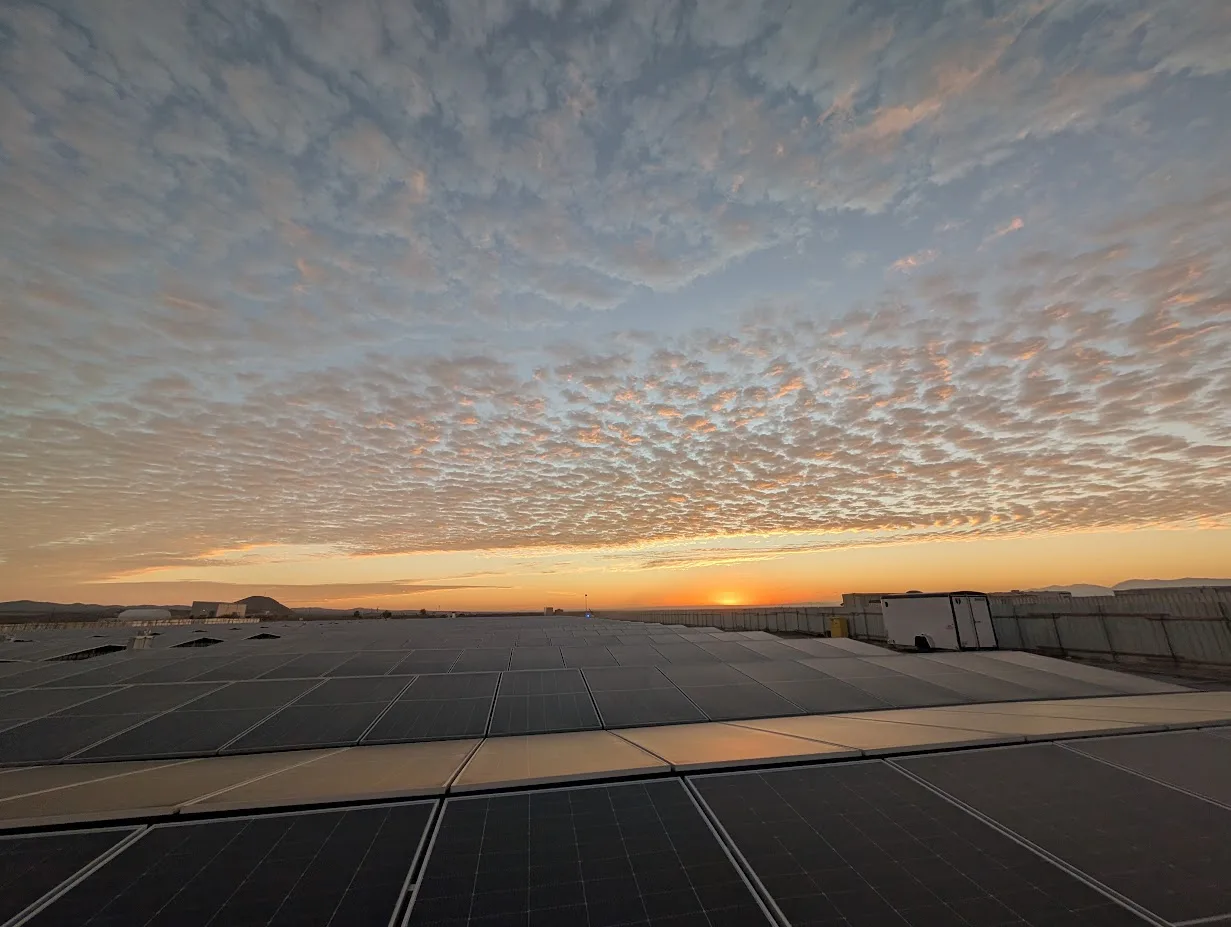
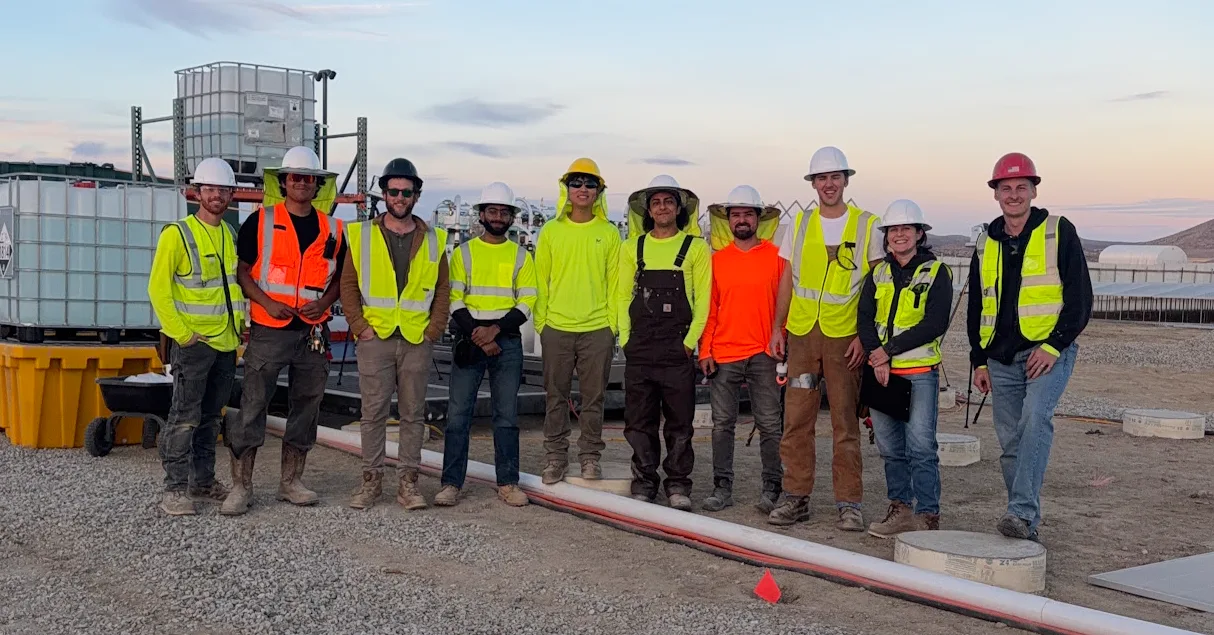
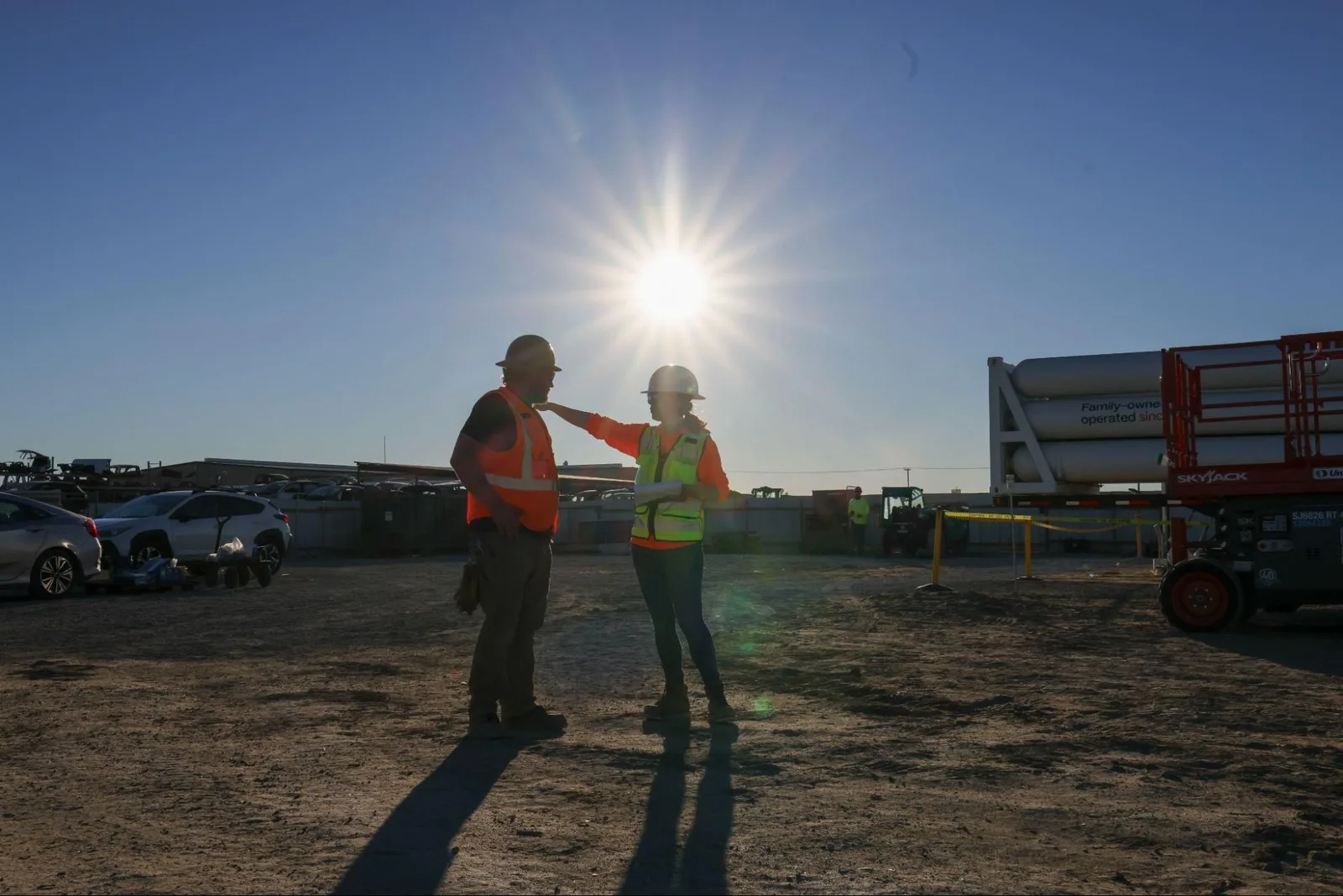
Last week, five years to the day after founding, our incredible team completed our integrated test campaign at Muroc, our full scale desert test site. Land purchased earlier this year, we permitted and constructed a 1.8 MW solar array, then commenced a campaign to qualify and ship Terraform-developed synthetic fuel hardware to the site.
Five years ago, we outlined a set of stringent conditions necessary to produce economically useful synthetic fuel: - Modular production, for economies of scale - Integrated development and design, for harmonious operation - Colocation with solar, to cut parasitic energy transmission costs - No unobtanium, for easy production scaling - Consumer appliance design language and capex, for investment returns better than drilling for oil - Intermittency-friendly, for following the sun, seasons, and weather - Direct coupling with solar, to cut parasitic power conditioning costs - Direct air capture of CO2, difficult but necessary for avoiding marginal siting constraints of point source capture, and for unlimited scaling
The Muroc Terraformer is the world’s first synthetic fuel plant that fulfills these criteria. First to make fuel from DAC CO2 and directly solar-coupled electrolysis.
The Terraformer has three major components, each embodying dozens of exceptional technical feats across fields littered with the ruins of previous attempts. On each of the electrolyzer, direct air capture, and reactor systems we called our shots and then executed.
Promises were made and promises were kept.
More than three years ago, we published our electrolyzer design spec. It states that $1/kg hydrogen is possible with an electrolyzer with a radical design pushing not for ever higher efficiency, but rather sacrificing efficiency in favor of lower costs. The industry largely ignored us, watched the IRA 45V PTC disappear (as we predicted it would) and then laid off their teams. Meanwhile we installed our injection molding machine, refined our design, built up plastic stack welding from scratch, built an ever more ambitious series of qualification testing rigs, and now routinely produce high purity hydrogen from electrolyzers directly connected to solar arrays. We produce for well under $2/kg today and are on track for $1/kg at even moderate scale.
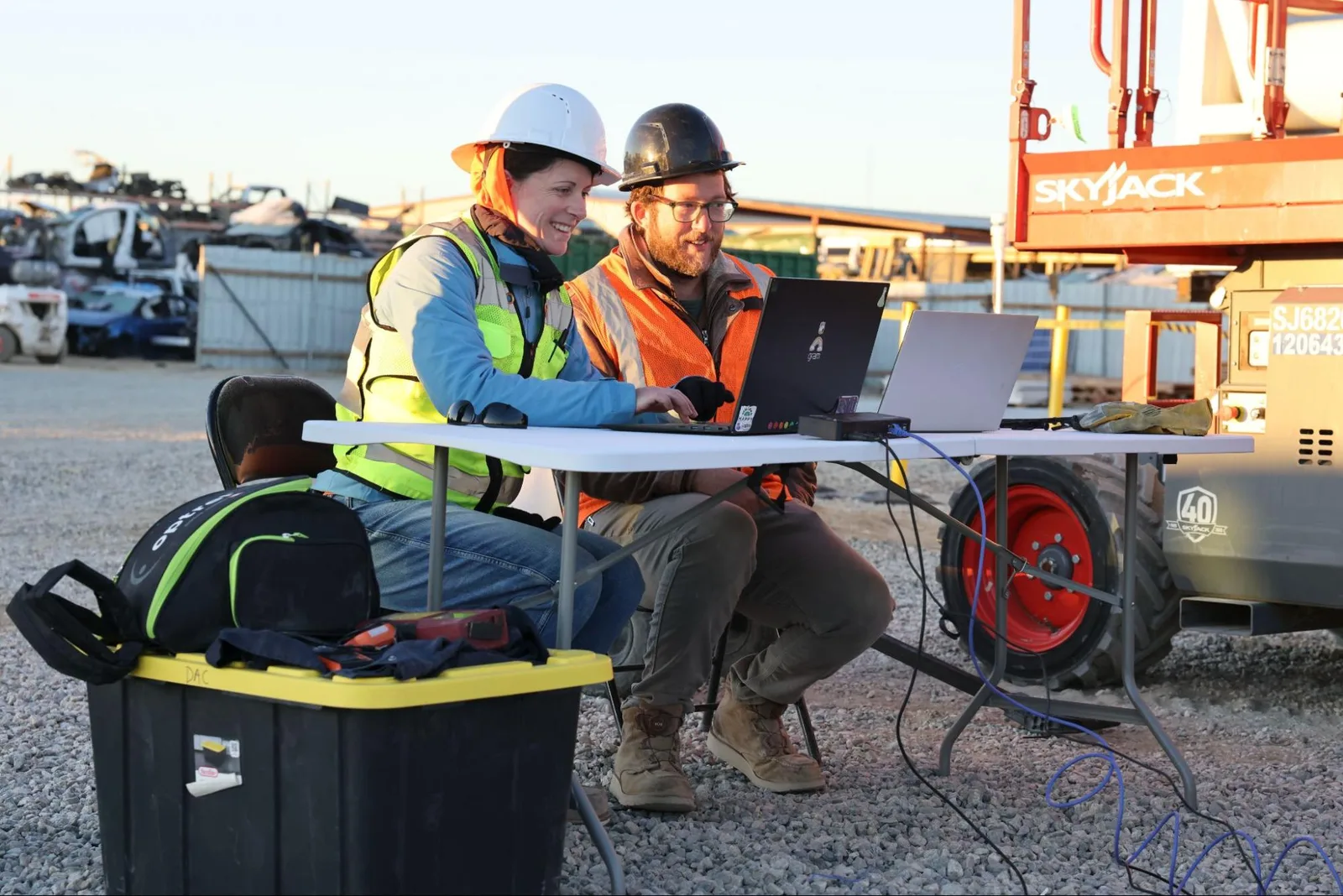
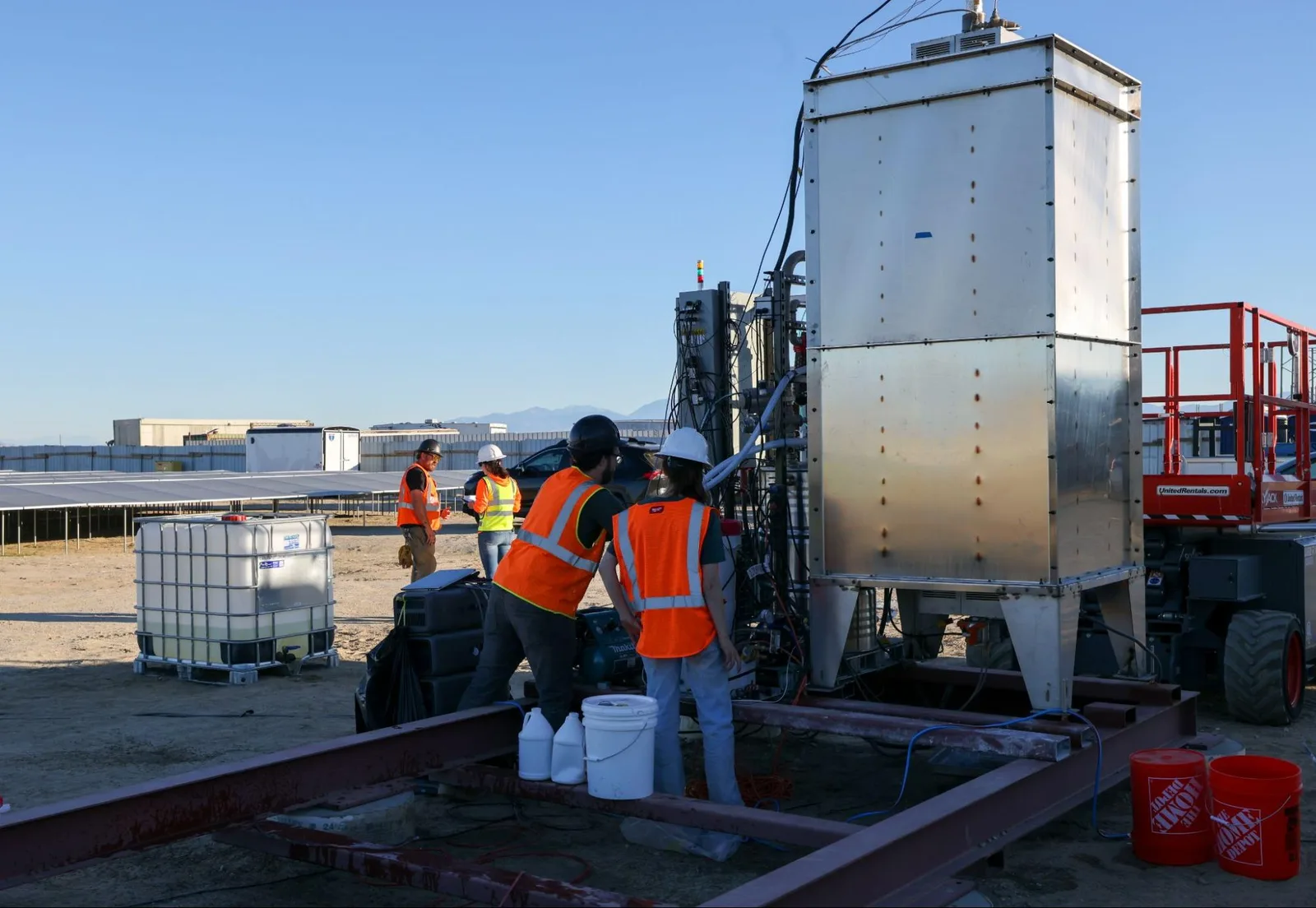
Even before I incorporated Terraform, I identified the lime-calcite cycle as the best way to perform direct air capture of CO2. A cheap, safe, and effective CO2 sorbent that works in unenriched air, that can be infinitely and robustly regenerated. The relative density of CO2 in the sorbent vs air is about two million to one, so the air contactor required a bunch of iteration to bring them together. Similarly, the electric calciner needed to handle corrosive high temperature chemical species while dumping absurd amounts of energy into a famously reflective material. There is no way I know of to one-shot this design problem, so we iterated and iterated and iterated. The air contactor went through six major rebuilds, the calciner went through seventeen. We knew there had to be a way to make this work. We stubbornly refused to quit trying!
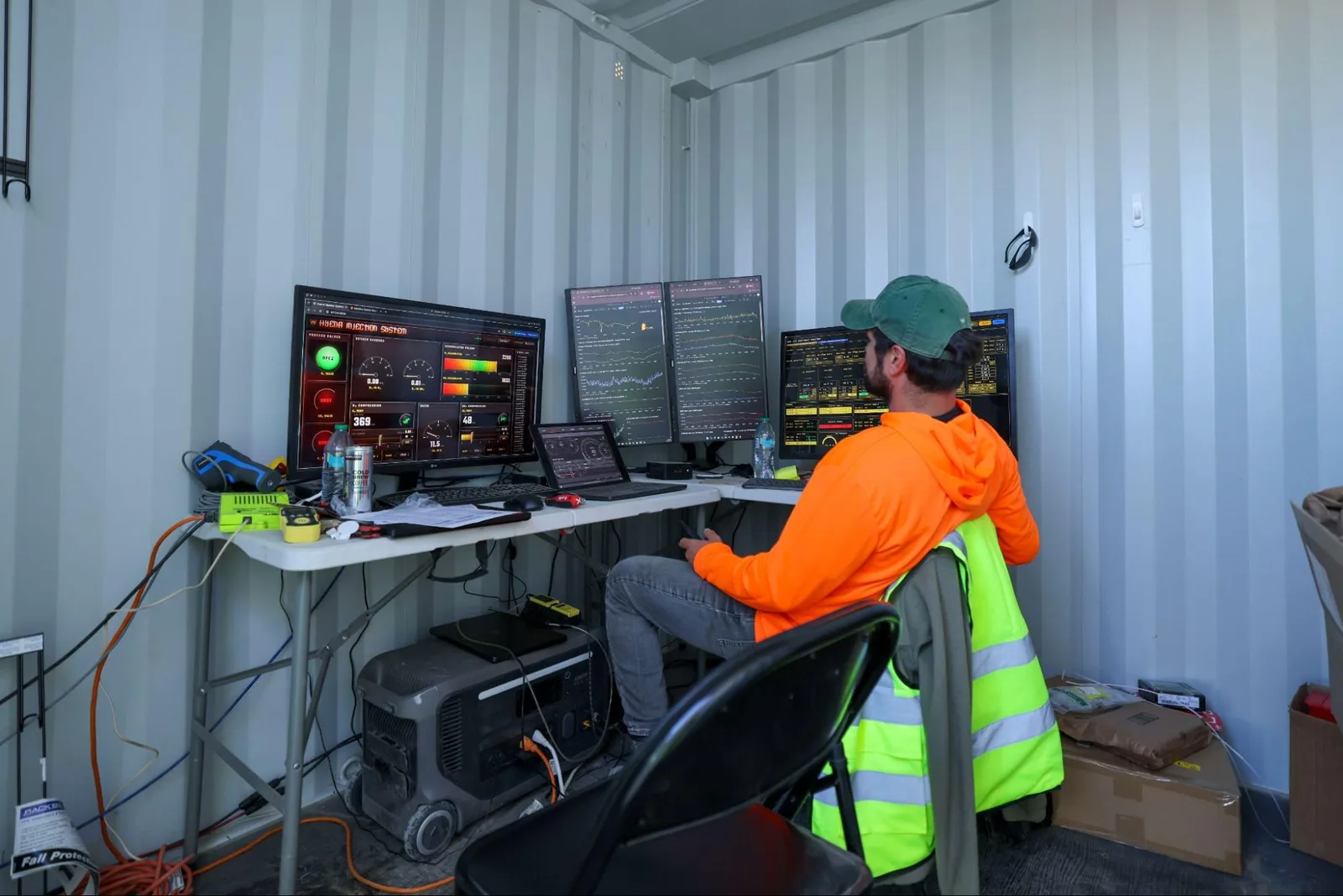
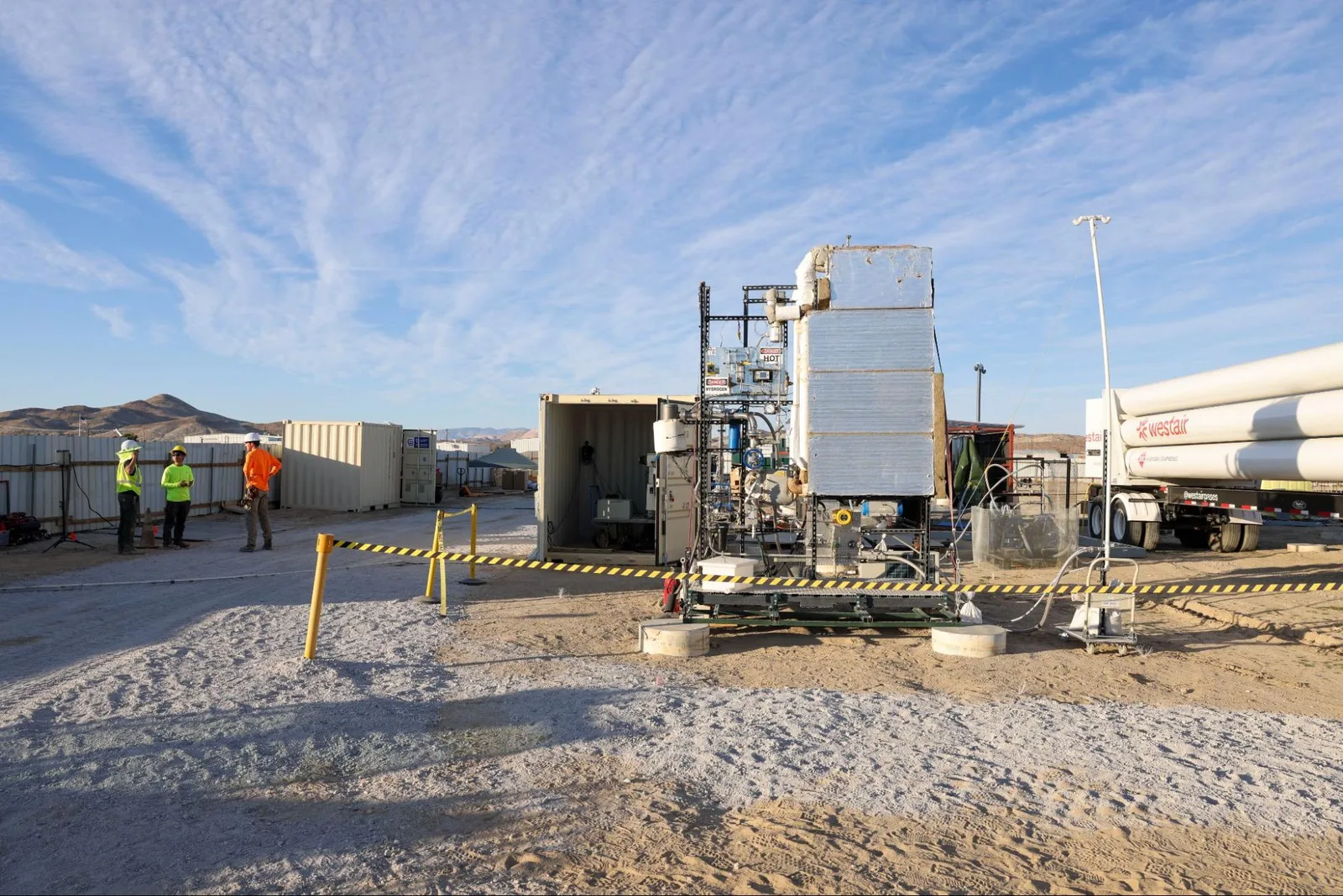
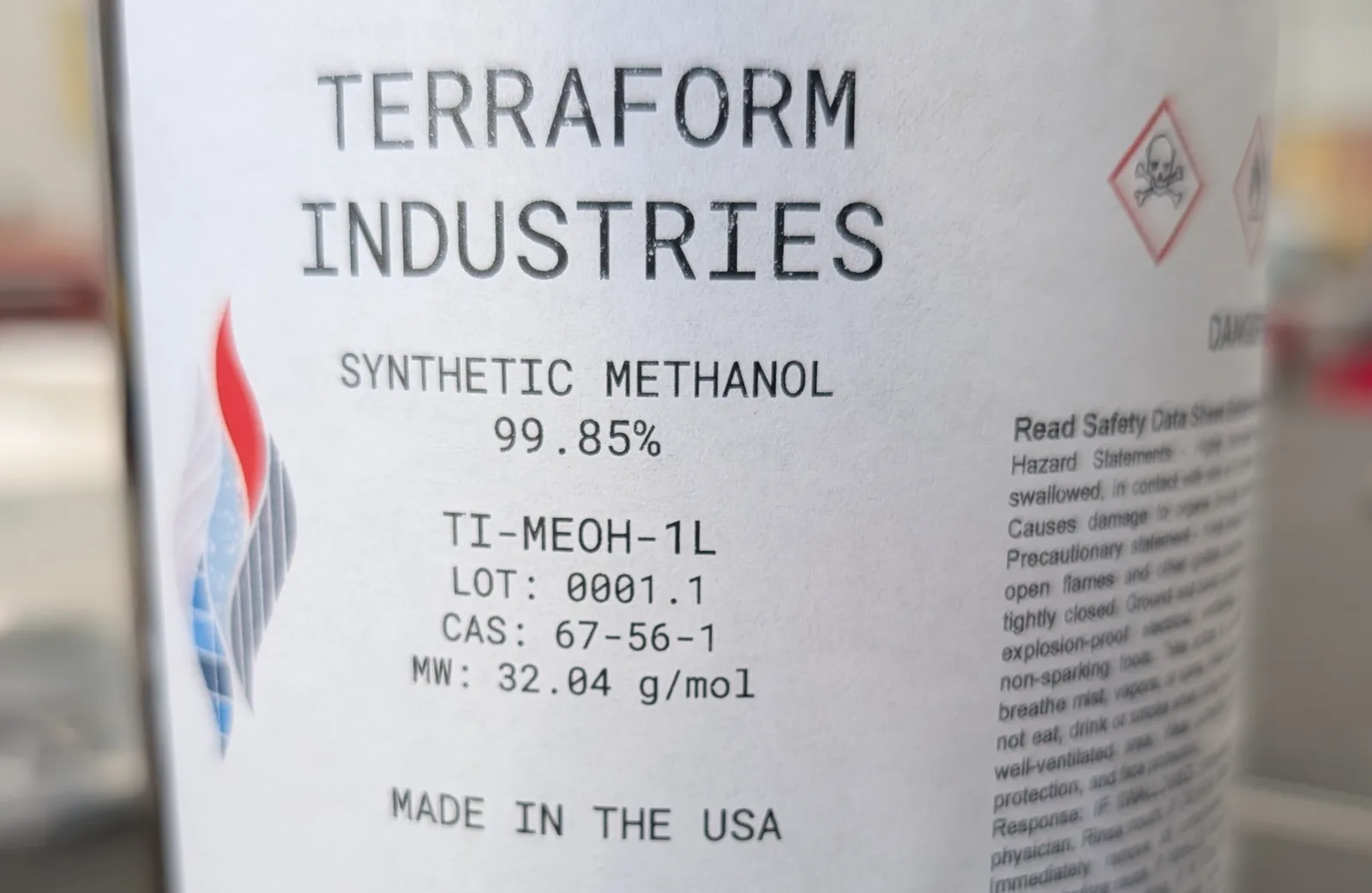
Terraform started out making methane (CH4). After a few years of frantic development, we realized we can use a substantially similar reactor to produce methanol (CH3OH) and (soon!) ammonia (NH3). Between these three fundamental precursor chemicals we can address the entire petrochemical industry.
Synthetic chemical plants typically operate 24/7 at steady state to simplify operation. This is not an option for us, so Terraform’s chemical reactors ramp production up and down to follow the sun.
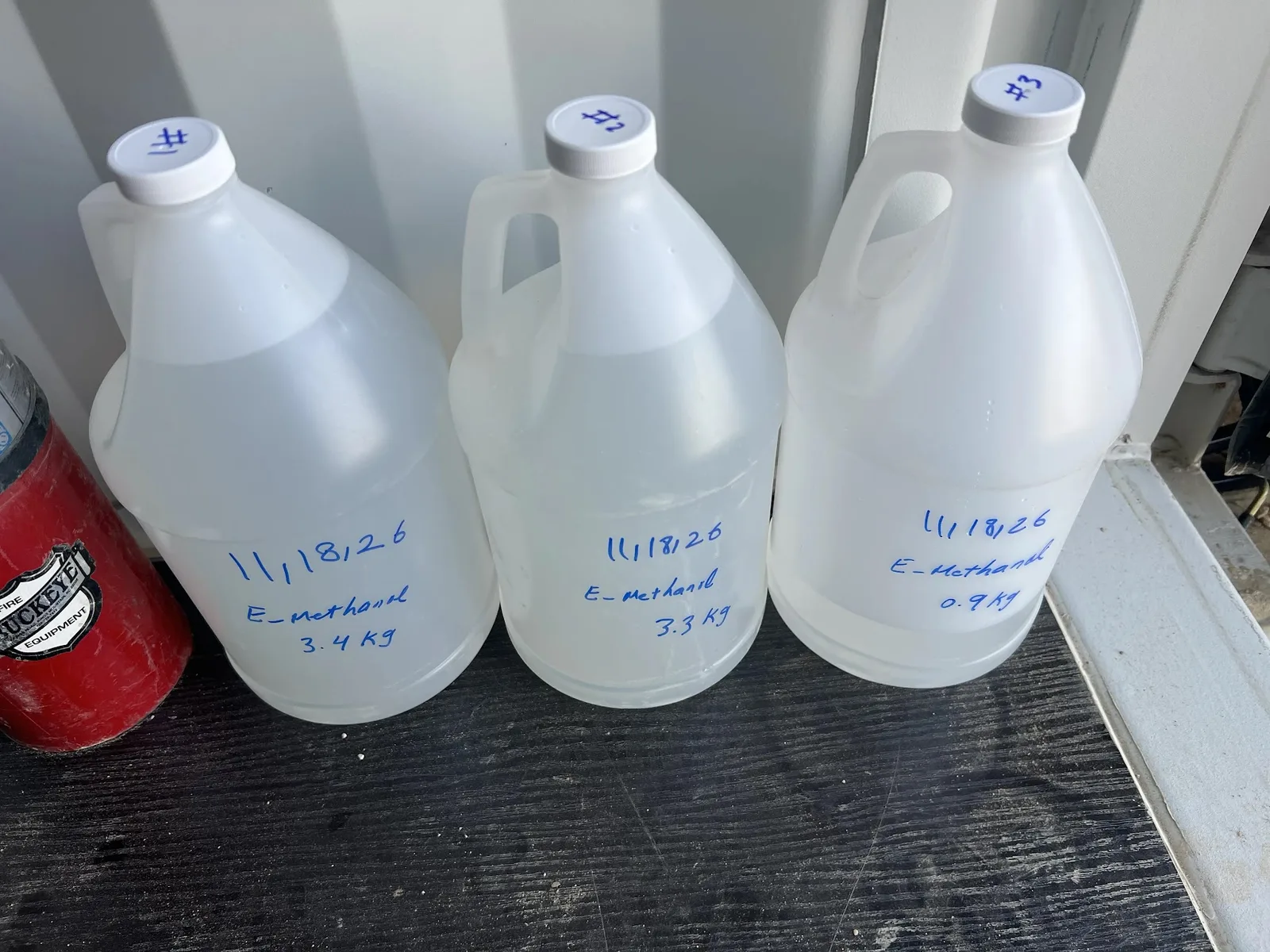
The methanol team speed ran three tech revisions in the first part of this year, and took the honor of being the reactor on site during integration testing this month, and thus the first end-to-end, at scale, solar synthetic fuel we produced.
What’s next?
We’ve made oil wealth from sunlight and air. Now we will make much more of it. First, we will expand production at our existing site, then we will open new sites and expand our factories to produce ever more Terraformers and ever more fuel at ever better prices.
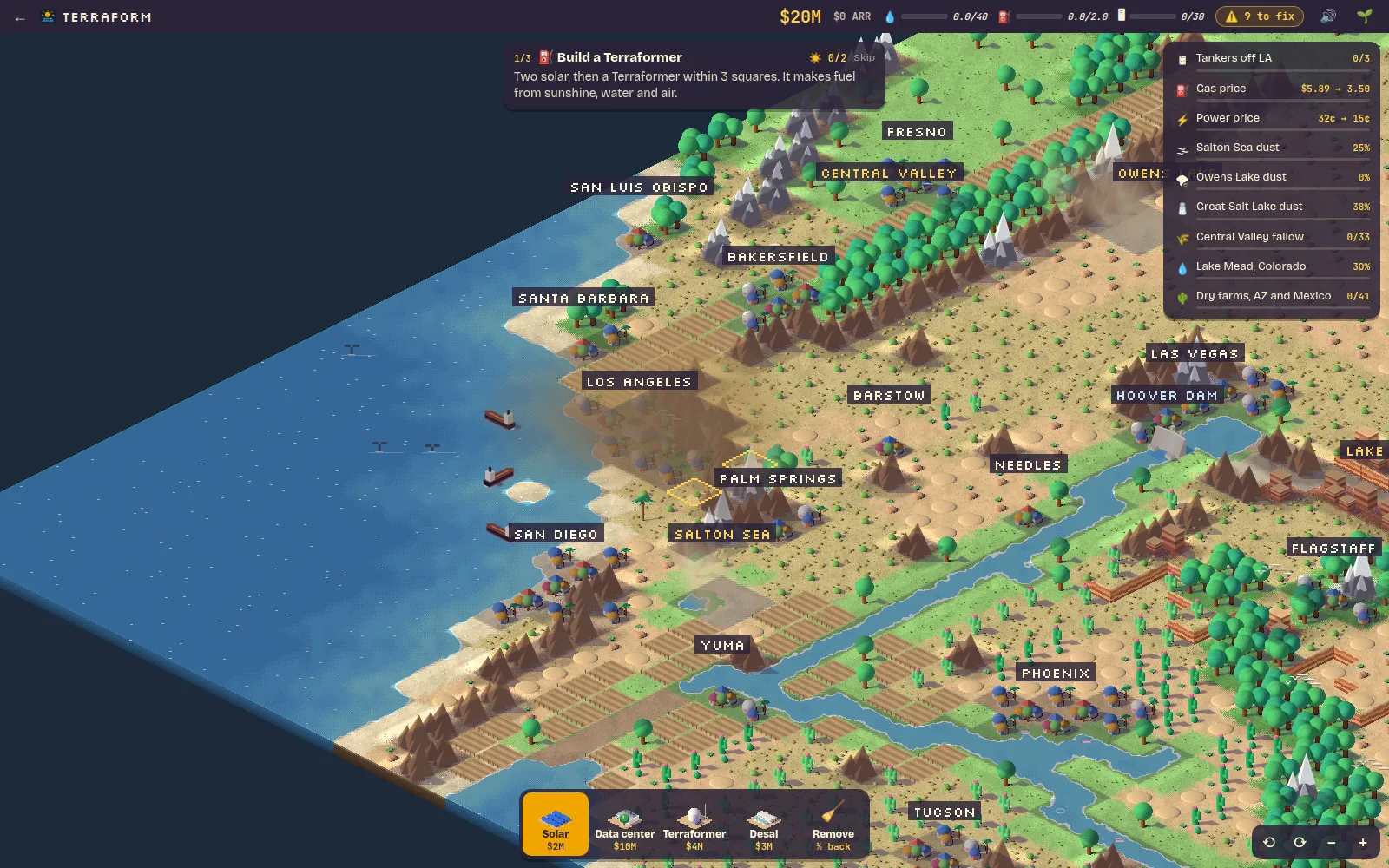
Try the Terraform game to bring oil, water, and wealth to the US Southwest.
We are hiring.
Terraform’s development roadmap
See where we’re going next on the roadmap website.